The new strategy picks up on the important topic of workforce development / PHOTO: SHUTTERSTOCK.COM/holbox
December’s launch of the new Department for Culture, Media and Sport (DCMS)strategy – Sporting Future: A New Strategy for an Active Nation – was a significant juncture in UK sporting policy and a clear step in the right direction in terms of getting the nation more active.
It followed the sports minister’s widely publicised criticism of the previous strategy, which was dubbed “severely outdated”, as well as a thorough public consultation on the remit and expectations of sport in society.
Speaking with the DCMS team in the lead-up to the launch, it was clear they wanted a document that didn’t appear woolly – one that had realistic ambitions backed up by specific programmes with genuine targets and outcomes.
Delivering change For the most part, this has been achieved. Parts of the strategy are bold and challenging and will bring real change to how some of the sector’s biggest players operate, and who they partner with.
For example, as called for in ukactive’s Blueprint for an Active Britain, the strategy states that all future funding will go to any organisation that can achieve one or more of the core aims of the strategy, which are focused on mental, physical and economic wellbeing. For our sector, it marks an end to ‘them and us’ and a new era of ‘us and us, together’ when it comes to delivering physical activity outcomes for local communities.
There was also a clear endorsement of the decision taken in July 2015 by the ukactive Membership Council to task its chartered institute – CIMSPA – with the delivery of the physical activity sector’s workforce development.
Meanwhile, forward-thinking elements such as the joint work with Public Health England and the NHS will help ensure that physical activity is integrated into all relevant care pathways.
Finally, ukactive chair Baroness Tanni Grey-Thompson will head up a Duty of Care working group, which will oversee the standards of delivery and conduct for all forms of participation. This detail should not be overlooked as it’s central to the delivery of the document, and could lead to some interesting opportunities.
Embracing our agenda I would of course like to point out the role that ukactive – in close partnership with the sector – has played in bringing this to fruition. We’ve always campaigned for government to take strong steps to include our sector within its efforts to get the nation moving. Now this thought leadership, together with the fostering of strong relationships across Whitehall, looks as though it may bear fruit.
This is certainly the case with Sporting Future, which takes our issues of public health, inactivity, professionalising the workforce and the embracing of a broader delivery team into the very heart of government policy.
In my response to the strategy on the launch day, I described it as a step in the right direction. But it is just one step. We must keep our foot on the gas to make sure the momentum continues.
Active Blackpool is deploying Cornerstone Connect, a new digital interface allowing
disparate information from multiple systems to be aggregated into one dataset, to support
its focus on reducing health inequalities and improving healthy life expectancy. [more...]
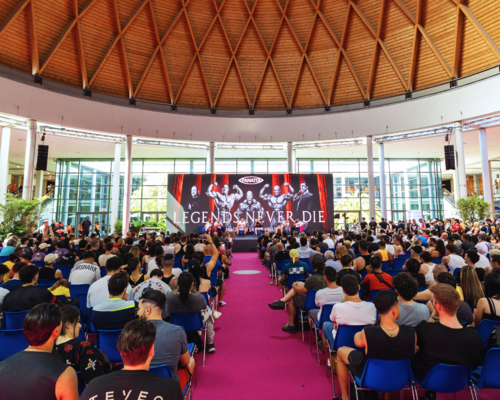
Panatta brought together four of the most influential figures in bodybuilding history on the
stage of RiminiWellness 2026: Phil Heath, Lee Haney, Ronnie Coleman and Hany Rambod. [more...]
The new strategy picks up on the important topic of workforce development / PHOTO: SHUTTERSTOCK.COM/holbox
December’s launch of the new Department for Culture, Media and Sport (DCMS)strategy – Sporting Future: A New Strategy for an Active Nation – was a significant juncture in UK sporting policy and a clear step in the right direction in terms of getting the nation more active.
It followed the sports minister’s widely publicised criticism of the previous strategy, which was dubbed “severely outdated”, as well as a thorough public consultation on the remit and expectations of sport in society.
Speaking with the DCMS team in the lead-up to the launch, it was clear they wanted a document that didn’t appear woolly – one that had realistic ambitions backed up by specific programmes with genuine targets and outcomes.
Delivering change For the most part, this has been achieved. Parts of the strategy are bold and challenging and will bring real change to how some of the sector’s biggest players operate, and who they partner with.
For example, as called for in ukactive’s Blueprint for an Active Britain, the strategy states that all future funding will go to any organisation that can achieve one or more of the core aims of the strategy, which are focused on mental, physical and economic wellbeing. For our sector, it marks an end to ‘them and us’ and a new era of ‘us and us, together’ when it comes to delivering physical activity outcomes for local communities.
There was also a clear endorsement of the decision taken in July 2015 by the ukactive Membership Council to task its chartered institute – CIMSPA – with the delivery of the physical activity sector’s workforce development.
Meanwhile, forward-thinking elements such as the joint work with Public Health England and the NHS will help ensure that physical activity is integrated into all relevant care pathways.
Finally, ukactive chair Baroness Tanni Grey-Thompson will head up a Duty of Care working group, which will oversee the standards of delivery and conduct for all forms of participation. This detail should not be overlooked as it’s central to the delivery of the document, and could lead to some interesting opportunities.
Embracing our agenda I would of course like to point out the role that ukactive – in close partnership with the sector – has played in bringing this to fruition. We’ve always campaigned for government to take strong steps to include our sector within its efforts to get the nation moving. Now this thought leadership, together with the fostering of strong relationships across Whitehall, looks as though it may bear fruit.
This is certainly the case with Sporting Future, which takes our issues of public health, inactivity, professionalising the workforce and the embracing of a broader delivery team into the very heart of government policy.
In my response to the strategy on the launch day, I described it as a step in the right direction. But it is just one step. We must keep our foot on the gas to make sure the momentum continues.
The UK's four Chief Medical Officers have published a refreshed edition of Physical activity
guidelines: UK Chief Medical Officers' report, updating the evidence that underpins the nation's
physical activity recommendations and placing greater emphasis on strength, balance, reducing
sedentary behaviour and, for the first time, supporting people taking weight loss medications.
Places Leisure has exchanged contracts to build and operate a flagship £60m water and leisure
destination on behalf of Basingstoke and Deane Borough Council.
The Republic of Ireland will become the latest market in PureGym’s expanding international
portfolio, with the first launch planned for Dublin in 2027.
Anytime Fitness opened more than one club a day in 2025 and is on track to maintain this rate
of growth this year, as parent company Purpose Brands targets further international expansion.
The £33.9 million Leighton Leisure and Community Centre has opened in Leighton Buzzard, UK,
creating a next-generation public leisure, health and wellbeing hub for the local community.
Walnuts Leisure Centre in Orpington, in the London Borough of Bromley, has reopened following
a £17m transformation designed to secure the long-term future of the public leisure asset and
reposition it as a community wellbeing hub.
The Gym Group, has announced that it's sustained positive trading momentum has continued
through the first half of 2026 and the company remains confident about the outlook.
Luxury boutique Pilates and wellness studio, X-Club, officially launches a
4,000sq ft flagship at
Marylebone on 16 July Built around X-Club’s four pillars of wellness – mind,
movement,
nutrition and therapy – the facility features two group exercise studi
Active Blackpool is deploying Cornerstone Connect, a new digital interface allowing
disparate information from multiple systems to be aggregated into one dataset, to support
its focus on reducing health inequalities and improving healthy life expectancy. [more...]
Panatta brought together four of the most influential figures in bodybuilding history on the
stage of RiminiWellness 2026: Phil Heath, Lee Haney, Ronnie Coleman and Hany Rambod. [more...]