Short bursts of HIIT may give better results than longer bouts of steady exercise
High intensity interval training (HIIT) is undoubtedly one of the biggest fitness trends of the last few years, and with new research showing how effective it is, it’s unlikely to dwindle in popularity. Most recently, one study has shown that short bursts of vigorous exercise are the best for battling diabetes, while another has revealed why it’s so good for endurance.
HIIT versus diabetes In research presented at the American Heart Association’s Scientific Sessions 2015, HIIT was identified as being the best form of exercise for battling Type 2 diabetes. Scientists found that short bursts of HIIT (working at 85 per cent of target heart rate) improved cholesterol, blood sugar and weight among Type 2 diabetics more significantly than 30 minutes of sustained, lower-intensity exercise (at 65 per cent of target heart rate).
The study showed that three months of high-intensity exercise in 10-minute bursts done three times a day, five days a week, led to an average 0.82 per cent decrease in blood sugar patterns. This compared with just a 0.25 per cent decrease among those who exercised at a lower intensity five times a week.
Historically, diabetes management programmes have focused on low-intensity, sustained exercise, according to lead study author Avinash Pandey, an undergraduate at the University of Western Ontario, Canada. Pandey added: “However, more may be accomplished with short bursts of vigorous exercise, in which patients achieve a higher maximum target heart rate. This may also be easier to fit into busy schedules.”
Researchers said it remains unclear why shorter bursts of high-intensity exercise would lead to more significant health improvements. One theory is that the activity uses energy in a different way, according to Pandey.
Good for endurance Meanwhile, in Europe, Swedish scientists at the Karolinska Institutet have been investigating the specific benefits behind the training, and why a few minutes of HIIT is enough to produce an effect at least equivalent to that achieved with long doses of more traditional endurance training. Their findings, which are published in the scientific journal PNAS*, highlight a specific cellular mechanism linked to the activity and also provide clues as to why antioxidants undermine the effect of endurance training.
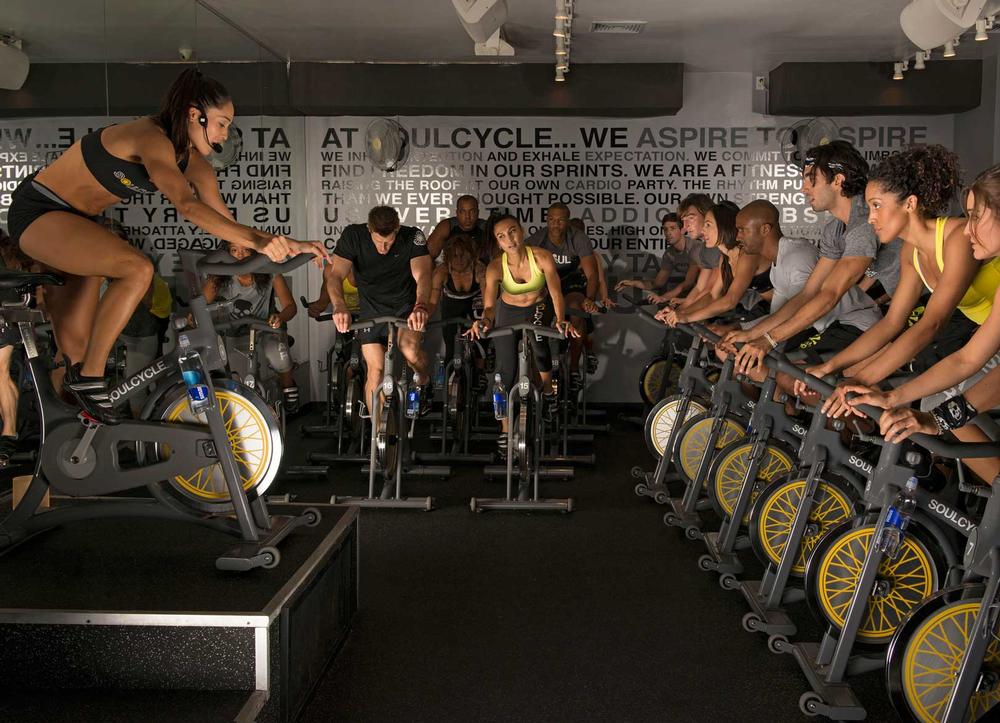
To investigate what happens in muscle cells during high-intensity exercise, the researchers asked male recreational exercisers to do 30 seconds of maximum exertion cycling followed by four minutes of rest, and to repeat the procedure six times. They then took muscle tissue samples from the exercisers’ thighs.
They found that HIIT has a significant impact on the calcium channels in muscle cells, and that this can in turn help to create more mitochondria. Mitochondria act as the cells’ power plants, providing energy – so any changes that stimulate the formation of new mitochondria help to increase muscle endurance.
“Our study shows that three minutes of high-intensity exercise breaks down calcium channels in the muscle cells,” said Professor Håkan Westerblad, principal investigator at Karolinska Institutet’s Department of Physiology and Pharmacology. “This causes a lasting change in how the cells handle calcium, and is an excellent signal for adaptation, such as the formation of new mitochondria.”
Active Blackpool is deploying Cornerstone Connect, a new digital interface allowing
disparate information from multiple systems to be aggregated into one dataset, to support
its focus on reducing health inequalities and improving healthy life expectancy. [more...]
Panatta brought together four of the most influential figures in bodybuilding history on the
stage of RiminiWellness 2026: Phil Heath, Lee Haney, Ronnie Coleman and Hany Rambod. [more...]
+ More featured suppliers
COMPANY PROFILES
Precor
Precor promises precision-quality products with steadfast reliability that are inspired by exerciser [more...]
PSLT Ltd
PSLT Fitness Solutions manufacture, remanufacture and buy back commercial gym equipment. [more...]
Short bursts of HIIT may give better results than longer bouts of steady exercise
High intensity interval training (HIIT) is undoubtedly one of the biggest fitness trends of the last few years, and with new research showing how effective it is, it’s unlikely to dwindle in popularity. Most recently, one study has shown that short bursts of vigorous exercise are the best for battling diabetes, while another has revealed why it’s so good for endurance.
HIIT versus diabetes In research presented at the American Heart Association’s Scientific Sessions 2015, HIIT was identified as being the best form of exercise for battling Type 2 diabetes. Scientists found that short bursts of HIIT (working at 85 per cent of target heart rate) improved cholesterol, blood sugar and weight among Type 2 diabetics more significantly than 30 minutes of sustained, lower-intensity exercise (at 65 per cent of target heart rate).
The study showed that three months of high-intensity exercise in 10-minute bursts done three times a day, five days a week, led to an average 0.82 per cent decrease in blood sugar patterns. This compared with just a 0.25 per cent decrease among those who exercised at a lower intensity five times a week.
Historically, diabetes management programmes have focused on low-intensity, sustained exercise, according to lead study author Avinash Pandey, an undergraduate at the University of Western Ontario, Canada. Pandey added: “However, more may be accomplished with short bursts of vigorous exercise, in which patients achieve a higher maximum target heart rate. This may also be easier to fit into busy schedules.”
Researchers said it remains unclear why shorter bursts of high-intensity exercise would lead to more significant health improvements. One theory is that the activity uses energy in a different way, according to Pandey.
Good for endurance Meanwhile, in Europe, Swedish scientists at the Karolinska Institutet have been investigating the specific benefits behind the training, and why a few minutes of HIIT is enough to produce an effect at least equivalent to that achieved with long doses of more traditional endurance training. Their findings, which are published in the scientific journal PNAS*, highlight a specific cellular mechanism linked to the activity and also provide clues as to why antioxidants undermine the effect of endurance training.
To investigate what happens in muscle cells during high-intensity exercise, the researchers asked male recreational exercisers to do 30 seconds of maximum exertion cycling followed by four minutes of rest, and to repeat the procedure six times. They then took muscle tissue samples from the exercisers’ thighs.
They found that HIIT has a significant impact on the calcium channels in muscle cells, and that this can in turn help to create more mitochondria. Mitochondria act as the cells’ power plants, providing energy – so any changes that stimulate the formation of new mitochondria help to increase muscle endurance.
“Our study shows that three minutes of high-intensity exercise breaks down calcium channels in the muscle cells,” said Professor Håkan Westerblad, principal investigator at Karolinska Institutet’s Department of Physiology and Pharmacology. “This causes a lasting change in how the cells handle calcium, and is an excellent signal for adaptation, such as the formation of new mitochondria.”
The UK's four Chief Medical Officers have published a refreshed edition of Physical activity
guidelines: UK Chief Medical Officers' report, updating the evidence that underpins the nation's
physical activity recommendations and placing greater emphasis on strength, balance, reducing
sedentary behaviour and, for the first time, supporting people taking weight loss medications.
Places Leisure has exchanged contracts to build and operate a flagship £60m water and leisure
destination on behalf of Basingstoke and Deane Borough Council.
The Republic of Ireland will become the latest market in PureGym’s expanding international
portfolio, with the first launch planned for Dublin in 2027.
Anytime Fitness opened more than one club a day in 2025 and is on track to maintain this rate
of growth this year, as parent company Purpose Brands targets further international expansion.
The £33.9 million Leighton Leisure and Community Centre has opened in Leighton Buzzard, UK,
creating a next-generation public leisure, health and wellbeing hub for the local community.
Walnuts Leisure Centre in Orpington, in the London Borough of Bromley, has reopened following
a £17m transformation designed to secure the long-term future of the public leisure asset and
reposition it as a community wellbeing hub.
The Gym Group, has announced that it's sustained positive trading momentum has continued
through the first half of 2026 and the company remains confident about the outlook.
Luxury boutique Pilates and wellness studio, X-Club, officially launches a
4,000sq ft flagship at
Marylebone on 16 July Built around X-Club’s four pillars of wellness – mind,
movement,
nutrition and therapy – the facility features two group exercise studi
Active Blackpool is deploying Cornerstone Connect, a new digital interface allowing
disparate information from multiple systems to be aggregated into one dataset, to support
its focus on reducing health inequalities and improving healthy life expectancy. [more...]
Panatta brought together four of the most influential figures in bodybuilding history on the
stage of RiminiWellness 2026: Phil Heath, Lee Haney, Ronnie Coleman and Hany Rambod. [more...]
+ More featured suppliers
COMPANY PROFILES
Precor Precor promises precision-quality products with steadfast reliability that are inspired by exerciser [more...]