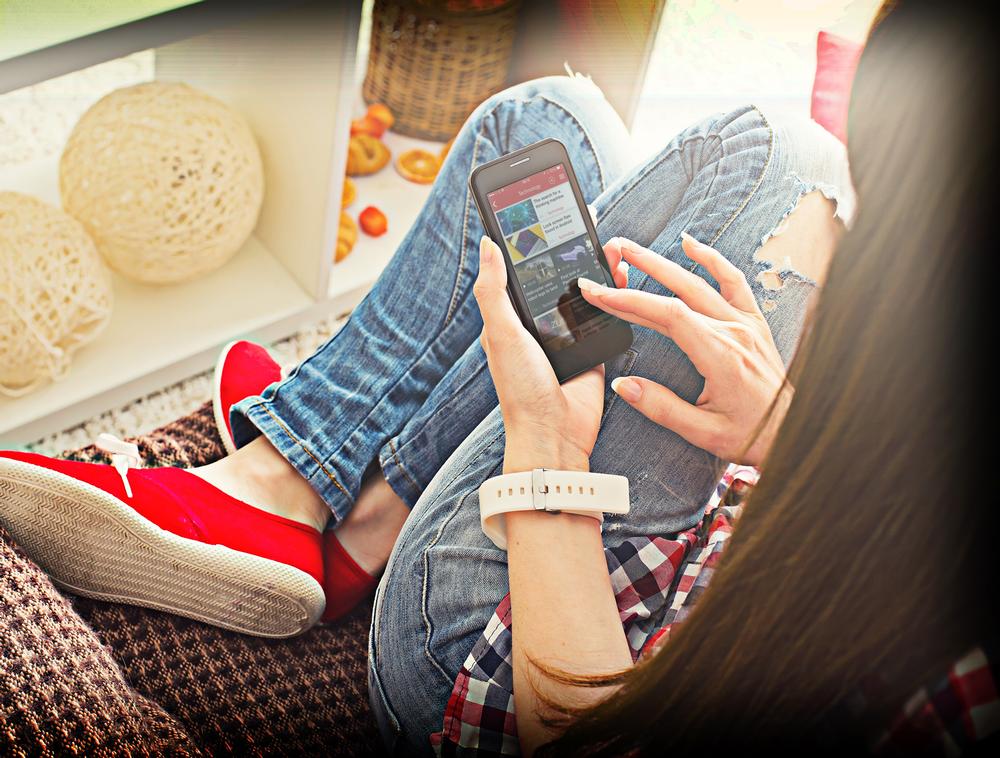
Shops can use beacons to send special offers to passers-by / PHOTO: www.shutterstock.
o you know precisely where your customers are now, and what might therefore be the most relevant products or services to communicate to them at this very moment in time? Chances are your answer to that will be ‘no’ – but that needn’t be the case, thanks to the strongly emerging category of beacon technology.
Beacons are small, low-cost pieces of computer hardware that use battery-friendly, low-energy Bluetooth connections to transmit messages or prompts directly to smartphones or tablets. This technology has the potential to transform how retailers, event organisers, educational institutions and even health clubs communicate with their customers and create more personalised experiences – and that’s because beacons precisely know, within inches, where a consumer is. It’s this micro-location capability that sets beacons apart.
Rapid adoption Back in 2014, Fitness First announced its intention to use technology to help redefine its gym experience and bolster brand trust. The health club group was already actively engaged with Apple and Samsung over the potential use of beacon technology, and outlined a road map to address the gym industry’s previous innovation inertia.
Fitness First and other leading club operators in the health club industry are now all evaluating the potential of beacons, and they are not alone. According to BI Intelligence projections from Business Insider, by the end of 2015 about 32 per cent of retail locations owned by the top 100 retailers in the United States will have deployed beacon hardware and software. By the end of 2016, this percentage is expected to have jumped to 85 per cent of retail locations.
Earlier this year, US retailer Target announced the launch of 50 retail stores with beacon technology. UK retailer House of Fraser and grocer Waitrose have also, along with other brands, adopted beacons having recognised the need to mimic mobile and online behaviour in their physical retail stores.
So how does this work? When using an app, for example, prior search histories and other user information – along with beacon technologies that track the exact location of customers in a store – combine to provide targeted information and offers. It’s an example of how technology can create a new era of personalisation, enabling brands to offer higher levels of service and more targeted promotions, along with greater intelligence about consumer behaviour.
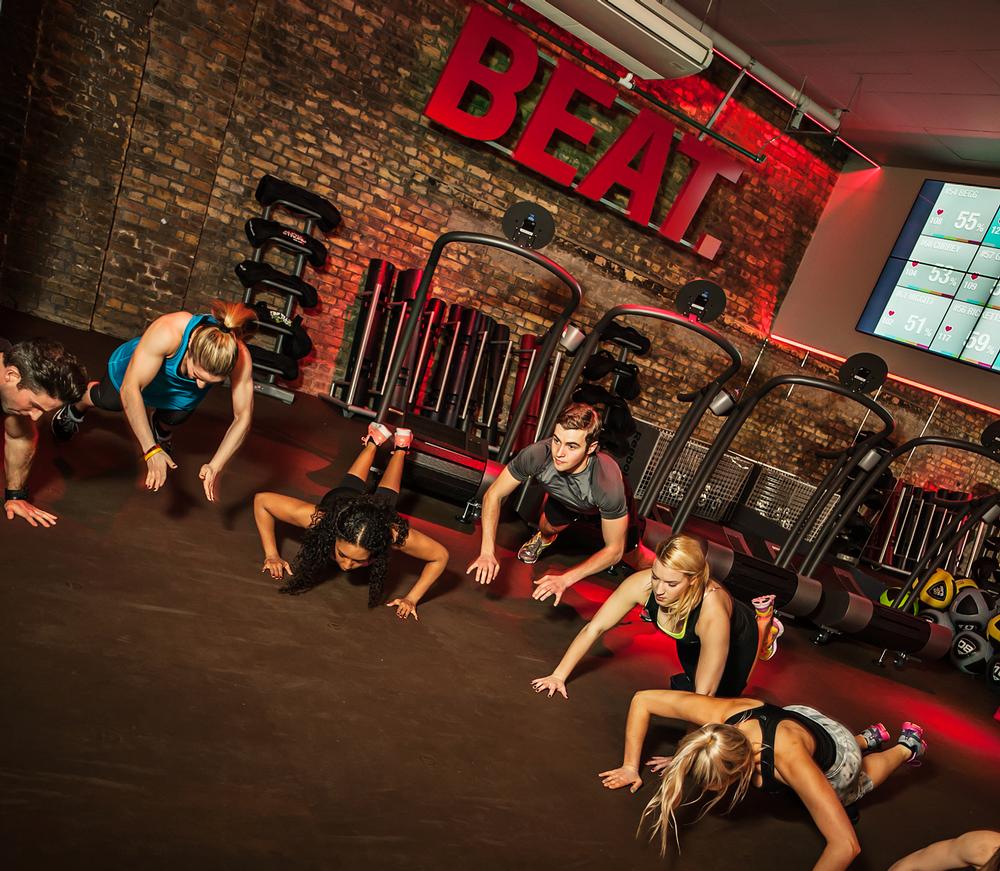
Health club beacons In the world of health clubs, beacon technology could provide deep consumer insights on how members use clubs. For example, knowing that certain members are going into a group exercise studio would enable tracking of how members actually use the club. If members are reading a group fitness schedule located outside a studio, an app could automatically ask if they’d like to see what the class looks like and share a video overview. If a user had previously purchased small group training, when they arrive at a club, a beacon could sense that and provide an offer to join a discounted small group class that morning.
The intelligence on actual member usage could in turn lead to improved club design, and even the redeployment of equipment to optimise its use.
In the case of advertising, where there’s high foot traffic, non-members could have offers extended to join a club as they walked by. With advertisements that include signage, beacons could be embedded to offer more specific information when prospects are nearby.
An even bigger opportunity lies in the data that’s gleaned, and the deep insights into customer behaviours that result, creating actionable opportunities. Imagine segmenting and targeting users based on locations they frequent – for instance, identifying that fitness addict by seeing her hit a beacon in her gym every day, and then providing her with a group fitness promotion in the evening when she’s browsing her favourite news app.
Other uses of beacons are also possible. The devices could be used to keep track of staff working in your fitness facility, for example. Beacons could monitor how often and for how long staff engage with customers, to enhance service training and track sales conversion rates.
The technology could also send alerts to members of staff when a certain task needs to be carried out, for instance.
Using beacon technology, retailers are also able to track vendor activity and even monitor deliveries.
Challenges ahead But for the implementation of beacons to be a success, club operators need customers who want to use them; the main barrier to the potential success of beacon technology is that customers have to voluntarily download and install a smartphone app for it to work.
In addition, although there’s scope for beacon apps that cover an entire street or mall, most brand apps are likely to be unique, meaning they will be in competition with others. While customers may be happy to download an app for a couple of brands, they might not want to download an app for every shop, gym and grocer they visit.
As with all new technologies, beacons face challenges. Health club operators, along with retailers and others, will need to educate customers about the benefits beacon technology provides and demonstrate the special benefits people would get from their use.
Some are concerned about specification wars between Apple, Google, Samsung and others as they each try to land grab this new space. Each of these tech players will develop its own specifications, so there will be iBeacons that work only with iOS products, and beacons just for Android devices. The concern is the lack of a central and open standard, resulting in a fragmented user experience – this due to the fact that businesses would need to purchase, install and manage beacons that support each platform, in addition to developing iOS and Android apps.
Internet of Things The technology is still very exciting, however, because it represents a first step towards the Internet of Things. Most thoughtful brands are striving for new ways to connect people with contextual data exactly when they want it. With Apple, Samsung and Google putting an emphasis on this technology, beacons will likely evolve and be a part of the proximity marketing landscape.
While the introduction of beacon technology poses various challenges, if health club brands offer a good experience to members, they will benefit from enhanced engagement and far better insights into in-club activities, as well as customer and staff behaviour.
Although NFC and to some extent radio-frequency identification (RFID) technology have made similar promises in the past, the widespread adoption of smartphones and the fact that mobile devices are playing a larger role in the consumer experience means that beacon technology has a good chance to go mainstream in the next few years.
About the author
Bryan O’Rourke
Bryan O’Rourke is an entrepreneur, consultant, executive and investor. He has presented as a keynote speaker at industry and corporate conferences on four continents. He is widely published and quoted in periodicals like Inc. Magazine, The Wall Street Journal and The New York Times. Bryan recently contributed to a newly released book with other European thought leaders titled Essentials of motivation and behaviour change.
Active Blackpool is deploying Cornerstone Connect, a new digital interface allowing
disparate information from multiple systems to be aggregated into one dataset, to support
its focus on reducing health inequalities and improving healthy life expectancy. [more...]
CoverMe, the global leader in fitness workforce management, today launches CoverMe PT, an
on-demand personal training platform that connects the right personal trainer to the right
client in under 10 seconds. [more...]
+ More featured suppliers
COMPANY PROFILES
Alliance Leisure
Alliance Leisure Services was specifically
established to respond to the changing
development need [more...]
ukactive
ukactive is the UK’s leading trade body for the physical activity sector, bringing together more tha [more...]
Shops can use beacons to send special offers to passers-by / PHOTO: www.shutterstock.
o you know precisely where your customers are now, and what might therefore be the most relevant products or services to communicate to them at this very moment in time? Chances are your answer to that will be ‘no’ – but that needn’t be the case, thanks to the strongly emerging category of beacon technology.
Beacons are small, low-cost pieces of computer hardware that use battery-friendly, low-energy Bluetooth connections to transmit messages or prompts directly to smartphones or tablets. This technology has the potential to transform how retailers, event organisers, educational institutions and even health clubs communicate with their customers and create more personalised experiences – and that’s because beacons precisely know, within inches, where a consumer is. It’s this micro-location capability that sets beacons apart.
Rapid adoption Back in 2014, Fitness First announced its intention to use technology to help redefine its gym experience and bolster brand trust. The health club group was already actively engaged with Apple and Samsung over the potential use of beacon technology, and outlined a road map to address the gym industry’s previous innovation inertia.
Fitness First and other leading club operators in the health club industry are now all evaluating the potential of beacons, and they are not alone. According to BI Intelligence projections from Business Insider, by the end of 2015 about 32 per cent of retail locations owned by the top 100 retailers in the United States will have deployed beacon hardware and software. By the end of 2016, this percentage is expected to have jumped to 85 per cent of retail locations.
Earlier this year, US retailer Target announced the launch of 50 retail stores with beacon technology. UK retailer House of Fraser and grocer Waitrose have also, along with other brands, adopted beacons having recognised the need to mimic mobile and online behaviour in their physical retail stores.
So how does this work? When using an app, for example, prior search histories and other user information – along with beacon technologies that track the exact location of customers in a store – combine to provide targeted information and offers. It’s an example of how technology can create a new era of personalisation, enabling brands to offer higher levels of service and more targeted promotions, along with greater intelligence about consumer behaviour.
Health club beacons In the world of health clubs, beacon technology could provide deep consumer insights on how members use clubs. For example, knowing that certain members are going into a group exercise studio would enable tracking of how members actually use the club. If members are reading a group fitness schedule located outside a studio, an app could automatically ask if they’d like to see what the class looks like and share a video overview. If a user had previously purchased small group training, when they arrive at a club, a beacon could sense that and provide an offer to join a discounted small group class that morning.
The intelligence on actual member usage could in turn lead to improved club design, and even the redeployment of equipment to optimise its use.
In the case of advertising, where there’s high foot traffic, non-members could have offers extended to join a club as they walked by. With advertisements that include signage, beacons could be embedded to offer more specific information when prospects are nearby.
An even bigger opportunity lies in the data that’s gleaned, and the deep insights into customer behaviours that result, creating actionable opportunities. Imagine segmenting and targeting users based on locations they frequent – for instance, identifying that fitness addict by seeing her hit a beacon in her gym every day, and then providing her with a group fitness promotion in the evening when she’s browsing her favourite news app.
Other uses of beacons are also possible. The devices could be used to keep track of staff working in your fitness facility, for example. Beacons could monitor how often and for how long staff engage with customers, to enhance service training and track sales conversion rates.
The technology could also send alerts to members of staff when a certain task needs to be carried out, for instance.
Using beacon technology, retailers are also able to track vendor activity and even monitor deliveries.
Challenges ahead But for the implementation of beacons to be a success, club operators need customers who want to use them; the main barrier to the potential success of beacon technology is that customers have to voluntarily download and install a smartphone app for it to work.
In addition, although there’s scope for beacon apps that cover an entire street or mall, most brand apps are likely to be unique, meaning they will be in competition with others. While customers may be happy to download an app for a couple of brands, they might not want to download an app for every shop, gym and grocer they visit.
As with all new technologies, beacons face challenges. Health club operators, along with retailers and others, will need to educate customers about the benefits beacon technology provides and demonstrate the special benefits people would get from their use.
Some are concerned about specification wars between Apple, Google, Samsung and others as they each try to land grab this new space. Each of these tech players will develop its own specifications, so there will be iBeacons that work only with iOS products, and beacons just for Android devices. The concern is the lack of a central and open standard, resulting in a fragmented user experience – this due to the fact that businesses would need to purchase, install and manage beacons that support each platform, in addition to developing iOS and Android apps.
Internet of Things The technology is still very exciting, however, because it represents a first step towards the Internet of Things. Most thoughtful brands are striving for new ways to connect people with contextual data exactly when they want it. With Apple, Samsung and Google putting an emphasis on this technology, beacons will likely evolve and be a part of the proximity marketing landscape.
While the introduction of beacon technology poses various challenges, if health club brands offer a good experience to members, they will benefit from enhanced engagement and far better insights into in-club activities, as well as customer and staff behaviour.
Although NFC and to some extent radio-frequency identification (RFID) technology have made similar promises in the past, the widespread adoption of smartphones and the fact that mobile devices are playing a larger role in the consumer experience means that beacon technology has a good chance to go mainstream in the next few years.
About the author
Bryan O’Rourke
Bryan O’Rourke is an entrepreneur, consultant, executive and investor. He has presented as a keynote speaker at industry and corporate conferences on four continents. He is widely published and quoted in periodicals like Inc. Magazine, The Wall Street Journal and The New York Times. Bryan recently contributed to a newly released book with other European thought leaders titled Essentials of motivation and behaviour change.
The UK's four Chief Medical Officers have published a refreshed edition of Physical activity
guidelines: UK Chief Medical Officers' report, updating the evidence that underpins the nation's
physical activity recommendations and placing greater emphasis on strength, balance, reducing
sedentary behaviour and, for the first time, supporting people taking weight loss medications.
Places Leisure has exchanged contracts to build and operate a flagship £60m water and leisure
destination on behalf of Basingstoke and Deane Borough Council.
The Republic of Ireland will become the latest market in PureGym’s expanding international
portfolio, with the first launch planned for Dublin in 2027.
Anytime Fitness opened more than one club a day in 2025 and is on track to maintain this rate
of growth this year, as parent company Purpose Brands targets further international expansion.
The £33.9 million Leighton Leisure and Community Centre has opened in Leighton Buzzard, UK,
creating a next-generation public leisure, health and wellbeing hub for the local community.
Walnuts Leisure Centre in Orpington, in the London Borough of Bromley, has reopened following
a £17m transformation designed to secure the long-term future of the public leisure asset and
reposition it as a community wellbeing hub.
The Gym Group, has announced that it's sustained positive trading momentum has continued
through the first half of 2026 and the company remains confident about the outlook.
Luxury boutique Pilates and wellness studio, X-Club, officially launches a
4,000sq ft flagship at
Marylebone on 16 July Built around X-Club’s four pillars of wellness – mind,
movement,
nutrition and therapy – the facility features two group exercise studi
Active Blackpool is deploying Cornerstone Connect, a new digital interface allowing
disparate information from multiple systems to be aggregated into one dataset, to support
its focus on reducing health inequalities and improving healthy life expectancy. [more...]
CoverMe, the global leader in fitness workforce management, today launches CoverMe PT, an
on-demand personal training platform that connects the right personal trainer to the right
client in under 10 seconds. [more...]
+ More featured suppliers
COMPANY PROFILES
Alliance Leisure Alliance Leisure Services was specifically
established to respond to the changing
development need [more...]