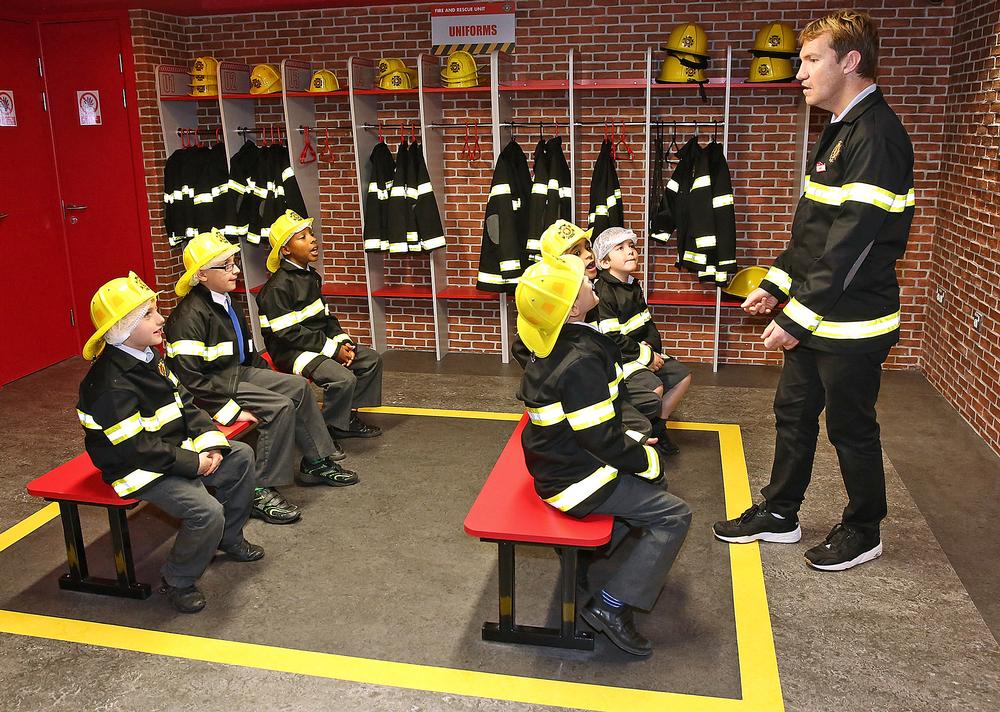
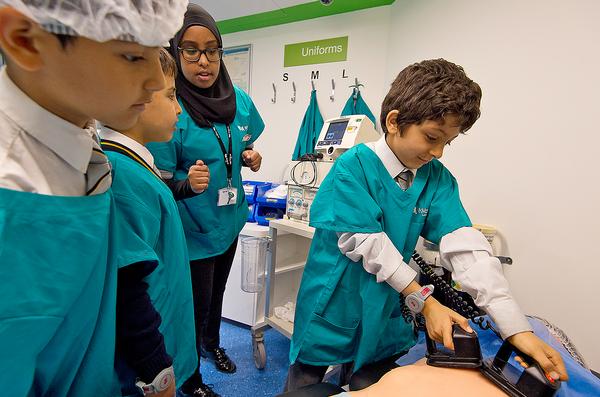
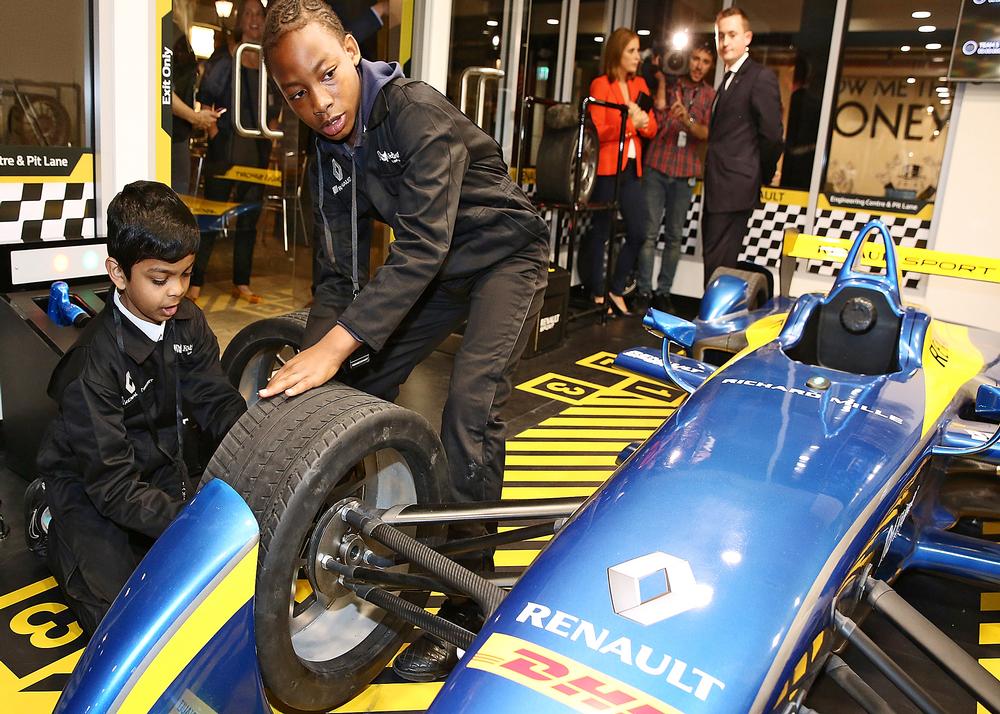
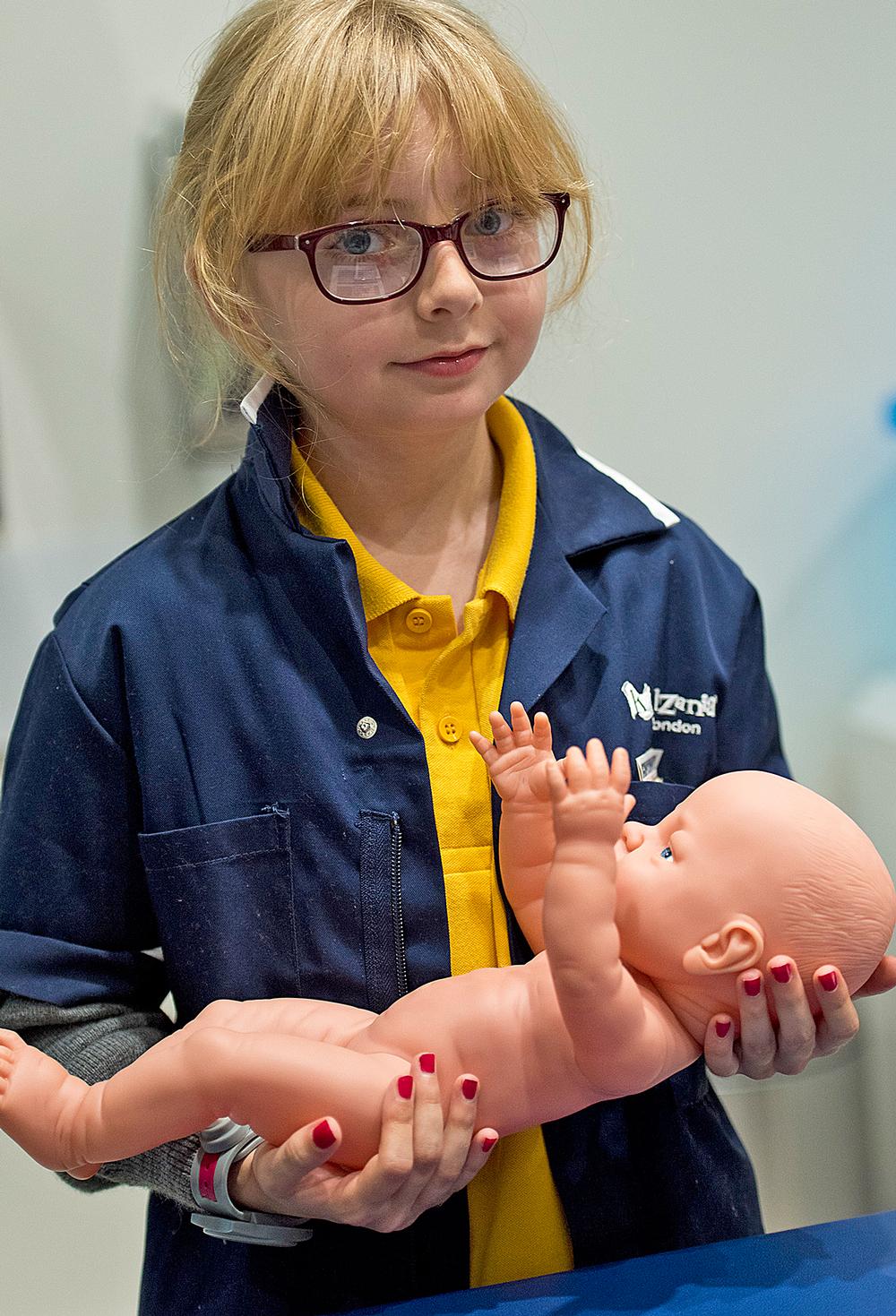
Children roleplay real-world jobs – such as firemen
KidZania is an edutainment concept that has exploded in popularity in recent times, with a surge of new openings worldwide under a franchise model, most recently its “flagship” location in London.
Targeted at children aged four to 14, KidZania offers the ultimate roleplay experience within a pint-sized city where children recreate real-world jobs, such as pilots, TV anchors, firefighters, chefs, doctors, police officers, journalists and more.
Using real-world brands from local, national and international companies, the attraction is crafted to teach kids essential life skills, including financial literacy, teamwork and independence.
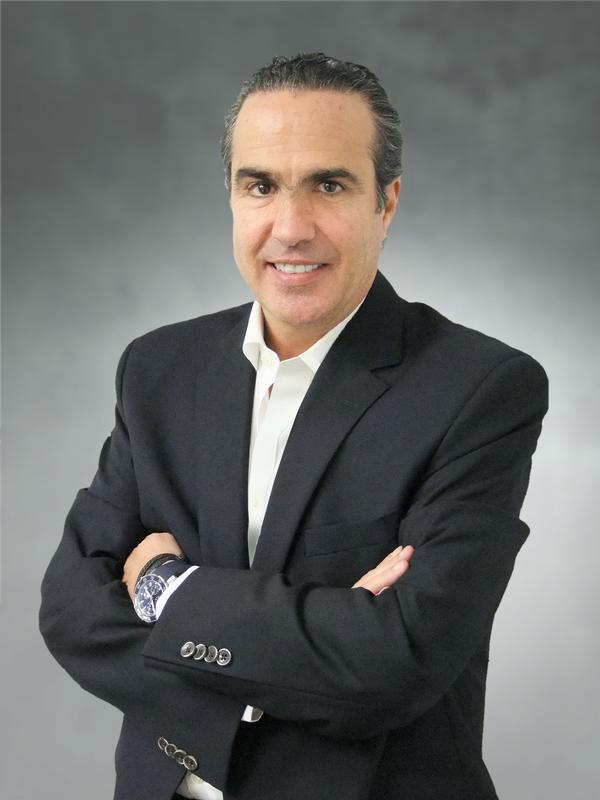
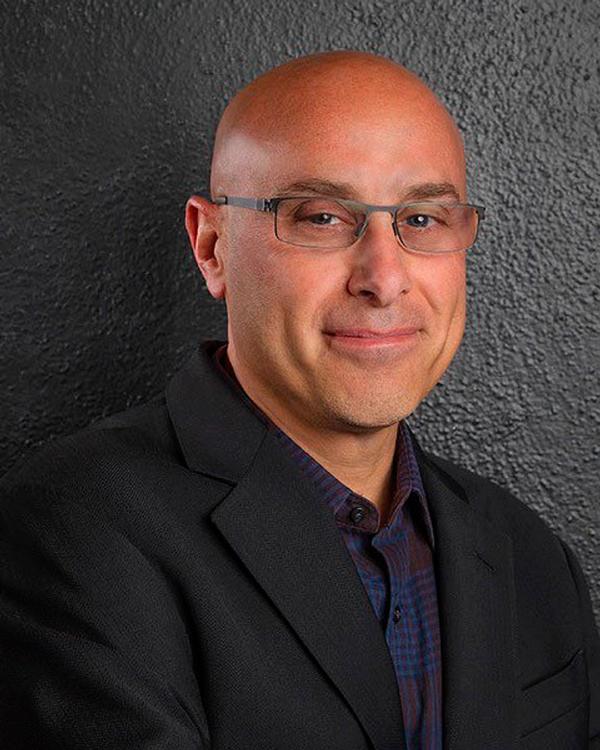
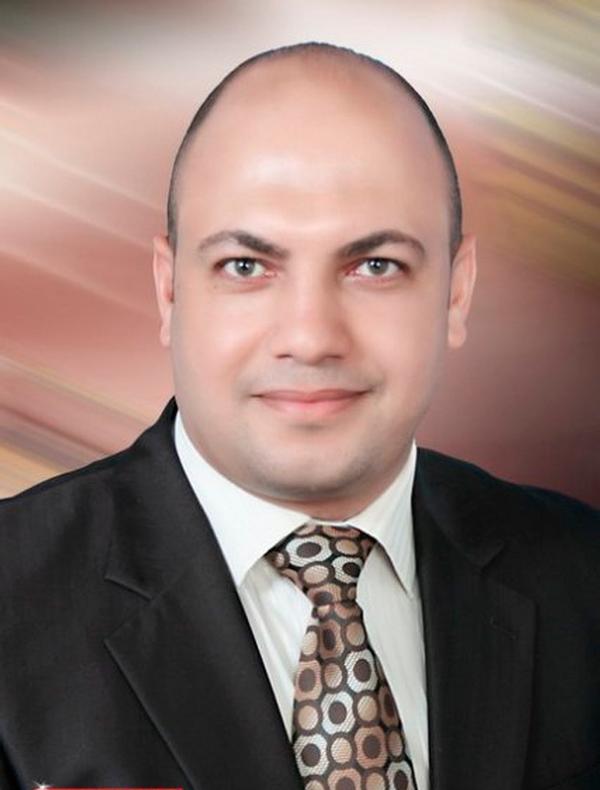
Xavier López AnconaFounder and presidentKidZania
Xavier López Ancona
How did you come up with the KidZania concept? KidZania came about from looking at the way children play and realising that they role-play. They imitate the lives of adults. There are 8 million children in Mexico – where I’m from – and I saw this need for safe, fun, educational entertainment. No one was doing a good job of delivering this. Creating role-play activities for children seemed obvious, and then we had the idea of building cities to take that role-play element to the next level.
How do you operate within the KidZania team? We have a big team and I get fairly involved. We have two operations managing the two sides of the business. Our non-franchised theme parks have a staff of about 2,000 and we have separate offices and a separate team of 120 people to support the franchises and our partners worldwide. They handle design, business intelligence, supervision, training – that kind of thing.
Personally, I touch on all the areas. My personal favourite is content. My passion is for designing the facilities, the architecture, the details. My focus is directed more on operations and the experience than the administrative side of things.
Why did you choose the franchise model for KidZania? When we opened the first KidZania in the Santa Fe Mall, Mexico City, in 1999, it was a much bigger success than we’d expected. We doubled our initial attendance projections; we tripled the amount of interested partners; we doubled the price of entry in less than a year because it was so successful. We wanted to bring KidZania to more children as rapidly as possible. A franchise model was the best way to make this happen, allowing us to look for local partners in new markets.
How to do you select franchisees? First, there has to be chemistry. Second, it has to be a business that does good in the community. We’re committed to making money, but we’re also committed to being educational. Our partners have to share these values. They have to have the right resources, management and team. We like people from the hospitality industry who have great customer experience records. With Joel Cadbury, CEO at our newest franchise, KidZania London, it was check, check, check. He’s a great partner for us.
"We doubled our initial attendance projections; we tripled the amount of interested partners; we doubled the price of entry in less than a year"
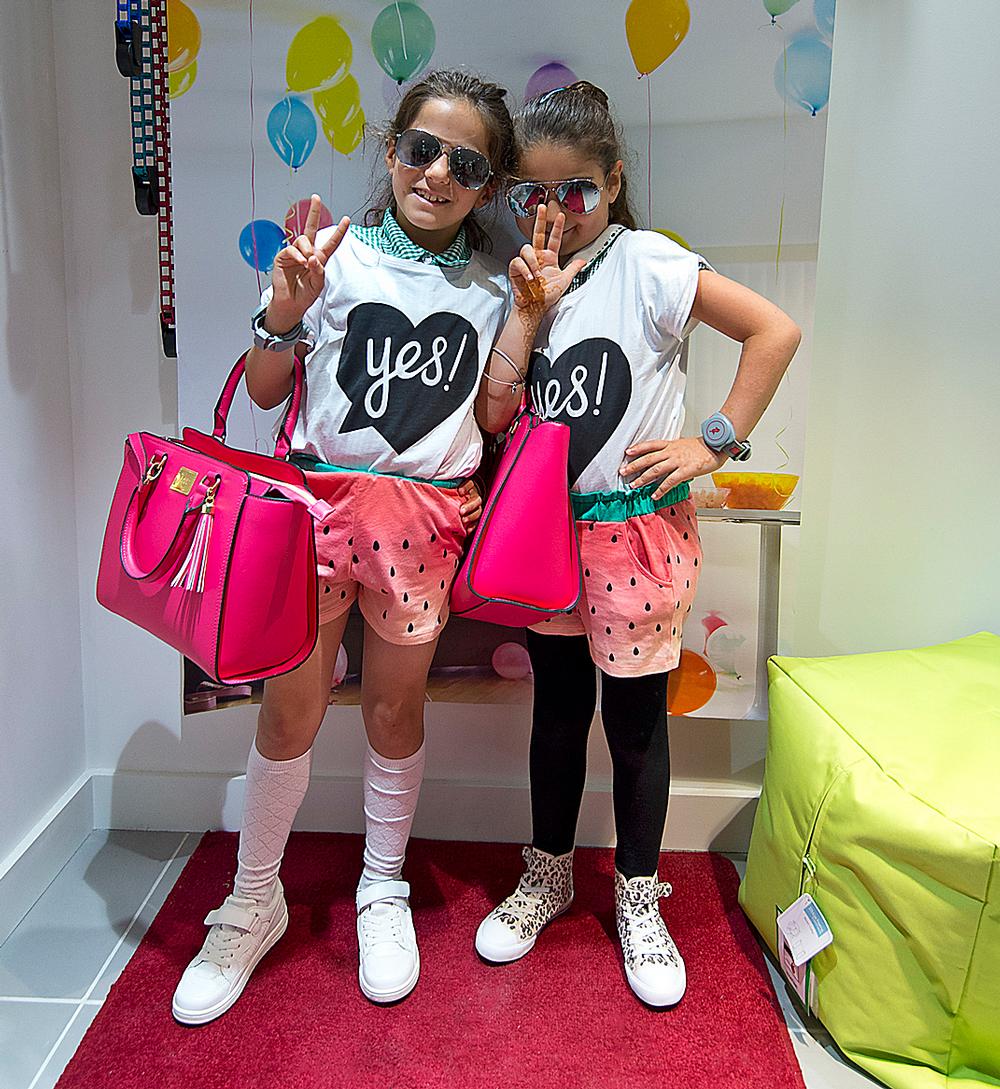
Children roleplay real-world jobs – such as dentists and firemen – to earn kidZos, KidZania’s cuurency
Andrew DarrowEVP of global businessKidZania
Andrew Darrow
What do you do at KidZania? I oversee all the extensions of our business around the world, handling the franchise side of things.
How do you decide where you want to put your next KidZania and how do you handle growth? We’ve been somewhat strategic about the way we’ve grown the business. I was brought in to develop the growth plan for the company, drafting the plan and then going out and selling it. We’ve grown on a regionalised basis, where we’ve establish a flagship in a certain region of the world and used that as a centrepiece to grow additional facilities in those areas.
Tokyo was a great location for our Asia-Pacific growth. That facility has sold out for eight years and continues to be sold out today. Dubai has been a flagship for us in the Middle East, and Sao Paulo in Brazil. London will certainly be the flagship for western Europe and maybe even for the world. This may be the most important facility we’ve opened so far.
What are the criteria when it comes to opening a KidZania? We look for markets that have 4 to 5 million people within a one-hour travel catchment and 600,000 to 700,000 children in the 0-14 age group. We also look for markets which have high per capita GDP and discretionary spending. The essence of our business isn’t tourism; we drive our business from the local resident population and we want to drive repeat business from that population two to five times a year.
What is your relationship with partners and brands? Each partner participates in a different way and they each perform some important roles. They make KidZania a much more realistic environment. We always want to create an authentic replica of a city environment.
When you walk down a city street, you don’t see signs for ‘bank’ and ‘airline’, you see signs for ‘HSBC’ and ‘British Airways’. Partners and brands also help bring realistic activities to our environment. We don’t necessarily know how to run a repair shop, a diner, a factory or a bank, and so they bring their expertise to help us to create very realistic play activities for kids. Each partner participates in a different way in our business depending on the nature of theirs.
The brands are looking for a way to communicate with families. We’re extremely sensitive and never let KidZania turn into an opportunity to market to children. What we want to do is create an environment that simply reflects the real world. Brands have the ability to talk as much to parents as to children about the integrity of their products.
Are there size and cost requirements for a new KidZania? Our traditional facilities – including the newly opened KidZania London – are about 75,000sq ft (6,968sqm). The cost to build is generally similar, per square foot, to the cost of building a five-star hotel, but it will vary from market to market. That should give you a sense of what it would cost to establish a KidZania business.
"London will certainly be the flagship for western Europe, and maybe even for the world"
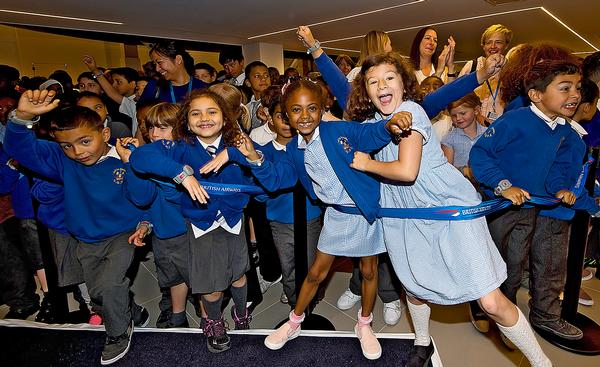
Children attend the opening of KidZania London in July. One million visitors are forecast annually
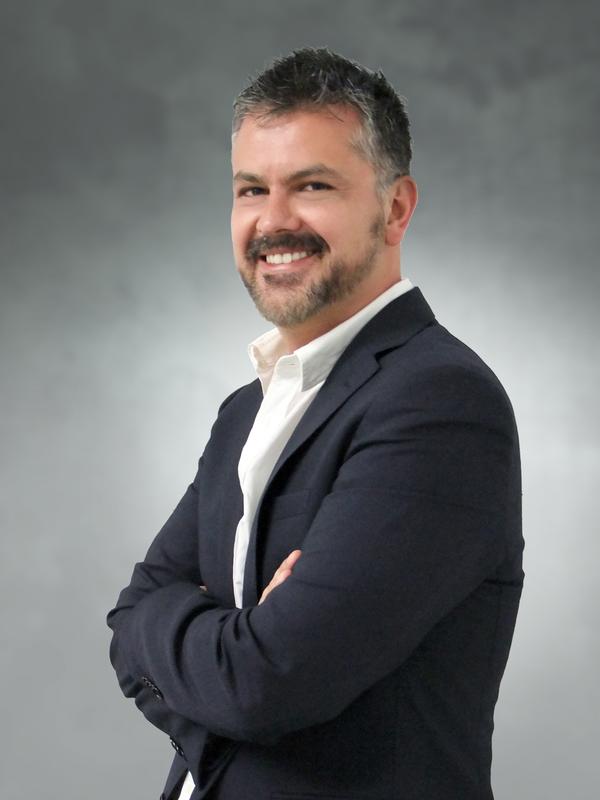
Joel Cadbury CEO KidZania London
“This brand is in 17 countries, five continents and has had 42 million visitors around the world. I think it’s more relevant to the UK than almost any other place in the world because of the educational content. It’s opening kids’ eyes to the real world.
We’re hoping that London can accommodate two KidZanias and our goal is to have one in the west and one in the east. Ultimately there are plans to expand outside London. It would be great to have a KidZania perhaps between Birmingham and Manchester, but that’s a long way away. For now, we are concentrating on the first one.”
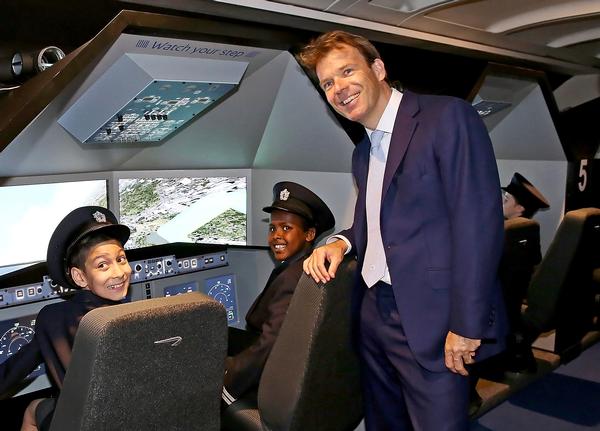
Entrepreneur Joel Cadbury is behind the investment for KidZania London and owns the franchise rights for the UK
Maged Al NaggarGovernorKidZania Jeddah
Maged Al Naggar
What’s your experience and current role? I’ve worked in the industry for 17 years, owning and operating amusement parks, FECs and edutainment centres in Saudi Arabia and the UAE. I joined this company in December 2014 and we’ve been operating KidZania Jeddah for six months.
How have initial visitor numbers been? So far we’ve had 150,000 visitors, averaging 30,000 visitors a month.
What is the educational value of KidZania? KidZania is a great concept, which works especially well in Saudi Arabia, which is a very special market. KidZania educates children and equips them with some of the necessary tools to help them make plans for their future. It’s an interactive experience and it’s something different.
At KidZania in Saudi Arabia, the educational benefits are also felt by the staff. Our KidZania is 100 per cent run by women, 90 per cent of whom are Saudi. It’s a unique platform for Saudi women to join the workforce. In this country, women typically stay at home and don’t have jobs available to them. At KidZania we’re giving women the opportunity to work. The value of KidZania Jeddah may be more than in other markets because the opportunities for women are slim. It’s also the only place in Saudi Arabia where women are legally allowed to drive.
What’s the typical visitor experience? Saudi families used to drop off their kids and go off somewhere, but at KidZania they really like to stay. A typical experience lasts between six and seven hours.
Does KidZania reflect Jeddah? Yes. We changed the city to match local traditions and we changed the uniforms to match what you’re used to in Jeddah. We co-operated with the government to match local regulations and customs.
Who is your target audience? We target both local and international visitors and provide everything in both Arabic and English.
Carlos CárdenasExperience directorKidZania
Carlos Cárdenas
What’s your role at KidZania? KidZania is like a nation and we’re the central government, which is divided into different ministries. I’m the Minister of Culture, so I’m the experience director in charge of all the creative areas of KidZania. The five areas are architecture, theming, content, graphic design and multimedia.
What’s your background? I started with the company 16 years ago. I have moved up the ladder, from graphic designer to theming and now to creative director of these arts.
Does the design change for each country? Every time we start a new KidZania we need to address cultural stylings and learn different ways of working. We try to localise the content so we want to reference local elements and reflect those in the project. On the other hand, KidZania has its own personality so we need to keep that intact. When we reference the local culture, like a building or cityscape, we stay under the KidZania banner.
Do you work with local architects or designers? We receive feedback from our local partners about the cultural elements they feel it’s important to include. We work in parallel with local builders and the local design team. In terms of the architect, we have worked with different theming companies, but it changes according to the location.
What challenges do you face working with brands? Some brands know what they want to reflect to visitors. With a brand like British Airways, for example, it’s easy because it’s a worldwide brand that’s very well known. Domestic brands can be much less known, so we need to do a lot of research.
Where is everything made and who makes it? KidZania is 60 per cent smaller than the real world. Everything from the buildings to the vehicles is scaled down. It’s sometimes difficult to find the right elements so some pieces are customised – and you’d be surprised what you can find on the open market for small props. Our “key materials” come from Mexico. It’s a requirement that the franchises take the key materials from us as this ensures we’re able to maintain our concept across all KidZanias and maintain the brand’s high standards globally.
KidZania a history
• The first location opening at the Santa Fe Shopping Mall in Mexico City in September 1999
• Originally named La Ciudad de los Niños (The City of the Children)
• Corporate sponsors contributed 55 per cent of the initial investment into KidZania
• The second KidZania didn’t open until 2006, in Monterrey, Mexico
• Since 2007, 17 new locations have opened worldwide, 16 under a franchise model
• KidZania has welcomed more than 42 million guests since opening
Elevate is set to celebrate its 10th anniversary in style this June, with organisers
confirming the event’s largest-ever drinks reception as registrations continue to run more
than 10% ahead of last year. [more...]
As healthcare continues to shift towards prevention, there’s a growing focus on helping
people stay active, independent and feeling good for longer. [more...]
Children roleplay real-world jobs – such as firemen
KidZania is an edutainment concept that has exploded in popularity in recent times, with a surge of new openings worldwide under a franchise model, most recently its “flagship” location in London.
Targeted at children aged four to 14, KidZania offers the ultimate roleplay experience within a pint-sized city where children recreate real-world jobs, such as pilots, TV anchors, firefighters, chefs, doctors, police officers, journalists and more.
Using real-world brands from local, national and international companies, the attraction is crafted to teach kids essential life skills, including financial literacy, teamwork and independence.
Xavier López AnconaFounder and presidentKidZania
Xavier López Ancona
How did you come up with the KidZania concept? KidZania came about from looking at the way children play and realising that they role-play. They imitate the lives of adults. There are 8 million children in Mexico – where I’m from – and I saw this need for safe, fun, educational entertainment. No one was doing a good job of delivering this. Creating role-play activities for children seemed obvious, and then we had the idea of building cities to take that role-play element to the next level.
How do you operate within the KidZania team? We have a big team and I get fairly involved. We have two operations managing the two sides of the business. Our non-franchised theme parks have a staff of about 2,000 and we have separate offices and a separate team of 120 people to support the franchises and our partners worldwide. They handle design, business intelligence, supervision, training – that kind of thing.
Personally, I touch on all the areas. My personal favourite is content. My passion is for designing the facilities, the architecture, the details. My focus is directed more on operations and the experience than the administrative side of things.
Why did you choose the franchise model for KidZania? When we opened the first KidZania in the Santa Fe Mall, Mexico City, in 1999, it was a much bigger success than we’d expected. We doubled our initial attendance projections; we tripled the amount of interested partners; we doubled the price of entry in less than a year because it was so successful. We wanted to bring KidZania to more children as rapidly as possible. A franchise model was the best way to make this happen, allowing us to look for local partners in new markets.
How to do you select franchisees? First, there has to be chemistry. Second, it has to be a business that does good in the community. We’re committed to making money, but we’re also committed to being educational. Our partners have to share these values. They have to have the right resources, management and team. We like people from the hospitality industry who have great customer experience records. With Joel Cadbury, CEO at our newest franchise, KidZania London, it was check, check, check. He’s a great partner for us.
"We doubled our initial attendance projections; we tripled the amount of interested partners; we doubled the price of entry in less than a year"
Children roleplay real-world jobs – such as dentists and firemen – to earn kidZos, KidZania’s cuurency
Andrew DarrowEVP of global businessKidZania
Andrew Darrow
What do you do at KidZania? I oversee all the extensions of our business around the world, handling the franchise side of things.
How do you decide where you want to put your next KidZania and how do you handle growth? We’ve been somewhat strategic about the way we’ve grown the business. I was brought in to develop the growth plan for the company, drafting the plan and then going out and selling it. We’ve grown on a regionalised basis, where we’ve establish a flagship in a certain region of the world and used that as a centrepiece to grow additional facilities in those areas.
Tokyo was a great location for our Asia-Pacific growth. That facility has sold out for eight years and continues to be sold out today. Dubai has been a flagship for us in the Middle East, and Sao Paulo in Brazil. London will certainly be the flagship for western Europe and maybe even for the world. This may be the most important facility we’ve opened so far.
What are the criteria when it comes to opening a KidZania? We look for markets that have 4 to 5 million people within a one-hour travel catchment and 600,000 to 700,000 children in the 0-14 age group. We also look for markets which have high per capita GDP and discretionary spending. The essence of our business isn’t tourism; we drive our business from the local resident population and we want to drive repeat business from that population two to five times a year.
What is your relationship with partners and brands? Each partner participates in a different way and they each perform some important roles. They make KidZania a much more realistic environment. We always want to create an authentic replica of a city environment.
When you walk down a city street, you don’t see signs for ‘bank’ and ‘airline’, you see signs for ‘HSBC’ and ‘British Airways’. Partners and brands also help bring realistic activities to our environment. We don’t necessarily know how to run a repair shop, a diner, a factory or a bank, and so they bring their expertise to help us to create very realistic play activities for kids. Each partner participates in a different way in our business depending on the nature of theirs.
The brands are looking for a way to communicate with families. We’re extremely sensitive and never let KidZania turn into an opportunity to market to children. What we want to do is create an environment that simply reflects the real world. Brands have the ability to talk as much to parents as to children about the integrity of their products.
Are there size and cost requirements for a new KidZania? Our traditional facilities – including the newly opened KidZania London – are about 75,000sq ft (6,968sqm). The cost to build is generally similar, per square foot, to the cost of building a five-star hotel, but it will vary from market to market. That should give you a sense of what it would cost to establish a KidZania business.
"London will certainly be the flagship for western Europe, and maybe even for the world"
Children attend the opening of KidZania London in July. One million visitors are forecast annually
Joel Cadbury CEO KidZania London
“This brand is in 17 countries, five continents and has had 42 million visitors around the world. I think it’s more relevant to the UK than almost any other place in the world because of the educational content. It’s opening kids’ eyes to the real world.
We’re hoping that London can accommodate two KidZanias and our goal is to have one in the west and one in the east. Ultimately there are plans to expand outside London. It would be great to have a KidZania perhaps between Birmingham and Manchester, but that’s a long way away. For now, we are concentrating on the first one.”
Entrepreneur Joel Cadbury is behind the investment for KidZania London and owns the franchise rights for the UK
Maged Al NaggarGovernorKidZania Jeddah
Maged Al Naggar
What’s your experience and current role? I’ve worked in the industry for 17 years, owning and operating amusement parks, FECs and edutainment centres in Saudi Arabia and the UAE. I joined this company in December 2014 and we’ve been operating KidZania Jeddah for six months.
How have initial visitor numbers been? So far we’ve had 150,000 visitors, averaging 30,000 visitors a month.
What is the educational value of KidZania? KidZania is a great concept, which works especially well in Saudi Arabia, which is a very special market. KidZania educates children and equips them with some of the necessary tools to help them make plans for their future. It’s an interactive experience and it’s something different.
At KidZania in Saudi Arabia, the educational benefits are also felt by the staff. Our KidZania is 100 per cent run by women, 90 per cent of whom are Saudi. It’s a unique platform for Saudi women to join the workforce. In this country, women typically stay at home and don’t have jobs available to them. At KidZania we’re giving women the opportunity to work. The value of KidZania Jeddah may be more than in other markets because the opportunities for women are slim. It’s also the only place in Saudi Arabia where women are legally allowed to drive.
What’s the typical visitor experience? Saudi families used to drop off their kids and go off somewhere, but at KidZania they really like to stay. A typical experience lasts between six and seven hours.
Does KidZania reflect Jeddah? Yes. We changed the city to match local traditions and we changed the uniforms to match what you’re used to in Jeddah. We co-operated with the government to match local regulations and customs.
Who is your target audience? We target both local and international visitors and provide everything in both Arabic and English.
Carlos CárdenasExperience directorKidZania
Carlos Cárdenas
What’s your role at KidZania? KidZania is like a nation and we’re the central government, which is divided into different ministries. I’m the Minister of Culture, so I’m the experience director in charge of all the creative areas of KidZania. The five areas are architecture, theming, content, graphic design and multimedia.
What’s your background? I started with the company 16 years ago. I have moved up the ladder, from graphic designer to theming and now to creative director of these arts.
Does the design change for each country? Every time we start a new KidZania we need to address cultural stylings and learn different ways of working. We try to localise the content so we want to reference local elements and reflect those in the project. On the other hand, KidZania has its own personality so we need to keep that intact. When we reference the local culture, like a building or cityscape, we stay under the KidZania banner.
Do you work with local architects or designers? We receive feedback from our local partners about the cultural elements they feel it’s important to include. We work in parallel with local builders and the local design team. In terms of the architect, we have worked with different theming companies, but it changes according to the location.
What challenges do you face working with brands? Some brands know what they want to reflect to visitors. With a brand like British Airways, for example, it’s easy because it’s a worldwide brand that’s very well known. Domestic brands can be much less known, so we need to do a lot of research.
Where is everything made and who makes it? KidZania is 60 per cent smaller than the real world. Everything from the buildings to the vehicles is scaled down. It’s sometimes difficult to find the right elements so some pieces are customised – and you’d be surprised what you can find on the open market for small props. Our “key materials” come from Mexico. It’s a requirement that the franchises take the key materials from us as this ensures we’re able to maintain our concept across all KidZanias and maintain the brand’s high standards globally.
KidZania a history
• The first location opening at the Santa Fe Shopping Mall in Mexico City in September 1999
• Originally named La Ciudad de los Niños (The City of the Children)
• Corporate sponsors contributed 55 per cent of the initial investment into KidZania
• The second KidZania didn’t open until 2006, in Monterrey, Mexico
• Since 2007, 17 new locations have opened worldwide, 16 under a franchise model
• KidZania has welcomed more than 42 million guests since opening
Global luxury hospitality brand, Six Senses, has partnered with longevity healthcare provider,
HUM2N, to launch a clinic at Six Senses London, at The Whiteley.
Premium London health club, KX Chelsea, will imminently unveil its most significant
redevelopment since its launch in 2002 to create an integrated wellness model combining
training, recovery and relaxation.
Researchers in the US have identified an antibody which could greatly reduce the loss of lean
muscle mass in people who are taking weight-loss medications.
Crunch Fitness has announced the launch of Crunch Reform Pilates – its own reformer concept
designed to bring this fast growing, but rather expensive, modality into the mainstream.
The 20th State of the Industry Report reveals a resilient, expanding and competitive
sector, the
importance of differentiation and the ongoing challenge of tackling inequalities.
Elevate is set to celebrate its 10th anniversary in style this June, with organisers
confirming the event’s largest-ever drinks reception as registrations continue to run more
than 10% ahead of last year. [more...]
As healthcare continues to shift towards prevention, there’s a growing focus on helping
people stay active, independent and feeling good for longer. [more...]