The challenge with older people is getting them to the gym in the first place. You don’t want moving around the facility once they’re there to be a challenge too
Sharon Cook, senior lecturer, Loughborough Design School
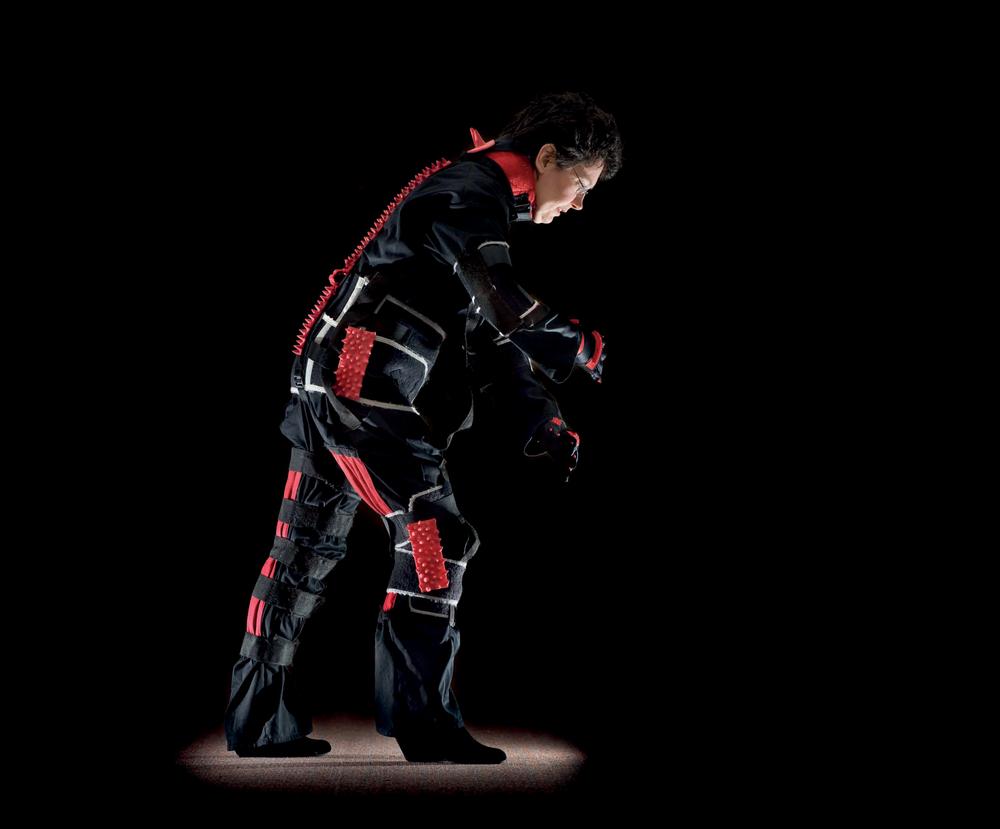
The Osteoarthritis Suit enables wearers to ‘walk in the shoes’ of an older person and experience the physical challenges they face
You’ve designed suits to simulate the physical limitations of old age and osteoarthritis. Tell us more Ergonomics is concerned with improving the safety, comfort, ease and reliability of people’s interactions. We can think of this in terms of four Ps: improving how People interact with Products/services in given Places (environments) following Procedures (formal/informal ways of use).
Loughborough is the only UK university to offer ergonomics at both undergraduate and postgraduate levels, and in 1994 the Ford Motor Company approached us. It had recognised that an ageing population was going to lead to a higher number of older drivers; it wanted its young designers to be more aware of the physical challenges faced by these drivers, in a bid to change the way they designed. We developed The Third Age Suit – a three-dimensional, full-body wearable simulation that allowed the young designers to experience some of the impacts of ageing for themselves.
In 2006, NAPP Pharmaceuticals then commissioned the whole-body simulation of osteoarthritis to raise awareness and improve understanding of this prevalent and often debilitating condition. In 2011, Stannah Stairlifts purchased The Osteoarthritis Suit for use by its design/engineering teams worldwide, to improve its product designs in the same way Ford had. The suit was also used in NHS staff training to give an insight into what it can be like to be an older patient.
How do the suits work? For a given health condition, research is undertaken to find out more about it. This can be drawn from literature, medical/health professionals and those who have the condition. Based on this data, the requirements of the simulation can then be developed and integrated into the suit. For The Third Age Suit, this included reducing mobility, tactile sensitivity and some aspects of vision.
In terms of possible uses for the suits, workplace design is an obvious area, as are public transport, leisure facilities, shops and shopping centres, restaurants… Really anywhere an element of ‘walking in my shoes’ will help convey a message.
How might health clubs use this simulation technology? Wearable simulations could help health clubs and leisure centres understand how accessible their facilities are for older users. How easy is it for them to walk into the facility, move around it, get onto equipment? Are the floor surfaces suitable for those who might be at greater risk of a fall?
The challenge with older people is getting them to the gym in the first place, as many view it as ‘not for them’. You don’t want moving around the facility once they’re there to be a challenge too, otherwise it will put them off returning.
The suit can’t give a full picture of an older user’s experience in a gym. It can’t simulate muscle strength – you can’t get on a piece of equipment and see what it feels like for an older user – and it obviously can’t offer any insight into the psychological factors that might act as a barrier to older people wanting to join a health club.
However, accessibility is a big issue for health clubs – the IFI is already doing a lot of work in the fitness sector to make gym equipment accessible to all users, including disabled people. Older people can have similar physical limitations, and wearable simulations can help you better appreciate those limitations.
Active Blackpool is deploying Cornerstone Connect, a new digital interface allowing
disparate information from multiple systems to be aggregated into one dataset, to support
its focus on reducing health inequalities and improving healthy life expectancy. [more...]
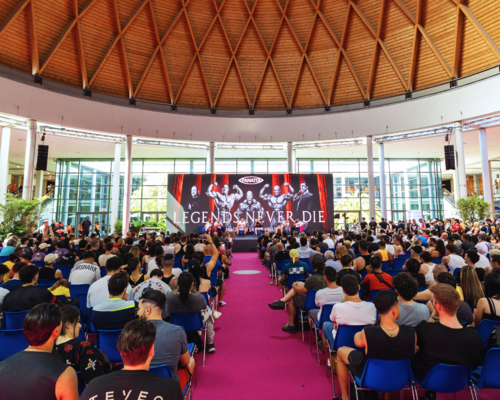
Panatta brought together four of the most influential figures in bodybuilding history on the
stage of RiminiWellness 2026: Phil Heath, Lee Haney, Ronnie Coleman and Hany Rambod. [more...]
+ More featured suppliers
COMPANY PROFILES
ukactive
ukactive is the UK’s leading trade body for the physical activity sector, bringing together more tha [more...]
Orbit4
With Orbit4, you’ll always have full visibility
of your equipment inventory, the true
market value [more...]
The challenge with older people is getting them to the gym in the first place. You don’t want moving around the facility once they’re there to be a challenge too
Sharon Cook, senior lecturer, Loughborough Design School
The Osteoarthritis Suit enables wearers to ‘walk in the shoes’ of an older person and experience the physical challenges they face
You’ve designed suits to simulate the physical limitations of old age and osteoarthritis. Tell us more Ergonomics is concerned with improving the safety, comfort, ease and reliability of people’s interactions. We can think of this in terms of four Ps: improving how People interact with Products/services in given Places (environments) following Procedures (formal/informal ways of use).
Loughborough is the only UK university to offer ergonomics at both undergraduate and postgraduate levels, and in 1994 the Ford Motor Company approached us. It had recognised that an ageing population was going to lead to a higher number of older drivers; it wanted its young designers to be more aware of the physical challenges faced by these drivers, in a bid to change the way they designed. We developed The Third Age Suit – a three-dimensional, full-body wearable simulation that allowed the young designers to experience some of the impacts of ageing for themselves.
In 2006, NAPP Pharmaceuticals then commissioned the whole-body simulation of osteoarthritis to raise awareness and improve understanding of this prevalent and often debilitating condition. In 2011, Stannah Stairlifts purchased The Osteoarthritis Suit for use by its design/engineering teams worldwide, to improve its product designs in the same way Ford had. The suit was also used in NHS staff training to give an insight into what it can be like to be an older patient.
How do the suits work? For a given health condition, research is undertaken to find out more about it. This can be drawn from literature, medical/health professionals and those who have the condition. Based on this data, the requirements of the simulation can then be developed and integrated into the suit. For The Third Age Suit, this included reducing mobility, tactile sensitivity and some aspects of vision.
In terms of possible uses for the suits, workplace design is an obvious area, as are public transport, leisure facilities, shops and shopping centres, restaurants… Really anywhere an element of ‘walking in my shoes’ will help convey a message.
How might health clubs use this simulation technology? Wearable simulations could help health clubs and leisure centres understand how accessible their facilities are for older users. How easy is it for them to walk into the facility, move around it, get onto equipment? Are the floor surfaces suitable for those who might be at greater risk of a fall?
The challenge with older people is getting them to the gym in the first place, as many view it as ‘not for them’. You don’t want moving around the facility once they’re there to be a challenge too, otherwise it will put them off returning.
The suit can’t give a full picture of an older user’s experience in a gym. It can’t simulate muscle strength – you can’t get on a piece of equipment and see what it feels like for an older user – and it obviously can’t offer any insight into the psychological factors that might act as a barrier to older people wanting to join a health club.
However, accessibility is a big issue for health clubs – the IFI is already doing a lot of work in the fitness sector to make gym equipment accessible to all users, including disabled people. Older people can have similar physical limitations, and wearable simulations can help you better appreciate those limitations.
The UK's four Chief Medical Officers have published a refreshed edition of Physical activity
guidelines: UK Chief Medical Officers' report, updating the evidence that underpins the nation's
physical activity recommendations and placing greater emphasis on strength, balance, reducing
sedentary behaviour and, for the first time, supporting people taking weight loss medications.
Places Leisure has exchanged contracts to build and operate a flagship £60m water and leisure
destination on behalf of Basingstoke and Deane Borough Council.
The Republic of Ireland will become the latest market in PureGym’s expanding international
portfolio, with the first launch planned for Dublin in 2027.
Anytime Fitness opened more than one club a day in 2025 and is on track to maintain this rate
of growth this year, as parent company Purpose Brands targets further international expansion.
The £33.9 million Leighton Leisure and Community Centre has opened in Leighton Buzzard, UK,
creating a next-generation public leisure, health and wellbeing hub for the local community.
Walnuts Leisure Centre in Orpington, in the London Borough of Bromley, has reopened following
a £17m transformation designed to secure the long-term future of the public leisure asset and
reposition it as a community wellbeing hub.
The Gym Group, has announced that it's sustained positive trading momentum has continued
through the first half of 2026 and the company remains confident about the outlook.
Luxury boutique Pilates and wellness studio, X-Club, officially launches a
4,000sq ft flagship at
Marylebone on 16 July Built around X-Club’s four pillars of wellness – mind,
movement,
nutrition and therapy – the facility features two group exercise studi
Active Blackpool is deploying Cornerstone Connect, a new digital interface allowing
disparate information from multiple systems to be aggregated into one dataset, to support
its focus on reducing health inequalities and improving healthy life expectancy. [more...]
Panatta brought together four of the most influential figures in bodybuilding history on the
stage of RiminiWellness 2026: Phil Heath, Lee Haney, Ronnie Coleman and Hany Rambod. [more...]
+ More featured suppliers
COMPANY PROFILES
ukactive ukactive is the UK’s leading trade body for the physical activity sector, bringing together more tha [more...]