Sitting is now the new smoking, but not enough people realise the true dangers of being sedentary. As Public Health England issues a rallying cry to get moving, what can our industry do to help?
By Kath Hudson | Published in Health Club Management 2015 issue 4
Does a new culture of ‘active every day’ have
to start in schools to build good habits early? / photo: www.shutterstock.com/camermannz
E verybody Active, Every Day is what Public Health England is calling for in its recently published national framework, which aims to make physical activity the social norm. But for this to happen, there needs to be change in many areas: opportunities for exercise in the street and the workplace, more GP referrals, inspiring and inclusive school sport, public health messaging and national interventions. And the health club industry could also be part of the solution, if it’s willing to step up.
John Morgan, a GP who prescribes exercise above medication, argues that education is one of the main issues: “Much of the media messages lean towards diet for weight management. We need to change people’s mindset, so they realise weight isn’t just about what they eat but being physically active as well.”
One important change clubs could make would be to push the importance of being active over weight loss. Explain to disillusioned members that, even if the pounds are proving hard to shift, their lifestyle change will be benefiting their physical and mental health in many ways.
This is the approach ukactive is already adopting, trying to steer the focus away from obesity and towards physical activity. “Obesity has always been physical activity’s larger, more visible, headline-stealing companion. Yet Cambridge University research shows that physical inactivity is responsible for twice as many deaths as obesity,” says ukactive CEO David Stalker, who argues that current exercise guidelines are confusing and offputting, and that targeted and supportive public health messaging is needed to get people off the couch.
So what’s the best approach, and where does the health and fitness industry fit into all of this? Does a new ‘active every day’ culture have to start with schools, building the habit early, or perhaps with GPs recommending activity to patients? Do health clubs need to restructure their offering to appeal to non-gym goers, and do cities need to be designed to facilitate daily activity? We ask the experts for their thoughts...
Any ideas on how to push the PHE message? Email us: [email protected]
John MorganGP Bucket and Sponge
John Morgan
“There has been too much emphasis on public health messaging as a way of communicating the need to get active. This approach has failed over time. GPs are in the best position to communicate this message, because they’re seeing patients every day and have a 90 per cent satisfaction rate for the advice they give. According to research, 64 per cent of people would do exercise if it were recommended by their GP.
The problem is, it’s not only patients who need educating about the benefits of physical activity – doctors do too. The curriculum at medical schools needs to be changed to take into account new evidence about the health benefits of exercise. Referring people for exercise should be part of the QOF framework in which all GPs must participate – but the pressures of the job mean many GPs don’t think outside of the box. Whereas they’re constantly receiving visits from pharmaceutical companies talking about how their products work and providing a solution, there isn’t an advocate for physical activity. If the health club industry could approach surgeries, presenting research and offering a pathway and solution for patients, and then follow it up with outcomes such as blood pressure and BMI readings for those people who go on to exercise, GPs may start to listen.”
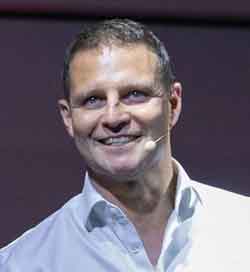
Dean HorridgeCEO and founder Fit For Sport
Dean Horridge
“It’s vital to form habits early: by the time they leave primary school, two-thirds of children have disengaged from playing sports because they’ve had a negative experience. Out of a class of 30, 10 will be naturally good and always have the ball. Those 10 will get the main focus, as they will be picked for school teams and go on to be active adults. To reverse this, the focus needs to be taken off sport and placed on being an active school. Schools should focus more on teaching all children how to run, skip, jump, catch and throw – then more will be able to take up sport itself.
Research shows active children perform better in all respects: academically, in their behaviour and how they eat and sleep. Schools need to provide the opportunity for children to be active for 60 minutes every day. One key focus for Fit For Sport is encouraging schools to meet this requirement by showing them how to deliver fun and engaging activities at break times and at lunch. With some upskilling of playground supervisors, engaging all kids in fun activities is very achievable.
Many leisure providers have the desire to work with schools. To do this, fitness instructors need to be trained in core skills to work with young people, so they can use their knowledge to get children active at their facilities during the quiet times.”
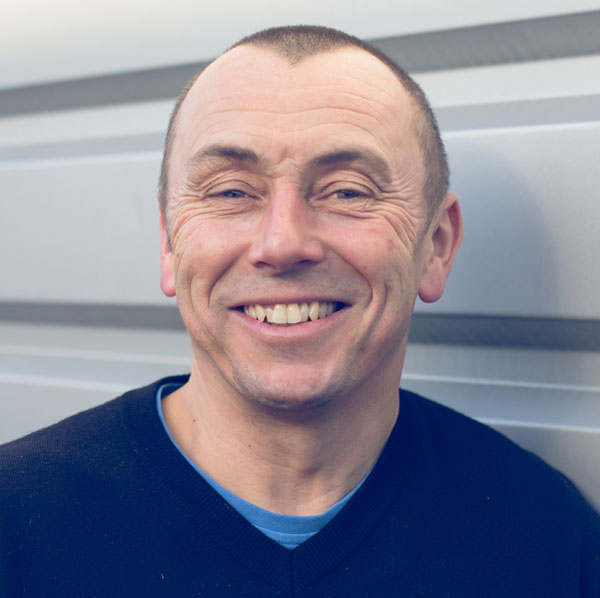
Tom WilliamsManaging directorParkrun UK
Tom Williams
“The health club industry is well placed to educate its members to make the right choices outside of the gym and to make consistent activity a habit. The message it puts across needs to change from weight loss to becoming active.
When I worked as a PT, the people who made the most gains were those who sought information during their sessions, which they then used during the rest of the week – not those who combined beasting themselves three times a week with bad habits.
Health clubs need to offer workouts that are social and fun, because then people will want to keep coming back. They must help members build habits – and habits need to be enjoyable. Clubs have a wonderful opportunity to get outside their four walls with running clubs and walking clubs, for example.
Like health clubs, Parkrun UK – a series of free, weekly 5k and 2k runs across 350 UK locations – is just one small part of the solution, but we’ve been successful in mobilising 55,000 weekly runners. It’s social, friendly and offers a community. Free entry has removed one of the barriers: even a nominal charge would change the culture. As the runs are the same time on the same day every week, it makes it easy to build the habit. Different locations means you can maintain the habit even if travelling.”
John AllisonFounderStreet Gym
John Allison
“Architects and urban planners need to consider how they can promote physical activity at the design stage. Things are starting to head in the right direction in the UK, with the London Design Council picking up on the work of the New York-based Center for Active Design. We’re starting to see the needs of London’s cyclists being factored into development schemes, for example – but now we need the same for those on foot. Every day in cities around the UK, people walk and run to work, so it’s about time we built Urban Trim Trails in safe locations along commuter routes.
Every year in London, we see many artworks positioned around the city, yet few of them are functional. I see this as a missed opportunity. The ‘Endless Stair’ – a temporary structure positioned outside Tate Modern during the London Design festival in 2013 – was an exception. You could walk, run and climb on and around it. My clients and I loved it.
Health club operators could offer innovative urban outdoor training sessions, which would appeal to a wider market. They have the opportunity to demonstrate that being active isn’t just about the latest equipment or gym-based fitness activity, but that the streets people use every day can be the route to getting fit, if people are inspired to use them differently.”
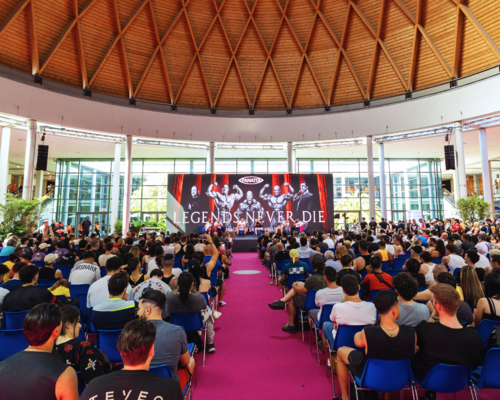
Panatta brought together four of the most influential figures in bodybuilding history on the
stage of RiminiWellness 2026: Phil Heath, Lee Haney, Ronnie Coleman and Hany Rambod. [more...]
Active Blackpool is deploying Cornerstone Connect, a new digital interface allowing
disparate information from multiple systems to be aggregated into one dataset, to support
its focus on reducing health inequalities and improving healthy life expectancy. [more...]
Sitting is now the new smoking, but not enough people realise the true dangers of being sedentary. As Public Health England issues a rallying cry to get moving, what can our industry do to help?
By Kath Hudson | Published in Health Club Management 2015 issue 4
Does a new culture of ‘active every day’ have
to start in schools to build good habits early? / photo: www.shutterstock.com/camermannz
E verybody Active, Every Day is what Public Health England is calling for in its recently published national framework, which aims to make physical activity the social norm. But for this to happen, there needs to be change in many areas: opportunities for exercise in the street and the workplace, more GP referrals, inspiring and inclusive school sport, public health messaging and national interventions. And the health club industry could also be part of the solution, if it’s willing to step up.
John Morgan, a GP who prescribes exercise above medication, argues that education is one of the main issues: “Much of the media messages lean towards diet for weight management. We need to change people’s mindset, so they realise weight isn’t just about what they eat but being physically active as well.”
One important change clubs could make would be to push the importance of being active over weight loss. Explain to disillusioned members that, even if the pounds are proving hard to shift, their lifestyle change will be benefiting their physical and mental health in many ways.
This is the approach ukactive is already adopting, trying to steer the focus away from obesity and towards physical activity. “Obesity has always been physical activity’s larger, more visible, headline-stealing companion. Yet Cambridge University research shows that physical inactivity is responsible for twice as many deaths as obesity,” says ukactive CEO David Stalker, who argues that current exercise guidelines are confusing and offputting, and that targeted and supportive public health messaging is needed to get people off the couch.
So what’s the best approach, and where does the health and fitness industry fit into all of this? Does a new ‘active every day’ culture have to start with schools, building the habit early, or perhaps with GPs recommending activity to patients? Do health clubs need to restructure their offering to appeal to non-gym goers, and do cities need to be designed to facilitate daily activity? We ask the experts for their thoughts...
Any ideas on how to push the PHE message? Email us: [email protected]
John MorganGP Bucket and Sponge
John Morgan
“There has been too much emphasis on public health messaging as a way of communicating the need to get active. This approach has failed over time. GPs are in the best position to communicate this message, because they’re seeing patients every day and have a 90 per cent satisfaction rate for the advice they give. According to research, 64 per cent of people would do exercise if it were recommended by their GP.
The problem is, it’s not only patients who need educating about the benefits of physical activity – doctors do too. The curriculum at medical schools needs to be changed to take into account new evidence about the health benefits of exercise. Referring people for exercise should be part of the QOF framework in which all GPs must participate – but the pressures of the job mean many GPs don’t think outside of the box. Whereas they’re constantly receiving visits from pharmaceutical companies talking about how their products work and providing a solution, there isn’t an advocate for physical activity. If the health club industry could approach surgeries, presenting research and offering a pathway and solution for patients, and then follow it up with outcomes such as blood pressure and BMI readings for those people who go on to exercise, GPs may start to listen.”
Dean HorridgeCEO and founder Fit For Sport
Dean Horridge
“It’s vital to form habits early: by the time they leave primary school, two-thirds of children have disengaged from playing sports because they’ve had a negative experience. Out of a class of 30, 10 will be naturally good and always have the ball. Those 10 will get the main focus, as they will be picked for school teams and go on to be active adults. To reverse this, the focus needs to be taken off sport and placed on being an active school. Schools should focus more on teaching all children how to run, skip, jump, catch and throw – then more will be able to take up sport itself.
Research shows active children perform better in all respects: academically, in their behaviour and how they eat and sleep. Schools need to provide the opportunity for children to be active for 60 minutes every day. One key focus for Fit For Sport is encouraging schools to meet this requirement by showing them how to deliver fun and engaging activities at break times and at lunch. With some upskilling of playground supervisors, engaging all kids in fun activities is very achievable.
Many leisure providers have the desire to work with schools. To do this, fitness instructors need to be trained in core skills to work with young people, so they can use their knowledge to get children active at their facilities during the quiet times.”
Tom WilliamsManaging directorParkrun UK
Tom Williams
“The health club industry is well placed to educate its members to make the right choices outside of the gym and to make consistent activity a habit. The message it puts across needs to change from weight loss to becoming active.
When I worked as a PT, the people who made the most gains were those who sought information during their sessions, which they then used during the rest of the week – not those who combined beasting themselves three times a week with bad habits.
Health clubs need to offer workouts that are social and fun, because then people will want to keep coming back. They must help members build habits – and habits need to be enjoyable. Clubs have a wonderful opportunity to get outside their four walls with running clubs and walking clubs, for example.
Like health clubs, Parkrun UK – a series of free, weekly 5k and 2k runs across 350 UK locations – is just one small part of the solution, but we’ve been successful in mobilising 55,000 weekly runners. It’s social, friendly and offers a community. Free entry has removed one of the barriers: even a nominal charge would change the culture. As the runs are the same time on the same day every week, it makes it easy to build the habit. Different locations means you can maintain the habit even if travelling.”
John AllisonFounderStreet Gym
John Allison
“Architects and urban planners need to consider how they can promote physical activity at the design stage. Things are starting to head in the right direction in the UK, with the London Design Council picking up on the work of the New York-based Center for Active Design. We’re starting to see the needs of London’s cyclists being factored into development schemes, for example – but now we need the same for those on foot. Every day in cities around the UK, people walk and run to work, so it’s about time we built Urban Trim Trails in safe locations along commuter routes.
Every year in London, we see many artworks positioned around the city, yet few of them are functional. I see this as a missed opportunity. The ‘Endless Stair’ – a temporary structure positioned outside Tate Modern during the London Design festival in 2013 – was an exception. You could walk, run and climb on and around it. My clients and I loved it.
Health club operators could offer innovative urban outdoor training sessions, which would appeal to a wider market. They have the opportunity to demonstrate that being active isn’t just about the latest equipment or gym-based fitness activity, but that the streets people use every day can be the route to getting fit, if people are inspired to use them differently.”
The UK's four Chief Medical Officers have published a refreshed edition of Physical activity
guidelines: UK Chief Medical Officers' report, updating the evidence that underpins the nation's
physical activity recommendations and placing greater emphasis on strength, balance, reducing
sedentary behaviour and, for the first time, supporting people taking weight loss medications.
Places Leisure has exchanged contracts to build and operate a flagship £60m water and leisure
destination on behalf of Basingstoke and Deane Borough Council.
The Republic of Ireland will become the latest market in PureGym’s expanding international
portfolio, with the first launch planned for Dublin in 2027.
Anytime Fitness opened more than one club a day in 2025 and is on track to maintain this rate
of growth this year, as parent company Purpose Brands targets further international expansion.
The £33.9 million Leighton Leisure and Community Centre has opened in Leighton Buzzard, UK,
creating a next-generation public leisure, health and wellbeing hub for the local community.
Walnuts Leisure Centre in Orpington, in the London Borough of Bromley, has reopened following
a £17m transformation designed to secure the long-term future of the public leisure asset and
reposition it as a community wellbeing hub.
The Gym Group, has announced that it's sustained positive trading momentum has continued
through the first half of 2026 and the company remains confident about the outlook.
Luxury boutique Pilates and wellness studio, X-Club, officially launches a
4,000sq ft flagship at
Marylebone on 16 July Built around X-Club’s four pillars of wellness – mind,
movement,
nutrition and therapy – the facility features two group exercise studi
Panatta brought together four of the most influential figures in bodybuilding history on the
stage of RiminiWellness 2026: Phil Heath, Lee Haney, Ronnie Coleman and Hany Rambod. [more...]
Active Blackpool is deploying Cornerstone Connect, a new digital interface allowing
disparate information from multiple systems to be aggregated into one dataset, to support
its focus on reducing health inequalities and improving healthy life expectancy. [more...]