Wearable technology is an opportunity, not a threat
Sean MaguireMDLegend Club Management Solution
I was interested to read the interview with futurologist Magnus Lindkvist in HCM February. As he says, wearable technology looks set to radically change the health club and leisure industry.
However, unlike Lindkvist, rather than view it as a disruptive influence that exposes operators to the risk of their customers leaving, I believe it represents a huge opportunity. The combination of social media and wearable tech truly presents a chance for organisations to get ever closer to their members; to create communities of like-minded individuals; and to offer even more personalised services to meet individual aspirations. At its most fundamental, it offers us all the potential to achieve what many of us aspire to: to help make the UK’s population healthier and more active.
There’s a second significant point that Lindkvist makes: the reason why clubs, PTs and fitness communities have a place is indeed because they offer “packaged knowledge”. His argument that apps and wearable tech also offer that “packaged knowledge” is to an extent true – but imagine how much more powerful the combination of the two would be. The ability to harness this combined knowledge and insight and link this to an individual’s personal data creates a hugely compelling proposition that will have a transformative effect on our sector.
Organisations that harness technology and achieve a new level of positive customer engagement will flourish.
photo: www.shutterstock.com/AntonioDiaz
Combining wearables with social media will enable clubs to get closer to members
Does your club have a solid music strategy?
Gemma WallisMusic platforms & resourcesFitPro
How we engage with sound has a profound effect on our nervous system. However, although clubs acknowledge the need to invest in high-quality music, licensing can cause confusion. Operators need an effective strategy, including understanding the difference between PPL and PRS, and recent changes in PPL licence fees.
Changes by PPL to the ‘Exercise to Music’ tariff in 2013 put the onus on clubs to hold a valid PPL licence for all classes using original artist music. Currently set at £1.25 per class, it will increase in May 2015 to £1.45 per class. Club owners and operators must be diligent; we’ve found that clubs often pay PPL licensing for all classes, even if some use music to which these fees do not apply.
A recent YouGov poll showed 87 per cent of exercise class participants prefer original artist music, but clubs should explore the options: you could reduce the amount of original artist music used and pay less in licensing, or eliminate PPL licensing costs, by using non-original artist compilations. Choose a solution that fits your business model and clientele.
photo: www.shutterstock.com/BlueSkyImage
PPL fees can be reduced by using non-original artist music
Broadening the appeal of water-based activity
Peter GunnCEO, BH Live and chairsporta
I wanted to write in response to your recent feature on maximising the value of swimming pools.
We recently looked at our pool programming to see how we could make all water-based activities more attractive across the whole community. We profiled non-swimmers and took a fresh look at the user journey – from antenatal to hydro mobility sessions – and found the main barriers to participation were fear and the perception that swimming is somehow boring.
To reverse these perceptions, we revisited our activity programme to include more specialist health and wellness classes, to give non-swimmers more confidence. We also introduced extra inflatable sessions during school holidays and weekends to boost the element of fun.
More people are now swimming to improve overall fitness, and many customers are having lessons to improve technique. Increasing water confidence in this way encourages participation in other water-based activities and classes too. We’re very pleased to see more people taking part, especially against the backdrop of a falling national trend.
Swimming can help improve overall fitness for all ages
The responsibility of a manager is to optimise use of the facility
Nuno LopesTechnical directorClube Oriental de Lisboa - Portugal
Reading the February issue of HCM, I was surprised to learn that many operators are not fully maximising the value of their pools.
My responsibility as the manager of a sports facility is the optimisation of its use, which includes creating programmes for the various groups in the local population – schools, pensioners, working adults, triathlon enthusiasts – as well as competitive sports events to ensure the pool is constantly in use.
Filling off-peak time is crucial, and we offer rehab and physiotherapy as well as sessions for seniors – developed in conjunction with town councils – and local schools.
It’s also about diversifying the offer: we’ve had success with personal training in the pool, for example, and have branched out into sports holidays for kids.
I check usage stats every couple of weeks – we can evaluate, with a maximum error margin of 0.5, the frequency of users in sessions. We also have a best practice manual for all staff and teachers, and implement assessments of all classes and facilities.
Operators should capitalise on boom in baby swimming
Zoe CooperHead of AccountsSTA
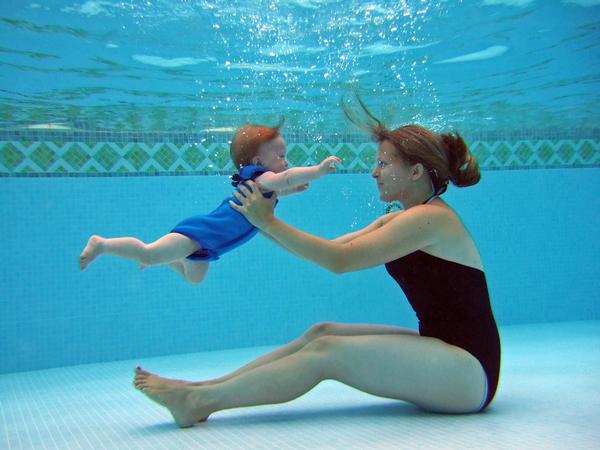
It was interesting to read your ‘Stop Treading Water’ article in HCM February, because at that time we had just gone to press with the results of our national baby swim school survey, which confirmed a huge growth in the private swimming market over the last five years – proving there’s great potential for pool owners to capitalise on this burgeoning sector.
Seventy per cent of respondents said they had waiting lists for baby swimming lessons, and franchise swim schools – of which 72 per cent said they hire health club pools, in addition to hotel, school and hydro pools – have the largest waiting lists at 81 per cent.
Almost 86 per cent also said the market had not yet reached its peak, although many warned that growth could be capped because of pool time availability. With demand there, this provides a real opportunity for pool owners to maximise income in this growth area: 58 per cent say they charge £5–10 per 30 minutes, and more than 36 per cent charge £11 or more.
As the HCM article rightly points out, pools are an expensive overhead, so being proactive and innovative in your approach to managing a pool programme is essential. From babies to adults, offering a diverse mix of swimming, aquatic and fitness programmes is key to retaining customers and attracting new users into your facility.
Many baby swimming providers have long waiting lists, indicating a big demand
How to get women into strength training
Julie Burfoot-BrownOwnerFitness Function
I was very interested to read your strength training feature in HCM March, which looked at how to get women into strength training.
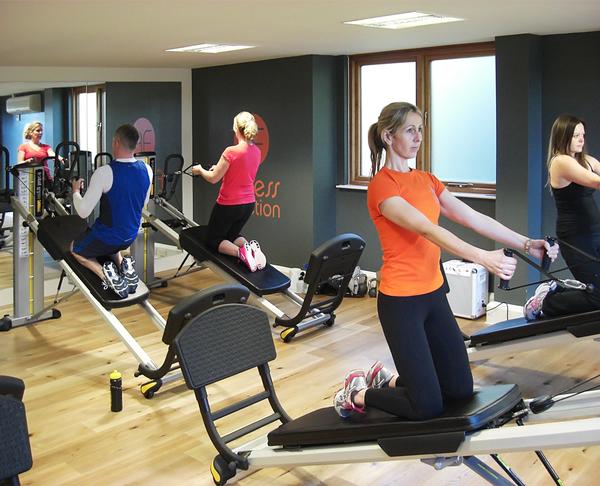
At Fitness Function in Penn Street Village, Buckinghamshire, we run GRAVITY Strength classes six days a week – and our membership is 95 per cent female, with classes running at 90 per cent capacity.
We’ve created a safe, female-friendly environment and, with just six people to a class, participants get a high level of one-to-one coaching.
In addition, I believe our approach is more appealing than using free weights for many women. There’s no pumping of iron involved – the equipment involves using between 1 and 62 per cent of your own bodyweight as the resistance. This provides a challenge for exercisers of all levels, with great opportunities to progress, and there’s a huge variety of exercises.
From my own experience, I know that this can lead to improvements in strength and fitness without women even feeling like they’re doing a weights-based workout.
Small group classes can attract women into weight training
The sector needs to do more to track members’ results
Nic JarvisSenior partnerThe Alignment Partnership
I read with interest your editor’s letter in the February issue of HCM, on the need to bring nutrition centre stage alongside fitness in gyms.
On the one hand it was pleasing to see so much sense being focused on the most important issue the health and fitness industry faces: meeting the wants (weight loss) of its customers. On the other hand it’s disappointing that, when considering future trends, so many operators still spend most of their time trying to come up with new, way-out fads that continue to ignore this core issue.
It has always struck me as strange that, for an industry that places such an emphasis on professionalism and prides itself on the level of service it provides customers, it doesn’t track the level of success it achieves. Operators continually boast of the impact they are having on the health of their customers, but fail to back this up with proof. Why is this? What do they fear? Could it be that the promises being made during the sales tour or initial consultation are empty ones? I long for the day an operator publishes the results its members have achieved over the previous 12 months!
Is it not time that one operator stands above the rest and begins tracking the results of its customers? Even if they discover that their current programmes are not delivering what they had hoped, they will at least be in a position to change things for the better. This is, after all, what professionals would do.
photo: www.shutterstock.com/ Peter Bernik
Is it time for operators to start tracking members’ results and publishing them?
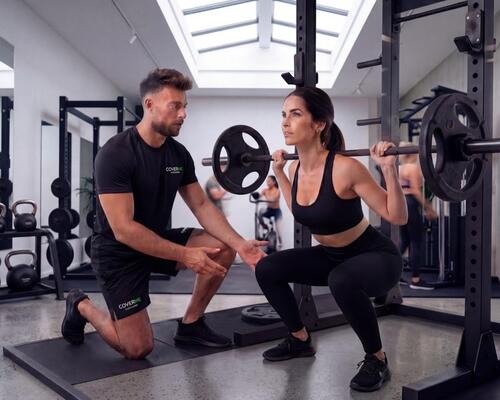
CoverMe, the global leader in fitness workforce management, today launches CoverMe PT, an
on-demand personal training platform that connects the right personal trainer to the right
client in under 10 seconds. [more...]
Panatta brought together four of the most influential figures in bodybuilding history on the
stage of RiminiWellness 2026: Phil Heath, Lee Haney, Ronnie Coleman and Hany Rambod. [more...]
Wearable technology is an opportunity, not a threat
Sean MaguireMDLegend Club Management Solution
I was interested to read the interview with futurologist Magnus Lindkvist in HCM February. As he says, wearable technology looks set to radically change the health club and leisure industry.
However, unlike Lindkvist, rather than view it as a disruptive influence that exposes operators to the risk of their customers leaving, I believe it represents a huge opportunity. The combination of social media and wearable tech truly presents a chance for organisations to get ever closer to their members; to create communities of like-minded individuals; and to offer even more personalised services to meet individual aspirations. At its most fundamental, it offers us all the potential to achieve what many of us aspire to: to help make the UK’s population healthier and more active.
There’s a second significant point that Lindkvist makes: the reason why clubs, PTs and fitness communities have a place is indeed because they offer “packaged knowledge”. His argument that apps and wearable tech also offer that “packaged knowledge” is to an extent true – but imagine how much more powerful the combination of the two would be. The ability to harness this combined knowledge and insight and link this to an individual’s personal data creates a hugely compelling proposition that will have a transformative effect on our sector.
Organisations that harness technology and achieve a new level of positive customer engagement will flourish.
photo: www.shutterstock.com/AntonioDiaz
Combining wearables with social media will enable clubs to get closer to members
Does your club have a solid music strategy?
Gemma WallisMusic platforms & resourcesFitPro
How we engage with sound has a profound effect on our nervous system. However, although clubs acknowledge the need to invest in high-quality music, licensing can cause confusion. Operators need an effective strategy, including understanding the difference between PPL and PRS, and recent changes in PPL licence fees.
Changes by PPL to the ‘Exercise to Music’ tariff in 2013 put the onus on clubs to hold a valid PPL licence for all classes using original artist music. Currently set at £1.25 per class, it will increase in May 2015 to £1.45 per class. Club owners and operators must be diligent; we’ve found that clubs often pay PPL licensing for all classes, even if some use music to which these fees do not apply.
A recent YouGov poll showed 87 per cent of exercise class participants prefer original artist music, but clubs should explore the options: you could reduce the amount of original artist music used and pay less in licensing, or eliminate PPL licensing costs, by using non-original artist compilations. Choose a solution that fits your business model and clientele.
photo: www.shutterstock.com/BlueSkyImage
PPL fees can be reduced by using non-original artist music
Broadening the appeal of water-based activity
Peter GunnCEO, BH Live and chairsporta
I wanted to write in response to your recent feature on maximising the value of swimming pools.
We recently looked at our pool programming to see how we could make all water-based activities more attractive across the whole community. We profiled non-swimmers and took a fresh look at the user journey – from antenatal to hydro mobility sessions – and found the main barriers to participation were fear and the perception that swimming is somehow boring.
To reverse these perceptions, we revisited our activity programme to include more specialist health and wellness classes, to give non-swimmers more confidence. We also introduced extra inflatable sessions during school holidays and weekends to boost the element of fun.
More people are now swimming to improve overall fitness, and many customers are having lessons to improve technique. Increasing water confidence in this way encourages participation in other water-based activities and classes too. We’re very pleased to see more people taking part, especially against the backdrop of a falling national trend.
Swimming can help improve overall fitness for all ages
The responsibility of a manager is to optimise use of the facility
Nuno LopesTechnical directorClube Oriental de Lisboa - Portugal
Reading the February issue of HCM, I was surprised to learn that many operators are not fully maximising the value of their pools.
My responsibility as the manager of a sports facility is the optimisation of its use, which includes creating programmes for the various groups in the local population – schools, pensioners, working adults, triathlon enthusiasts – as well as competitive sports events to ensure the pool is constantly in use.
Filling off-peak time is crucial, and we offer rehab and physiotherapy as well as sessions for seniors – developed in conjunction with town councils – and local schools.
It’s also about diversifying the offer: we’ve had success with personal training in the pool, for example, and have branched out into sports holidays for kids.
I check usage stats every couple of weeks – we can evaluate, with a maximum error margin of 0.5, the frequency of users in sessions. We also have a best practice manual for all staff and teachers, and implement assessments of all classes and facilities.
Operators should capitalise on boom in baby swimming
Zoe CooperHead of AccountsSTA
It was interesting to read your ‘Stop Treading Water’ article in HCM February, because at that time we had just gone to press with the results of our national baby swim school survey, which confirmed a huge growth in the private swimming market over the last five years – proving there’s great potential for pool owners to capitalise on this burgeoning sector.
Seventy per cent of respondents said they had waiting lists for baby swimming lessons, and franchise swim schools – of which 72 per cent said they hire health club pools, in addition to hotel, school and hydro pools – have the largest waiting lists at 81 per cent.
Almost 86 per cent also said the market had not yet reached its peak, although many warned that growth could be capped because of pool time availability. With demand there, this provides a real opportunity for pool owners to maximise income in this growth area: 58 per cent say they charge £5–10 per 30 minutes, and more than 36 per cent charge £11 or more.
As the HCM article rightly points out, pools are an expensive overhead, so being proactive and innovative in your approach to managing a pool programme is essential. From babies to adults, offering a diverse mix of swimming, aquatic and fitness programmes is key to retaining customers and attracting new users into your facility.
Many baby swimming providers have long waiting lists, indicating a big demand
How to get women into strength training
Julie Burfoot-BrownOwnerFitness Function
I was very interested to read your strength training feature in HCM March, which looked at how to get women into strength training.
At Fitness Function in Penn Street Village, Buckinghamshire, we run GRAVITY Strength classes six days a week – and our membership is 95 per cent female, with classes running at 90 per cent capacity.
We’ve created a safe, female-friendly environment and, with just six people to a class, participants get a high level of one-to-one coaching.
In addition, I believe our approach is more appealing than using free weights for many women. There’s no pumping of iron involved – the equipment involves using between 1 and 62 per cent of your own bodyweight as the resistance. This provides a challenge for exercisers of all levels, with great opportunities to progress, and there’s a huge variety of exercises.
From my own experience, I know that this can lead to improvements in strength and fitness without women even feeling like they’re doing a weights-based workout.
Small group classes can attract women into weight training
The sector needs to do more to track members’ results
Nic JarvisSenior partnerThe Alignment Partnership
I read with interest your editor’s letter in the February issue of HCM, on the need to bring nutrition centre stage alongside fitness in gyms.
On the one hand it was pleasing to see so much sense being focused on the most important issue the health and fitness industry faces: meeting the wants (weight loss) of its customers. On the other hand it’s disappointing that, when considering future trends, so many operators still spend most of their time trying to come up with new, way-out fads that continue to ignore this core issue.
It has always struck me as strange that, for an industry that places such an emphasis on professionalism and prides itself on the level of service it provides customers, it doesn’t track the level of success it achieves. Operators continually boast of the impact they are having on the health of their customers, but fail to back this up with proof. Why is this? What do they fear? Could it be that the promises being made during the sales tour or initial consultation are empty ones? I long for the day an operator publishes the results its members have achieved over the previous 12 months!
Is it not time that one operator stands above the rest and begins tracking the results of its customers? Even if they discover that their current programmes are not delivering what they had hoped, they will at least be in a position to change things for the better. This is, after all, what professionals would do.
photo: www.shutterstock.com/ Peter Bernik
Is it time for operators to start tracking members’ results and publishing them?
The UK's four Chief Medical Officers have published a refreshed edition of Physical activity
guidelines: UK Chief Medical Officers' report, updating the evidence that underpins the nation's
physical activity recommendations and placing greater emphasis on strength, balance, reducing
sedentary behaviour and, for the first time, supporting people taking weight loss medications.
Places Leisure has exchanged contracts to build and operate a flagship £60m water and leisure
destination on behalf of Basingstoke and Deane Borough Council.
The Republic of Ireland will become the latest market in PureGym’s expanding international
portfolio, with the first launch planned for Dublin in 2027.
Anytime Fitness opened more than one club a day in 2025 and is on track to maintain this rate
of growth this year, as parent company Purpose Brands targets further international expansion.
The £33.9 million Leighton Leisure and Community Centre has opened in Leighton Buzzard, UK,
creating a next-generation public leisure, health and wellbeing hub for the local community.
Walnuts Leisure Centre in Orpington, in the London Borough of Bromley, has reopened following
a £17m transformation designed to secure the long-term future of the public leisure asset and
reposition it as a community wellbeing hub.
The Gym Group, has announced that it's sustained positive trading momentum has continued
through the first half of 2026 and the company remains confident about the outlook.
Luxury boutique Pilates and wellness studio, X-Club, officially launches a
4,000sq ft flagship at
Marylebone on 16 July Built around X-Club’s four pillars of wellness – mind,
movement,
nutrition and therapy – the facility features two group exercise studi
CoverMe, the global leader in fitness workforce management, today launches CoverMe PT, an
on-demand personal training platform that connects the right personal trainer to the right
client in under 10 seconds. [more...]
Panatta brought together four of the most influential figures in bodybuilding history on the
stage of RiminiWellness 2026: Phil Heath, Lee Haney, Ronnie Coleman and Hany Rambod. [more...]