The Asia-Pacific region’s 13 markets serve more than 17 million customers at around 28,000 clubs / PHOTO: WWW.SHUTTERSTOCK.COM/TORWAIPHOTO
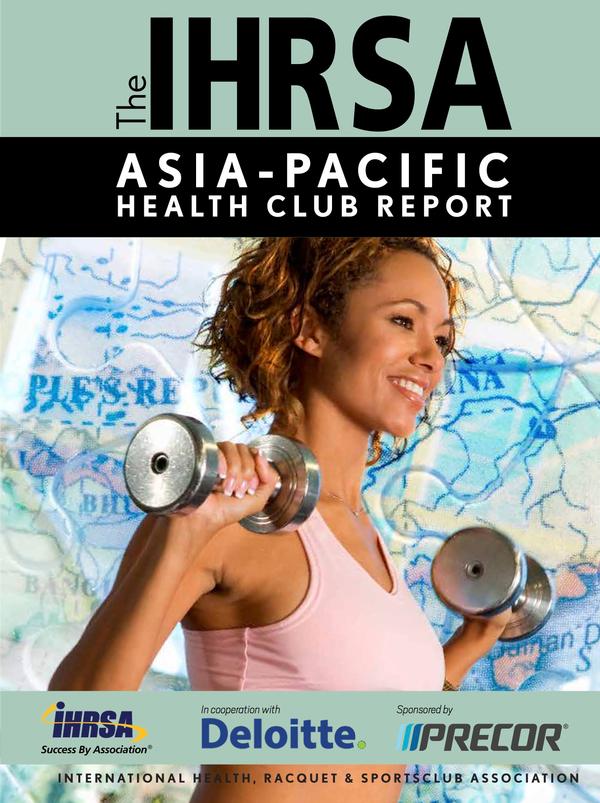
Last month, IHRSA released The 2015 IHRSA Asia-Pacific Health Club Report, produced in co-operation with Deloitte China. This new research publication focuses on the health club industry in 13 markets in the Asia-Pacific region, containing profiles of leading club companies as well as analyses of the competitive landscape, fitness trends, and an economic overview for all markets observed.
“This report is the most comprehensive examination of the Asia-Pacific health club industry available anywhere,” says Jay Ablondi, IHRSA’s executive vice president of global products. “It’s the ultimate reference on the industry in the Asia-Pacific for club operators, developers, analysts, and lenders and investors.”
Growth potential According to the report, 13 markets in the Asia-Pacific region combine to serve some 17 million members at more than 28,000 health clubs. Total revenues for the region are an estimated US$14.3bn.
The report shows room for growth, as the average market penetration rate for the region is 3.8 per cent – although Australia and New Zealand lead the way, with health club penetration rates at 14.8 per cent and 11.4 per cent respectively.
“Japan, Hong Kong, South Korea and Taiwan – as well as some large cities including Kuala Lumpur in Malaysia, Jakarta in Indonesia, Beijing and Shanghai in China – belong to maturing fitness industries with gradually professionalising players and maturing consumers,” says Alan MacCharles, partner at Deloitte China. “However, health club industries in the remaining Asian markets that were observed are still in a comparatively early stage due to economic development and awareness factors, and robust future growth can be expected.”
“This market report provides country-specific insights and quantitative data, enabling business leaders to make fact-based decisions about the future,” says Jack Trummer, regional business director for Asia-Pacific at Precor, which sponsored the report. “We hope it will spark new ideas and directions, and ultimately help people live the healthy lives they desire.”
For a topline overview of the report’s findings – size of the individual Asia-Pacific markets in terms of revenue, number of clubs, number of members and penetration rates – please see Figures 1–4.
IN A NUTSHELL
The report is divided into the following sections: Asia-Pacific market overview: Summarising statistics like club count, number of memberships, market size, penetration rates, and market potential by market. Market reports: An in-depth look at individual markets in the Asia-Pacific region: Australia, China, Beijing, Shanghai, Guangzhou, Hong Kong, Taiwan, India, Indonesia, Japan, Malaysia, New Zealand, Philippines, Singapore, South Korea and Thailand. Appendix: Details on sources, definitions and abbreviations, and exchange rates applied. Company profiles: Leading club companies in the Asia-Pacific region.
The Asia-Pacific Health Club Report: Size & Scope of the Fitness Industry can be purchased in PDF format at www.ihrsa.org/research-reports – priced at US$299 for IHRSA members and US$599 for non-members.
It will also be available at the on-site IHRSA Store at IHRSA 2015 (11–14 March) in Los Angeles, California, US.
Panatta brought together four of the most influential figures in bodybuilding history on the
stage of RiminiWellness 2026: Phil Heath, Lee Haney, Ronnie Coleman and Hany Rambod. [more...]
The Asia-Pacific region’s 13 markets serve more than 17 million customers at around 28,000 clubs / PHOTO: WWW.SHUTTERSTOCK.COM/TORWAIPHOTO
Last month, IHRSA released The 2015 IHRSA Asia-Pacific Health Club Report, produced in co-operation with Deloitte China. This new research publication focuses on the health club industry in 13 markets in the Asia-Pacific region, containing profiles of leading club companies as well as analyses of the competitive landscape, fitness trends, and an economic overview for all markets observed.
“This report is the most comprehensive examination of the Asia-Pacific health club industry available anywhere,” says Jay Ablondi, IHRSA’s executive vice president of global products. “It’s the ultimate reference on the industry in the Asia-Pacific for club operators, developers, analysts, and lenders and investors.”
Growth potential According to the report, 13 markets in the Asia-Pacific region combine to serve some 17 million members at more than 28,000 health clubs. Total revenues for the region are an estimated US$14.3bn.
The report shows room for growth, as the average market penetration rate for the region is 3.8 per cent – although Australia and New Zealand lead the way, with health club penetration rates at 14.8 per cent and 11.4 per cent respectively.
“Japan, Hong Kong, South Korea and Taiwan – as well as some large cities including Kuala Lumpur in Malaysia, Jakarta in Indonesia, Beijing and Shanghai in China – belong to maturing fitness industries with gradually professionalising players and maturing consumers,” says Alan MacCharles, partner at Deloitte China. “However, health club industries in the remaining Asian markets that were observed are still in a comparatively early stage due to economic development and awareness factors, and robust future growth can be expected.”
“This market report provides country-specific insights and quantitative data, enabling business leaders to make fact-based decisions about the future,” says Jack Trummer, regional business director for Asia-Pacific at Precor, which sponsored the report. “We hope it will spark new ideas and directions, and ultimately help people live the healthy lives they desire.”
For a topline overview of the report’s findings – size of the individual Asia-Pacific markets in terms of revenue, number of clubs, number of members and penetration rates – please see Figures 1–4.
IN A NUTSHELL
The report is divided into the following sections: Asia-Pacific market overview: Summarising statistics like club count, number of memberships, market size, penetration rates, and market potential by market. Market reports: An in-depth look at individual markets in the Asia-Pacific region: Australia, China, Beijing, Shanghai, Guangzhou, Hong Kong, Taiwan, India, Indonesia, Japan, Malaysia, New Zealand, Philippines, Singapore, South Korea and Thailand. Appendix: Details on sources, definitions and abbreviations, and exchange rates applied. Company profiles: Leading club companies in the Asia-Pacific region.
The Asia-Pacific Health Club Report: Size & Scope of the Fitness Industry can be purchased in PDF format at www.ihrsa.org/research-reports – priced at US$299 for IHRSA members and US$599 for non-members.
It will also be available at the on-site IHRSA Store at IHRSA 2015 (11–14 March) in Los Angeles, California, US.
According to research which tracked more than 147,000 people for 30 years, 90-120 minutes
of strength training a week may deliver some of the biggest long-term health rewards.
The UK's four Chief Medical Officers have published a refreshed edition of Physical activity
guidelines: UK Chief Medical Officers' report, updating the evidence that underpins the nation's
physical activity recommendations and placing greater emphasis on strength, balance, reducing
sedentary behaviour and, for the first time, supporting people taking weight loss medications.
Places Leisure has exchanged contracts to build and operate a flagship £60m water and leisure
destination on behalf of Basingstoke and Deane Borough Council.
The Republic of Ireland will become the latest market in PureGym’s expanding international
portfolio, with the first launch planned for Dublin in 2027.
Anytime Fitness opened more than one club a day in 2025 and is on track to maintain this rate
of growth this year, as parent company Purpose Brands targets further international expansion.
The £33.9 million Leighton Leisure and Community Centre has opened in Leighton Buzzard, UK,
creating a next-generation public leisure, health and wellbeing hub for the local community.
Walnuts Leisure Centre in Orpington, in the London Borough of Bromley, has reopened following
a £17m transformation designed to secure the long-term future of the public leisure asset and
reposition it as a community wellbeing hub.
The Gym Group, has announced that it's sustained positive trading momentum has continued
through the first half of 2026 and the company remains confident about the outlook.
Panatta brought together four of the most influential figures in bodybuilding history on the
stage of RiminiWellness 2026: Phil Heath, Lee Haney, Ronnie Coleman and Hany Rambod. [more...]