Encourage members to do classes: gym-only members are 56 per cent more likely to cancel / photo: www.shutterstock.com/ breakwavemedia
What is TRP 10,000? The TRP 10,000 study examines a range of possible determinants of membership retention in a sample of members of different ages and genders, with a range of experiences of health club membership, and at different stages of their membership. A total of 10,062 members aged 16–84 years, from nearly 200 clubs, completed an online survey between July and September 2013. They answered a wide range of questions covering everything from why they joined, how the club communicates with them, how they use their club, their club experiences, their motives and recent progress. Retention rates were calculated from the questionnaire completion date to the end of January 2014.
Why do people join? Members cited convenience from home and work, price and opening times as the primary reasons for selecting their current club. Less common reasons given for club selection were type of equipment available and class availability. Only one in 20 members chose their current club because they trusted the brand.
What do they do when they come to the club? Three-quarters of members stated that their main reason for attending their club was to work out in the gym. Four in 10 attended mainly to do an exercise class, and of those, 74 per cent were female. Just under half of the members attended for a single activity, while a third usually did two activities (typically gym and class). Younger members, those new to the club, or those with a history of multiple club membership were most likely to attend for the gym only.
The risk of cancelling during the seven months of follow-up was 56 per cent higher among gym-only members compared to members who did classes only or who combined gym and classes. This equates to an extra 10 cancelled memberships each month for every 1,000 members.
How do we communicate with them, and what do they value? The most common forms of member communication are face-to-face via reception or gym staff and through email correspondence. Phone calls, SMS and social media interactions were reported by fewer than 10 per cent of members.
However, fewer than half of members said reception staff spoke to them during their last visit, and only 37 per cent said fitness staff did – this in spite of the fact that nearly 90 per cent of members say they value fitness staff speaking to them.
For all types of communication, only a small proportion of members are receiving the type of communication they say they value, suggesting a lot of unmet demand. In the meantime, around a third of members said they were receiving emails they did not value, indicating that communication strategies need to be better matched to members’ preferences.
Only face-to-face communication was associated with member retention: over 90 per cent of members who reported they regularly received both reception and fitness staff communication retained their membership for the whole of the follow-up period, compared to 80 per cent of members who reported no face-to-face communication.
What are members motivated by, and do they progress? Nearly six out of 10 members reported being equally motivated to exercise for fitness, appearance, enjoyment and social (friendship) outcomes. Appearance motivation was mainly restricted to younger females, with more males than females being motivated by enjoyment and friendship. Overall, motivation was higher among more frequent club users and younger rather than older members.
Most members reported making at least some progress in the last three months, with feeling fitter and enjoying exercise the most frequently reported measures of progress. Around half of members reported losing weight, with just over a third reporting making a new friend.
Making any progress versus none was associated with better retention, but the most important measure of progress was friendship. Compared to members who did not make a friend, those who did were 40 per cent less likely to cancel their membership.
When all the measures of progress were considered together, making a friend and attending the club as planned were the most important factors. Improved appearance, having more energy and feeling fitter were not related to the risk of cancelling at all. More important was whether members perceived they had made progress on the things they said motivated them to exercise; failure to do so was associated with a considerable increase in the risk of cancelling.
Members who are motivated by the enjoyment of exercise, but who did not find it enjoyable, were 2.3 times more likely to cancel than members who did find it enjoyable, even though they were not motivated by enjoyment. Failure to make progress in fitness and appearance when motivated by these two factors was also associated with an increase in cancellations. Strikingly, members who said they were motivated by appearance, and who perceived improved appearance, still had a higher cancellation rate than members who were not motivated by appearance and did not perceive it had improved.
The findings suggest that failing to achieve one’s goals significantly increases the risk of cancelling, while prioritising fun and friendship over fitness and thinness would lead to higher levels of retention.
Club experiences, both good and bad Around 45 per cent of members report experiencing ‘hassles’ during their club visits, with just over half of members reporting positive uplifting experiences.
The most commonly reported hassle is not being spoken to by reception or fitness staff. Although less commonly reported (fewer than 15 per cent of members), the most annoying hassles members report are queuing for equipment, cancelled classes, broken down equipment, unclean changing facilities and no parking space.
By contrast, the things members say are most uplifting about their visits are completing a challenging workout, achieving fitness goals, and interaction with reception and fitness staff.
Of all the hassles that members find annoying, just three significantly increase the risk of cancelling: fitness staff not speaking, reception staff not speaking, and queuing for equipment. Members who frequently have to queue for equipment and are not spoken to by fitness staff are more than twice as likely to cancel as members who do not have to queue for equipment and who regularly interact with fitness staff.
Positive uplifts that reduce the risk of cancelling are interaction with reception and fitness staff, along with making new friends at the gym. For every 1,000 members, 16 fewer cancel every month if reception and fitness staff speak to them regularly and they make a friend, compared to members who do not report this – representing a 53 per cent reduction in the risk of cancellation.
Top 10 recommendations
Develop a marketing strategy that conveys fun and friendliness, and prioritise these aspects over fitness and thinness throughout the club.
• Help new members develop realistic expectations and try to focus on intrinsic motivations such as enjoyment and social engagement. Set out a realistic plan for achieving them.
• Encourage and support members to experiment with a wide range of exercise types, and especially group exercise.
• Regularly review members’ progress and revise plans if progress is not being made.
• Ensure exercise programmes are enjoyable above all else.
• Develop a targeted communication strategy that maximises opportunities to interact with members in and out of the club.
• Create a conversation culture in the club: implement methods to maximise and monitor face-to-face communications.
• Minimise the time members queue to use equipment.
• Encourage staff to be aware of member hassles and to understand that they can either compound the problem by ignoring people or alleviate it by simply conversing with members.
• Encourage staff to be aware that the power to delight a customer lies in their willingness to hold a conversation that in turn extends the life of the membership.
FIND OUT MORE
Dr Melvyn Hillsdon is associate professor of exercise and health at the University of Exeter, where he researches physical activity and population health. He’s also a leading authority on retention in the fitness sector, and was responsible for the landmark Winning the Retention Battle report in 2001.
To find out more about TRP 10,000, visit: www.theretentionpeople.com/research/trp-10000
Members who made a friend at the gym were 40 less likely to cancel than those who didn’t / photo: www.shutterstock.com/ StudioFI
No room at the inn: Having to queue for kit significantly increases the risk of cancelling / photo: www.shutterstock.com/ LuckyImages
Nearly 90 per cent of all members say they value fitness staff interacting with them / photo: www.shutterstock.com/ Corepics VOF
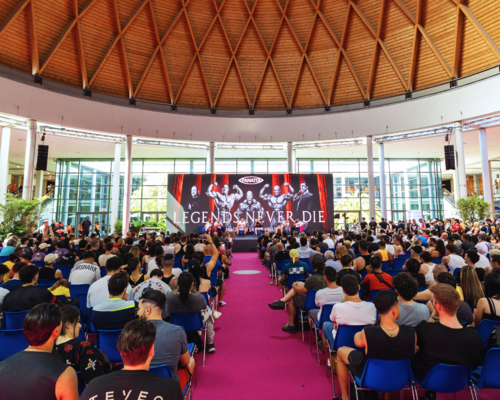
Panatta brought together four of the most influential figures in bodybuilding history on the
stage of RiminiWellness 2026: Phil Heath, Lee Haney, Ronnie Coleman and Hany Rambod. [more...]
Encourage members to do classes: gym-only members are 56 per cent more likely to cancel / photo: www.shutterstock.com/ breakwavemedia
What is TRP 10,000? The TRP 10,000 study examines a range of possible determinants of membership retention in a sample of members of different ages and genders, with a range of experiences of health club membership, and at different stages of their membership. A total of 10,062 members aged 16–84 years, from nearly 200 clubs, completed an online survey between July and September 2013. They answered a wide range of questions covering everything from why they joined, how the club communicates with them, how they use their club, their club experiences, their motives and recent progress. Retention rates were calculated from the questionnaire completion date to the end of January 2014.
Why do people join? Members cited convenience from home and work, price and opening times as the primary reasons for selecting their current club. Less common reasons given for club selection were type of equipment available and class availability. Only one in 20 members chose their current club because they trusted the brand.
What do they do when they come to the club? Three-quarters of members stated that their main reason for attending their club was to work out in the gym. Four in 10 attended mainly to do an exercise class, and of those, 74 per cent were female. Just under half of the members attended for a single activity, while a third usually did two activities (typically gym and class). Younger members, those new to the club, or those with a history of multiple club membership were most likely to attend for the gym only.
The risk of cancelling during the seven months of follow-up was 56 per cent higher among gym-only members compared to members who did classes only or who combined gym and classes. This equates to an extra 10 cancelled memberships each month for every 1,000 members.
How do we communicate with them, and what do they value? The most common forms of member communication are face-to-face via reception or gym staff and through email correspondence. Phone calls, SMS and social media interactions were reported by fewer than 10 per cent of members.
However, fewer than half of members said reception staff spoke to them during their last visit, and only 37 per cent said fitness staff did – this in spite of the fact that nearly 90 per cent of members say they value fitness staff speaking to them.
For all types of communication, only a small proportion of members are receiving the type of communication they say they value, suggesting a lot of unmet demand. In the meantime, around a third of members said they were receiving emails they did not value, indicating that communication strategies need to be better matched to members’ preferences.
Only face-to-face communication was associated with member retention: over 90 per cent of members who reported they regularly received both reception and fitness staff communication retained their membership for the whole of the follow-up period, compared to 80 per cent of members who reported no face-to-face communication.
What are members motivated by, and do they progress? Nearly six out of 10 members reported being equally motivated to exercise for fitness, appearance, enjoyment and social (friendship) outcomes. Appearance motivation was mainly restricted to younger females, with more males than females being motivated by enjoyment and friendship. Overall, motivation was higher among more frequent club users and younger rather than older members.
Most members reported making at least some progress in the last three months, with feeling fitter and enjoying exercise the most frequently reported measures of progress. Around half of members reported losing weight, with just over a third reporting making a new friend.
Making any progress versus none was associated with better retention, but the most important measure of progress was friendship. Compared to members who did not make a friend, those who did were 40 per cent less likely to cancel their membership.
When all the measures of progress were considered together, making a friend and attending the club as planned were the most important factors. Improved appearance, having more energy and feeling fitter were not related to the risk of cancelling at all. More important was whether members perceived they had made progress on the things they said motivated them to exercise; failure to do so was associated with a considerable increase in the risk of cancelling.
Members who are motivated by the enjoyment of exercise, but who did not find it enjoyable, were 2.3 times more likely to cancel than members who did find it enjoyable, even though they were not motivated by enjoyment. Failure to make progress in fitness and appearance when motivated by these two factors was also associated with an increase in cancellations. Strikingly, members who said they were motivated by appearance, and who perceived improved appearance, still had a higher cancellation rate than members who were not motivated by appearance and did not perceive it had improved.
The findings suggest that failing to achieve one’s goals significantly increases the risk of cancelling, while prioritising fun and friendship over fitness and thinness would lead to higher levels of retention.
Club experiences, both good and bad Around 45 per cent of members report experiencing ‘hassles’ during their club visits, with just over half of members reporting positive uplifting experiences.
The most commonly reported hassle is not being spoken to by reception or fitness staff. Although less commonly reported (fewer than 15 per cent of members), the most annoying hassles members report are queuing for equipment, cancelled classes, broken down equipment, unclean changing facilities and no parking space.
By contrast, the things members say are most uplifting about their visits are completing a challenging workout, achieving fitness goals, and interaction with reception and fitness staff.
Of all the hassles that members find annoying, just three significantly increase the risk of cancelling: fitness staff not speaking, reception staff not speaking, and queuing for equipment. Members who frequently have to queue for equipment and are not spoken to by fitness staff are more than twice as likely to cancel as members who do not have to queue for equipment and who regularly interact with fitness staff.
Positive uplifts that reduce the risk of cancelling are interaction with reception and fitness staff, along with making new friends at the gym. For every 1,000 members, 16 fewer cancel every month if reception and fitness staff speak to them regularly and they make a friend, compared to members who do not report this – representing a 53 per cent reduction in the risk of cancellation.
Top 10 recommendations
Develop a marketing strategy that conveys fun and friendliness, and prioritise these aspects over fitness and thinness throughout the club.
• Help new members develop realistic expectations and try to focus on intrinsic motivations such as enjoyment and social engagement. Set out a realistic plan for achieving them.
• Encourage and support members to experiment with a wide range of exercise types, and especially group exercise.
• Regularly review members’ progress and revise plans if progress is not being made.
• Ensure exercise programmes are enjoyable above all else.
• Develop a targeted communication strategy that maximises opportunities to interact with members in and out of the club.
• Create a conversation culture in the club: implement methods to maximise and monitor face-to-face communications.
• Minimise the time members queue to use equipment.
• Encourage staff to be aware of member hassles and to understand that they can either compound the problem by ignoring people or alleviate it by simply conversing with members.
• Encourage staff to be aware that the power to delight a customer lies in their willingness to hold a conversation that in turn extends the life of the membership.
FIND OUT MORE
Dr Melvyn Hillsdon is associate professor of exercise and health at the University of Exeter, where he researches physical activity and population health. He’s also a leading authority on retention in the fitness sector, and was responsible for the landmark Winning the Retention Battle report in 2001.
To find out more about TRP 10,000, visit: www.theretentionpeople.com/research/trp-10000
Members who made a friend at the gym were 40 less likely to cancel than those who didn’t / photo: www.shutterstock.com/ StudioFI
No room at the inn: Having to queue for kit significantly increases the risk of cancelling / photo: www.shutterstock.com/ LuckyImages
Nearly 90 per cent of all members say they value fitness staff interacting with them / photo: www.shutterstock.com/ Corepics VOF
According to research which tracked more than 147,000 people for 30 years, 90-120 minutes
of strength training a week may deliver some of the biggest long-term health rewards.
The UK's four Chief Medical Officers have published a refreshed edition of Physical activity
guidelines: UK Chief Medical Officers' report, updating the evidence that underpins the nation's
physical activity recommendations and placing greater emphasis on strength, balance, reducing
sedentary behaviour and, for the first time, supporting people taking weight loss medications.
Places Leisure has exchanged contracts to build and operate a flagship £60m water and leisure
destination on behalf of Basingstoke and Deane Borough Council.
The Republic of Ireland will become the latest market in PureGym’s expanding international
portfolio, with the first launch planned for Dublin in 2027.
Anytime Fitness opened more than one club a day in 2025 and is on track to maintain this rate
of growth this year, as parent company Purpose Brands targets further international expansion.
The £33.9 million Leighton Leisure and Community Centre has opened in Leighton Buzzard, UK,
creating a next-generation public leisure, health and wellbeing hub for the local community.
Walnuts Leisure Centre in Orpington, in the London Borough of Bromley, has reopened following
a £17m transformation designed to secure the long-term future of the public leisure asset and
reposition it as a community wellbeing hub.
The Gym Group, has announced that it's sustained positive trading momentum has continued
through the first half of 2026 and the company remains confident about the outlook.
Panatta brought together four of the most influential figures in bodybuilding history on the
stage of RiminiWellness 2026: Phil Heath, Lee Haney, Ronnie Coleman and Hany Rambod. [more...]