Private sector low-cost sites have passed the 250 mark – up 31 per cent year-on-year
I start my foreword to the 15th edition of the 2014 State of the Fitness Industry Report with a quote from Siobhan Sharpe, the PR guru in the critically lauded Olympic sitcom Twenty Twelve: “Guys we are where we are with this, and it’s never a good place to be.”
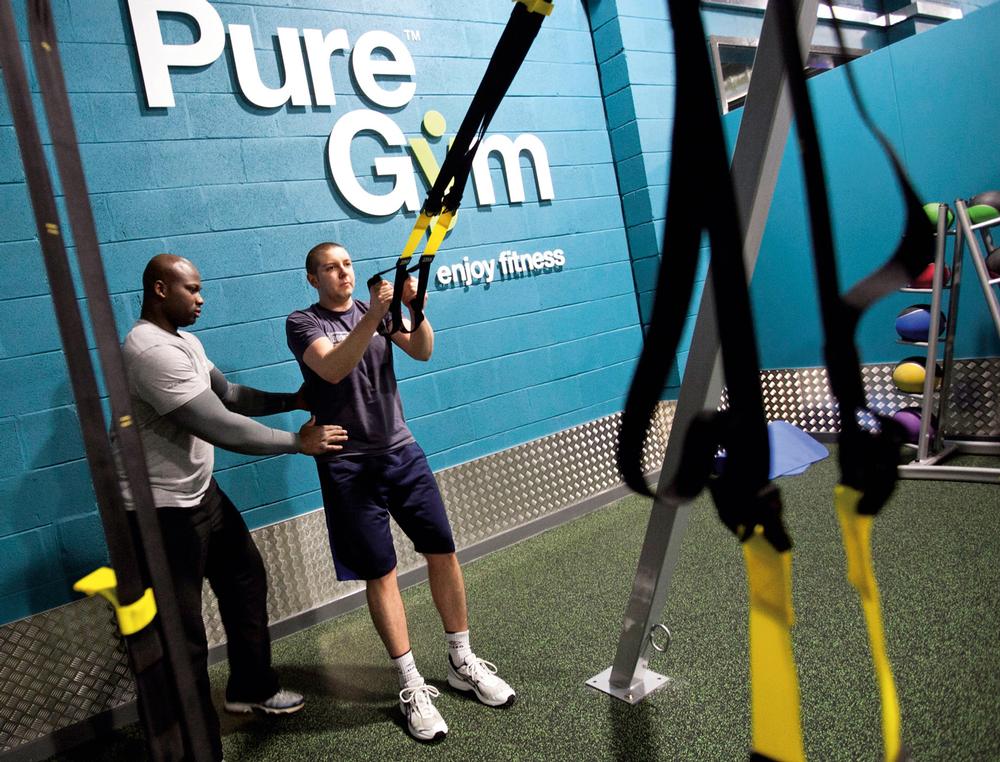
The fitness industry doesn’t do irony or self-deprecation very well, and social media can be a cruel and unforgiving place where it’s impossible to hide from the wrath of those who think mid-market brands are simply getting their comeuppance. Fitness First and LA fitness both ended 2014 with smaller estates, having suffered the ignominy of a CVA (Company Voluntary Arrangement) with their creditors and banks. At the same time, low-cost brands like Pure Gym, The Gym Group, Fit4less and TruGym, to name but a few, have grown in size, with those four chains alone adding 48 sites between them.
Overall it’s good news, with the industry growing to 6,112 sites with 8.3 million members, taking the combined UK penetration rate to 13.2 per cent – the first time it has broken out of the 12 percentage points where it has been stuck since 2009. This has been driven by a combination of the low-cost and public sectors.
Private growth Private sector low-cost sites have passed the 250 mark – a 31 per cent increase on the previous year – although I’m not including low-cost sites that charge over £20 in this figure. Collectively, they have around 940,000 members, paying on average £17.99 a month. This now represents 19 per cent of the total private sector membership, up from 14 per cent last year.
However, applying the term ‘low-cost’ is relative, even to this sub-£20 a month bracket, when you consider that 81 per cent of the UK’s 29.3 million tax payers pay the basic 20 per cent tax rate. The median pre-tax income in Britain is just £22,200 and contributes 33 per cent of the HMRC revenues. For the majority of the population, even £20 a month is too much to find for a gym membership.
Meanwhile, the top 1 per cent of taxpayers contribute 30 per cent of HMRC revenues; it’s a very small minority who can easily afford premium club fees.
Thankfully our industry and consumers are not ruled by statistics alone, but by heart and achievement, so the upsell aspirational purchases and memberships go beyond the median – people somehow find the money to do what they want to do, whether that’s £20 a month or £120 a month.
However, operators must be aware that the demographics and income distribution of the UK simply cannot sustain unlimited growth of the low-cost sector, and I find too many brands making questionable statistical assumptions which have the effect of saturating cities like Nottingham – only for some sites to fail not once, but twice.
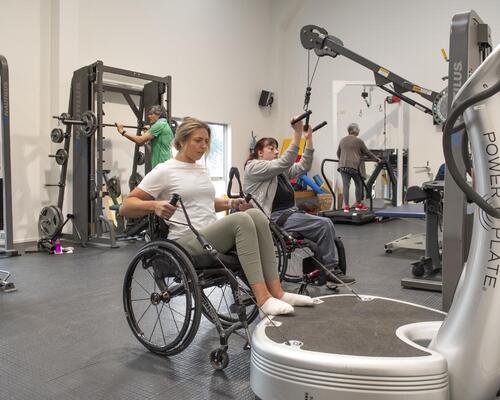
Public sector strength The public sector, meanwhile, put on a total of 56 new sites, including 36 new builds. It almost single-handedly benefited from the Olympic bounce, thanks to so many sports clubs based at the 2,753 UK public sports centres with fitness. This has provided a huge upsell opportunity across the tens of millions of people visiting these sites. This so-called ‘John Lewis Partnership’ approach – whereby everyone is a partner who shares in the success – has been adopted by the trusts and wider public sector sites, who have catered for 3.3 million fitness members who obviously value the extra facilities, family offering, location, local investment and transparent costs of joining, to pay an average of £30 a month.
Across trust-only sites, all embedded in their local communities, this average goes up to almost £34. With 84 per cent of the population within two miles of a site, it’s no wonder old, inefficient sites are being closed down – 60 in total last year, of which 40 per cent had antiquated wet facilities.
Meanwhile, demand for new sites consistently outstrips latent demand estimates, and new openings continue to grow the market at a higher yield. Every design, build and manage contract has opened above expectation, and trusts find raising investment via bonds and new funds easier than expected, which provides a virtuous circle of support and growth.
Days of disruption In the tech world, we have a new circle of ‘trust’ networks and ‘trust’ sharing economy. Is it by accident that the public sector has picked up on this new access economy? A new collaborative consumption involving renting, lending, sharing, borrowing and swapping has turned into big business for disruptive and community organisations. Could this be the time for the fitness industry to re-think its outdated model of renting equipment?
Someone from outside the industry is looking in and can see a better way; I can guarantee disruption is coming.
In the past 12 months, GPS (location data,) APIs (data feeds) and this wider Sharing Economy have been merging to provide tracking apps and wearable devices with more functionality than ever before, which in turn provides a level of granularity we haven’t had in the past. Added to this we have the promise of Healthkit, Apple’s new Health aggregation framework in the new all-data-gathering iOS 8, available for free on older iPhones and included in the new iPhone 6.
In the very near future, Apple envisages that there will be three types of apps: one for the analysis of data and graphs; one for the recording of information (which is what we mostly have now); and one to sync data with medical records.
So the question on everyone’s app is how will this affect the fitness (and health) industries? Your phone, whatever make, is about to become the central hub of information; fitness sites need to encourage people to bring their own devices. Customers will do this in any case, but this is a recognition factor that these aggregators will do more, more often, with more of your members than anything you might invest in locally.
To give just one example: most of the modern devices will sync automatically to HealthKit and upload heart rate monitor, glucose sensors, blood pressure and health thermometers. Consumers can agree to share this data with PTs, doctors, nutritionists and a wide range of specialists who may be helping them achieve their goals. This will all be seamless, easy, fun and you’ll be part of the Here & Now Commerce, where the experience is as important as the product.
FIND OUT MORE
The annual State of the Fitness Industry Report is published by independent analyst for the industry The Leisure Database Company, which compiles the report from a comprehensive review and audit involving individual contact with all sites.
The public sector has catered for 3.3 million members who value aspects such as the family offering and broader range of facilities / photo: www.shutterstock.com
Operators must recognise that members’ phones will become
the central hub of information / photo: www.shutterstock.com
As healthcare continues to shift towards prevention, there’s a growing focus on helping
people stay active, independent and feeling good for longer. [more...]
CoverMe, the global leader in fitness workforce management, today launches CoverMe PT, an
on-demand personal training platform that connects the right personal trainer to the right
client in under 10 seconds. [more...]
+ More featured suppliers
COMPANY PROFILES
PSLT Ltd
PSLT Fitness Solutions manufacture, remanufacture and buy back commercial gym equipment. [more...]
Private sector low-cost sites have passed the 250 mark – up 31 per cent year-on-year
I start my foreword to the 15th edition of the 2014 State of the Fitness Industry Report with a quote from Siobhan Sharpe, the PR guru in the critically lauded Olympic sitcom Twenty Twelve: “Guys we are where we are with this, and it’s never a good place to be.”
The fitness industry doesn’t do irony or self-deprecation very well, and social media can be a cruel and unforgiving place where it’s impossible to hide from the wrath of those who think mid-market brands are simply getting their comeuppance. Fitness First and LA fitness both ended 2014 with smaller estates, having suffered the ignominy of a CVA (Company Voluntary Arrangement) with their creditors and banks. At the same time, low-cost brands like Pure Gym, The Gym Group, Fit4less and TruGym, to name but a few, have grown in size, with those four chains alone adding 48 sites between them.
Overall it’s good news, with the industry growing to 6,112 sites with 8.3 million members, taking the combined UK penetration rate to 13.2 per cent – the first time it has broken out of the 12 percentage points where it has been stuck since 2009. This has been driven by a combination of the low-cost and public sectors.
Private growth Private sector low-cost sites have passed the 250 mark – a 31 per cent increase on the previous year – although I’m not including low-cost sites that charge over £20 in this figure. Collectively, they have around 940,000 members, paying on average £17.99 a month. This now represents 19 per cent of the total private sector membership, up from 14 per cent last year.
However, applying the term ‘low-cost’ is relative, even to this sub-£20 a month bracket, when you consider that 81 per cent of the UK’s 29.3 million tax payers pay the basic 20 per cent tax rate. The median pre-tax income in Britain is just £22,200 and contributes 33 per cent of the HMRC revenues. For the majority of the population, even £20 a month is too much to find for a gym membership.
Meanwhile, the top 1 per cent of taxpayers contribute 30 per cent of HMRC revenues; it’s a very small minority who can easily afford premium club fees.
Thankfully our industry and consumers are not ruled by statistics alone, but by heart and achievement, so the upsell aspirational purchases and memberships go beyond the median – people somehow find the money to do what they want to do, whether that’s £20 a month or £120 a month.
However, operators must be aware that the demographics and income distribution of the UK simply cannot sustain unlimited growth of the low-cost sector, and I find too many brands making questionable statistical assumptions which have the effect of saturating cities like Nottingham – only for some sites to fail not once, but twice.
Public sector strength The public sector, meanwhile, put on a total of 56 new sites, including 36 new builds. It almost single-handedly benefited from the Olympic bounce, thanks to so many sports clubs based at the 2,753 UK public sports centres with fitness. This has provided a huge upsell opportunity across the tens of millions of people visiting these sites. This so-called ‘John Lewis Partnership’ approach – whereby everyone is a partner who shares in the success – has been adopted by the trusts and wider public sector sites, who have catered for 3.3 million fitness members who obviously value the extra facilities, family offering, location, local investment and transparent costs of joining, to pay an average of £30 a month.
Across trust-only sites, all embedded in their local communities, this average goes up to almost £34. With 84 per cent of the population within two miles of a site, it’s no wonder old, inefficient sites are being closed down – 60 in total last year, of which 40 per cent had antiquated wet facilities.
Meanwhile, demand for new sites consistently outstrips latent demand estimates, and new openings continue to grow the market at a higher yield. Every design, build and manage contract has opened above expectation, and trusts find raising investment via bonds and new funds easier than expected, which provides a virtuous circle of support and growth.
Days of disruption In the tech world, we have a new circle of ‘trust’ networks and ‘trust’ sharing economy. Is it by accident that the public sector has picked up on this new access economy? A new collaborative consumption involving renting, lending, sharing, borrowing and swapping has turned into big business for disruptive and community organisations. Could this be the time for the fitness industry to re-think its outdated model of renting equipment?
Someone from outside the industry is looking in and can see a better way; I can guarantee disruption is coming.
In the past 12 months, GPS (location data,) APIs (data feeds) and this wider Sharing Economy have been merging to provide tracking apps and wearable devices with more functionality than ever before, which in turn provides a level of granularity we haven’t had in the past. Added to this we have the promise of Healthkit, Apple’s new Health aggregation framework in the new all-data-gathering iOS 8, available for free on older iPhones and included in the new iPhone 6.
In the very near future, Apple envisages that there will be three types of apps: one for the analysis of data and graphs; one for the recording of information (which is what we mostly have now); and one to sync data with medical records.
So the question on everyone’s app is how will this affect the fitness (and health) industries? Your phone, whatever make, is about to become the central hub of information; fitness sites need to encourage people to bring their own devices. Customers will do this in any case, but this is a recognition factor that these aggregators will do more, more often, with more of your members than anything you might invest in locally.
To give just one example: most of the modern devices will sync automatically to HealthKit and upload heart rate monitor, glucose sensors, blood pressure and health thermometers. Consumers can agree to share this data with PTs, doctors, nutritionists and a wide range of specialists who may be helping them achieve their goals. This will all be seamless, easy, fun and you’ll be part of the Here & Now Commerce, where the experience is as important as the product.
FIND OUT MORE
The annual State of the Fitness Industry Report is published by independent analyst for the industry The Leisure Database Company, which compiles the report from a comprehensive review and audit involving individual contact with all sites.
The public sector has catered for 3.3 million members who value aspects such as the family offering and broader range of facilities / photo: www.shutterstock.com
Operators must recognise that members’ phones will become
the central hub of information / photo: www.shutterstock.com
Global luxury hospitality brand, Six Senses, has partnered with longevity healthcare provider,
HUM2N, to launch a clinic at Six Senses London, at The Whiteley.
Premium London health club, KX Chelsea, will imminently unveil its most significant
redevelopment since its launch in 2002 to create an integrated wellness model combining
training, recovery and relaxation.
Researchers in the US have identified an antibody which could greatly reduce the loss of lean
muscle mass in people who are taking weight-loss medications.
Crunch Fitness has announced the launch of Crunch Reform Pilates – its own reformer concept
designed to bring this fast growing, but rather expensive, modality into the mainstream.
The 20th State of the Industry Report reveals a resilient, expanding and competitive
sector, the
importance of differentiation and the ongoing challenge of tackling inequalities.
Nuffield Health has told HCM that it takes its responsibilities towards its colleagues seriously
and is committed to meeting all legal obligations after news of a tribunal has made national
headlines.
Technogym has announced the launch of the Run X World Treadmill Championship, the first
world championship for running on connected treadmills over five kilometres.
As healthcare continues to shift towards prevention, there’s a growing focus on helping
people stay active, independent and feeling good for longer. [more...]
CoverMe, the global leader in fitness workforce management, today launches CoverMe PT, an
on-demand personal training platform that connects the right personal trainer to the right
client in under 10 seconds. [more...]
+ More featured suppliers
COMPANY PROFILES
PSLT Ltd PSLT Fitness Solutions manufacture, remanufacture and buy back commercial gym equipment. [more...]