SIBEC Europe in Madeira opened with an industry debate. Chaired by editor of Health Club Management Kate Cracknell, the discussion covered wearable tech and Sports Direct’s
£5 memberships
By Kate Cracknell | Published in Health Club Management 2015 issue 1
L-R: Graham, HCM editor and panel chair Kate Cracknell, Leonie, Vesey and Wright
MEET THE PANEL Jim Graham (JG) COO The Gym Group Sarah Leonie (SL) Group fitness manager, Places for People Leisure (PfPL) Diane Vesey (DV) Director of European operations, Anytime Fitness Dave Wright (DW) CEO, CFM and MYZONE
Kate Cracknell (KC): Sports Direct has announced that it will be offering gym memberships for £5 a month. What impact might this have on the rest of the market? JG: It’s difficult to comment until we see whether £5 really is the new low-cost price floor, or if it’s a pre-sale marketing tactic. If Sports Direct really is offering memberships for £5, then the mid-market bracket has been redefined again.
It’s impossible to make a profit charging £5 a month, so this would clearly be a loss leader to drive retail sales. A key challenge will be finding quality staff who are happy to work for a loss-leading product.
DW: This could redefine what we consider affordable fitness. A few years ago that space was occupied by Fitness First and LA fitness. In the US, Planet Fitness has 838 clubs and 4 million members enjoying memberships as low as US$5 a month. If anything, this Sports Direct play could be a fantastic marketing ploy from Mike Ashley, who is looking to make waves in the industry.
KC to SL: Would you consider competing on cost? SL: Half of our centres now offer gym-only membership and can be reactive on price when low-cost competition opens up on the doorstep. That said, we recognise the need to differentiate our product from the budget clubs.
We’re family orientated and offer much more than just gym and classes. We operate with the wider view of being perfectly placed in the community and able to respond to the health agenda. Rather than go head to head, our plan is to differentiate and not just drop prices. We need to focus on our services and be confident in our strategy. We certainly won’t be throwing all that away to compete with a £5 membership.
DV: You could take the view that anything that gets more people engaged in exercise is a good thing. But I would question, for this price, what the member experience will be like, the service levels and so on.
Tara Dillon (floor): The whole sector needs to stop acting like a shop – we’re selling fitness on the cheap, but ultimately you get what you pay for and I don’t think it will work.
As a sector we’re diversifying, but we need to do more if we’re to expand from the 13 per cent of the population who currently go to the gym. We need to look at the health agenda and consider how we can truly make an impact. We need to grow up as a sector and take ourselves seriously.
SL: My concern is the quality of service people will receive in these budget clubs. If they haven’t been to a gym before and have never used equipment, and they join a gym for a short amount of time with no interaction, will we lose them forever?
JG: When I joined the sector, the one thing that really surprised me was the lack of understanding that we’re in the hospitality and service industry. We put relatively low-paid staff in front of customers, many of whom would rather not be buying the product, find it painful to consume and find the environment intimidating. It’s a complex emotional situation – and that means we need to work even harder to deliver good service.
Robin Gargrave (floor):A gym in a retail store with very low prices could certainly reduce cultural barriers to exercise and potentially engage the hard to reach inactive audience.
KC: With the likes of Apple entering the fitness tech market, and wearables getting smarter all the time, we’re set to see a massive growth in individuals tracking and monitoring their own health and fitness. How will the gym sector be impacted by this? DW: I believe operators need to own the data of their members. Many clubs have no choice but to allow members to BYOD – ‘bring your own device’ – but that data then sits in the silos of the users’ personal accounts, invisible to the facility unless it invests in an integrated solution.
DV: The wearables sector has seen huge growth, with lots of diverse offerings all creating more awareness of physical activity levels and personal health, which is a positive thing. We’re embracing this technology and infusing it into our brand, which we believe will increase our value proposition. Our device of choice at the moment is the Fitbit, which we’re trialling, and we’re also working on integrating Map My Fitness into our customer app.
KC: As these wearables get smarter, is there still a role for the club? DV: You can’t beat social interaction at the club level. We don’t sell fitness – we sell motivation.
SL: We’re looking at the wider health agenda and public health’s constant need for data. These devices can be powerful tools to help us manage, monitor and track. Data is certainly key to cementing our relationships with GPs and the wider health community.
KC: How close is wearable tech to really going mainstream, providing the sort of data that makes it an invaluable part of daily life? DW: The ability to measure and record complete types of health data – glucose levels, cholesterol, blood pressure and so on – is there in various formats, but it will be at least five to seven years before that data is captured in a device that’s a totally frictionless, palatable and commercial proposition for the consumer.
KC: Is wearable tech something every health club must embrace? JG: We’re not yet rushing into the digital space just yet. When we do, we will be platform agnostic and let members choose their own wearable devices and apps. The real question for me is that, although people love measuring stuff and sharing it on social media, how can we help them use their data to improve their fitness? I’m not sure we’ll ever get to take the expertise of the personal trainer out of the loop.
That said, while we have 100 per cent accurate data on usage of our gyms, we have a big gap in terms of knowing what individual members do when they’re working out. That blind spot reduces our ability to craft the most engaging proposition. In the future, the network-enabled gym will help us close that gap, and that’s a critical element of the tech roadmap for any fitness businesses. But the technology isn’t quite where we need it to be yet.
Should clubs own their members’ data or allow them to bring their own devices into the gym? / photo: www.shutterstock.com
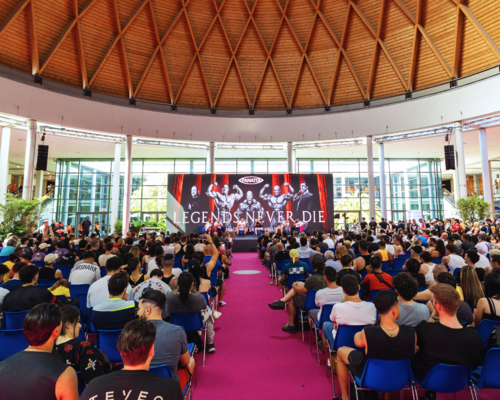
Panatta brought together four of the most influential figures in bodybuilding history on the
stage of RiminiWellness 2026: Phil Heath, Lee Haney, Ronnie Coleman and Hany Rambod. [more...]
Active Blackpool is deploying Cornerstone Connect, a new digital interface allowing
disparate information from multiple systems to be aggregated into one dataset, to support
its focus on reducing health inequalities and improving healthy life expectancy. [more...]
+ More featured suppliers
COMPANY PROFILES
PSLT Ltd
PSLT Fitness Solutions manufacture, remanufacture and buy back commercial gym equipment. [more...]
ukactive
ukactive is the UK’s leading trade body for the physical activity sector, bringing together more tha [more...]
SIBEC Europe in Madeira opened with an industry debate. Chaired by editor of Health Club Management Kate Cracknell, the discussion covered wearable tech and Sports Direct’s
£5 memberships
By Kate Cracknell | Published in Health Club Management 2015 issue 1
L-R: Graham, HCM editor and panel chair Kate Cracknell, Leonie, Vesey and Wright
MEET THE PANEL Jim Graham (JG) COO The Gym Group Sarah Leonie (SL) Group fitness manager, Places for People Leisure (PfPL) Diane Vesey (DV) Director of European operations, Anytime Fitness Dave Wright (DW) CEO, CFM and MYZONE
Kate Cracknell (KC): Sports Direct has announced that it will be offering gym memberships for £5 a month. What impact might this have on the rest of the market? JG: It’s difficult to comment until we see whether £5 really is the new low-cost price floor, or if it’s a pre-sale marketing tactic. If Sports Direct really is offering memberships for £5, then the mid-market bracket has been redefined again.
It’s impossible to make a profit charging £5 a month, so this would clearly be a loss leader to drive retail sales. A key challenge will be finding quality staff who are happy to work for a loss-leading product.
DW: This could redefine what we consider affordable fitness. A few years ago that space was occupied by Fitness First and LA fitness. In the US, Planet Fitness has 838 clubs and 4 million members enjoying memberships as low as US$5 a month. If anything, this Sports Direct play could be a fantastic marketing ploy from Mike Ashley, who is looking to make waves in the industry.
KC to SL: Would you consider competing on cost? SL: Half of our centres now offer gym-only membership and can be reactive on price when low-cost competition opens up on the doorstep. That said, we recognise the need to differentiate our product from the budget clubs.
We’re family orientated and offer much more than just gym and classes. We operate with the wider view of being perfectly placed in the community and able to respond to the health agenda. Rather than go head to head, our plan is to differentiate and not just drop prices. We need to focus on our services and be confident in our strategy. We certainly won’t be throwing all that away to compete with a £5 membership.
DV: You could take the view that anything that gets more people engaged in exercise is a good thing. But I would question, for this price, what the member experience will be like, the service levels and so on.
Tara Dillon (floor): The whole sector needs to stop acting like a shop – we’re selling fitness on the cheap, but ultimately you get what you pay for and I don’t think it will work.
As a sector we’re diversifying, but we need to do more if we’re to expand from the 13 per cent of the population who currently go to the gym. We need to look at the health agenda and consider how we can truly make an impact. We need to grow up as a sector and take ourselves seriously.
SL: My concern is the quality of service people will receive in these budget clubs. If they haven’t been to a gym before and have never used equipment, and they join a gym for a short amount of time with no interaction, will we lose them forever?
JG: When I joined the sector, the one thing that really surprised me was the lack of understanding that we’re in the hospitality and service industry. We put relatively low-paid staff in front of customers, many of whom would rather not be buying the product, find it painful to consume and find the environment intimidating. It’s a complex emotional situation – and that means we need to work even harder to deliver good service.
Robin Gargrave (floor):A gym in a retail store with very low prices could certainly reduce cultural barriers to exercise and potentially engage the hard to reach inactive audience.
KC: With the likes of Apple entering the fitness tech market, and wearables getting smarter all the time, we’re set to see a massive growth in individuals tracking and monitoring their own health and fitness. How will the gym sector be impacted by this? DW: I believe operators need to own the data of their members. Many clubs have no choice but to allow members to BYOD – ‘bring your own device’ – but that data then sits in the silos of the users’ personal accounts, invisible to the facility unless it invests in an integrated solution.
DV: The wearables sector has seen huge growth, with lots of diverse offerings all creating more awareness of physical activity levels and personal health, which is a positive thing. We’re embracing this technology and infusing it into our brand, which we believe will increase our value proposition. Our device of choice at the moment is the Fitbit, which we’re trialling, and we’re also working on integrating Map My Fitness into our customer app.
KC: As these wearables get smarter, is there still a role for the club? DV: You can’t beat social interaction at the club level. We don’t sell fitness – we sell motivation.
SL: We’re looking at the wider health agenda and public health’s constant need for data. These devices can be powerful tools to help us manage, monitor and track. Data is certainly key to cementing our relationships with GPs and the wider health community.
KC: How close is wearable tech to really going mainstream, providing the sort of data that makes it an invaluable part of daily life? DW: The ability to measure and record complete types of health data – glucose levels, cholesterol, blood pressure and so on – is there in various formats, but it will be at least five to seven years before that data is captured in a device that’s a totally frictionless, palatable and commercial proposition for the consumer.
KC: Is wearable tech something every health club must embrace? JG: We’re not yet rushing into the digital space just yet. When we do, we will be platform agnostic and let members choose their own wearable devices and apps. The real question for me is that, although people love measuring stuff and sharing it on social media, how can we help them use their data to improve their fitness? I’m not sure we’ll ever get to take the expertise of the personal trainer out of the loop.
That said, while we have 100 per cent accurate data on usage of our gyms, we have a big gap in terms of knowing what individual members do when they’re working out. That blind spot reduces our ability to craft the most engaging proposition. In the future, the network-enabled gym will help us close that gap, and that’s a critical element of the tech roadmap for any fitness businesses. But the technology isn’t quite where we need it to be yet.
Should clubs own their members’ data or allow them to bring their own devices into the gym? / photo: www.shutterstock.com
According to research which tracked more than 147,000 people for 30 years, 90-120 minutes
of strength training a week may deliver some of the biggest long-term health rewards.
The UK's four Chief Medical Officers have published a refreshed edition of Physical activity
guidelines: UK Chief Medical Officers' report, updating the evidence that underpins the nation's
physical activity recommendations and placing greater emphasis on strength, balance, reducing
sedentary behaviour and, for the first time, supporting people taking weight loss medications.
Places Leisure has exchanged contracts to build and operate a flagship £60m water and leisure
destination on behalf of Basingstoke and Deane Borough Council.
The Republic of Ireland will become the latest market in PureGym’s expanding international
portfolio, with the first launch planned for Dublin in 2027.
Anytime Fitness opened more than one club a day in 2025 and is on track to maintain this rate
of growth this year, as parent company Purpose Brands targets further international expansion.
The £33.9 million Leighton Leisure and Community Centre has opened in Leighton Buzzard, UK,
creating a next-generation public leisure, health and wellbeing hub for the local community.
Walnuts Leisure Centre in Orpington, in the London Borough of Bromley, has reopened following
a £17m transformation designed to secure the long-term future of the public leisure asset and
reposition it as a community wellbeing hub.
The Gym Group, has announced that it's sustained positive trading momentum has continued
through the first half of 2026 and the company remains confident about the outlook.
Panatta brought together four of the most influential figures in bodybuilding history on the
stage of RiminiWellness 2026: Phil Heath, Lee Haney, Ronnie Coleman and Hany Rambod. [more...]
Active Blackpool is deploying Cornerstone Connect, a new digital interface allowing
disparate information from multiple systems to be aggregated into one dataset, to support
its focus on reducing health inequalities and improving healthy life expectancy. [more...]
+ More featured suppliers
COMPANY PROFILES
PSLT Ltd PSLT Fitness Solutions manufacture, remanufacture and buy back commercial gym equipment. [more...]