Both in the UK and internationally, the focus seems to be moving towards small group training at the expense of one-to-one personal training. Is the one-to-one model broken or still alive and kicking?
By Kath Hudson | Published in Health Club Management 2015 issue 1
Although still in demand, PTs must adapt to survive; having a specialism is vital / photo: www.shutterstock.com/Catalin Petolea
For those who can afford it, the benefits of one-to-one personal training cannot be underestimated: as well as designing a tailor-made programme, PTs can help ensure their clients adhere to it.
However, there are vast swathes of the population who would love to have a trainer but simply can’t afford one; others who sorely need the services of a PT, but who fall so far outside the demographic that they wouldn’t even think of it.
Meanwhile, set against the high price tag and demographically limited appeal of one-to-one personal training, we’ve seen a surge of interest in small group training (SGT) recently – a format that still allows for personalised attention and motivation, but at a lower cost. Matt Roberts, owner of Matt Roberts Personal Training clubs in London, comments: “At IHRSA last year, the big clubs were talking about having to regenerate their businesses. They’ve moved towards small group, bodyweight training exercise rather than lots of machines and racks which depreciate each year. This is in response to demand: gym-goers want more attention.”
Writing in The Huffington Post last year, Jamie Walker, CEO of SweatGym, said personal trainers are going to have to change their approach if they’re to survive: “The days are numbered for PTs who subsist simply by showing you how to work out in a gym.” She argues that trainers need to put the ‘personal’ back into personal training, evolving and adapting to accommodate the changing needs of clients; having a niche or a specialism is now vital, she says – a point with which Roberts agrees.
So how should operators respond? Is one-to-one training broken, and if so should they invest exclusively in small group training? Should they emulate freemium providers such as The Daily Hit, Fitness Blender and BeFit, embracing technology and offering PT online, dropping the price point and allowing PTs to work with more clients? Should they look at ways to offer PT and SGT at more affordable prices? We ask the experts for their thoughts....
Do you think one-to-one personal training has a future? Email us: [email protected]
Matt Roberts Owner Matt Roberts Personal Training
Matt Roberts
“There’s still an enormous appetite for one-on-one training, but really only in affluent areas in central London. From a cost point of view, it’s prohibitive for PT to take off in suburban or rural areas; SGT has broadened the market and catered for those who want to work out with specialists but can’t afford one-on-one.
Although the one-to-one model is not broken, trends and technology are changing it. The days of PTs going from house to house are limited as this is such a time-inefficient model, even in London. Although one-on-one PT will remain our core focus, we’re diversifying with the launch of a SGT club this year. It will be in London, but not a prime central location. It will be a different space and a different brand is being created.
There’s currently a staggering demand for home workouts, and we’re also responding to this with the launch of an app via mycloudtag, which is like having an interactive trainer. This will allow us to reach a broader audience with an inexpensive price point. Also, we’re launching an online TV channel in the next couple of months. This will offer live workouts with me and our other trainers. Users will be able to interact with the presenters and watch celebrity guests take part in the workout, as well as text and email questions.”
Arron WilliamsSpecial projectsLife Fitness
Arron Williams
“I don’t think the one-to-one model is broken, but it is largely the domain of the affluent few in the conventional health club setting. Meanwhile the explosion of boutique gyms and studios has brought about an evolution of the personal training model, whereby it’s geared much more towards small group and group training rather than one-to-one.
PT is typically the second largest source of revenue for most health clubs, and the recent IHRSA consumer report indicated that clubs have a great opportunity to more fully leverage PT services, as only 14 per cent of members are taking a PT session annually and only 2.5 per cent are regular users (50 or more sessions a year). Compare this to boutiques, where PT uptake is typically 35–60 per cent and driven mainly by SGT.
Going forward, I believe health clubs need to explore different ways to drive average revenue per member and review how they can enhance both their existing group training and SGT offering, perhaps with branded programmes around products or structured programmes. Alternatively, they could look to take a leaf out of the freemium providers’ handbook by embracing technology and offering different forms of PT services and support for members online, 24/7.”
David MintonDirector The Leisure Database Company
David Minton
“Idon’t think the one-to-one business model is broken, but it needs tweaking. Everything changes all the time and it’s important to evolve to ensure you keep offering the best service.
Everyone could benefit from a PT to provide motivation and stop boredom creeping in, but the current one-to-one model is flawed, as it’s too expensive for most people.
I’d like to see the emergence of a new business model where PT is financed differently to make it affordable. I’d like to see it being offered as part of the membership, even if this means the membership price has to increase slightly. Nuffield has already tried this with its wellbeing membership. What the clubs lose in secondary income could be made up for by members getting better results, which leads to better retention and more credibility with the healthcare sector. For the big chains, just one month’s extra membership across its membership base would be worth millions.
Operators could also offer PT more cheaply if apps and the internet were embraced to allow PTs to work with numerous clients at once. However, it’s crucial that if PT is offered more widely, standards aren’t compromised and the education and knowledge base of personal trainers is kept high.”
Lucy BirchHead of trainingThe Training Rooms
Lucy Birch
“Our experience is showing there’s still a huge market for one-to-one PT. We’re seeing consistent growth in this area. At the moment we train 3,000 personal trainers a year, but we’re looking to grow that to 10,000 a year by 2016, and this is driven by the fact that demand for individual PT sessions is strong.
Awareness about the impact of obesity, alongside ‘fitspiration’ posts on social media, is having a huge impact on the health and fitness industry, and our big name gym partners – both budget and premium brands – are taking on more personal trainers to meet this increased demand.
Although group training has grown in popularity recently too, there will always be a large proportion of people who want that intensive connection with an expert and are prepared to pay for it. Not everyone feels comfortable, or able to achieve their specific goals, in a group environment.
There’s always the argument that not everyone can afford one-to-one sessions. While I don’t think the cost of PT should be dropped or included in gym membership packages – as this devalues the service and the experience of the professional – I would like to see an expansion of GP referral schemes, where patients are referred for a course of one-to-one training.”
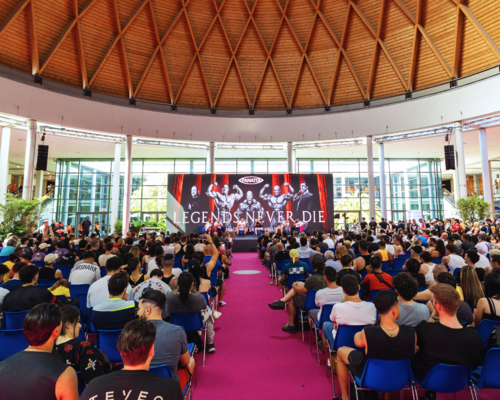
Panatta brought together four of the most influential figures in bodybuilding history on the
stage of RiminiWellness 2026: Phil Heath, Lee Haney, Ronnie Coleman and Hany Rambod. [more...]
Active Blackpool is deploying Cornerstone Connect, a new digital interface allowing
disparate information from multiple systems to be aggregated into one dataset, to support
its focus on reducing health inequalities and improving healthy life expectancy. [more...]
+ More featured suppliers
COMPANY PROFILES
Safe Space Lockers
We provide a full turn-key solution for clients from design and consultation, through to bespoke man [more...]
Precor
Precor promises precision-quality products with steadfast reliability that are inspired by exerciser [more...]
Both in the UK and internationally, the focus seems to be moving towards small group training at the expense of one-to-one personal training. Is the one-to-one model broken or still alive and kicking?
By Kath Hudson | Published in Health Club Management 2015 issue 1
Although still in demand, PTs must adapt to survive; having a specialism is vital / photo: www.shutterstock.com/Catalin Petolea
For those who can afford it, the benefits of one-to-one personal training cannot be underestimated: as well as designing a tailor-made programme, PTs can help ensure their clients adhere to it.
However, there are vast swathes of the population who would love to have a trainer but simply can’t afford one; others who sorely need the services of a PT, but who fall so far outside the demographic that they wouldn’t even think of it.
Meanwhile, set against the high price tag and demographically limited appeal of one-to-one personal training, we’ve seen a surge of interest in small group training (SGT) recently – a format that still allows for personalised attention and motivation, but at a lower cost. Matt Roberts, owner of Matt Roberts Personal Training clubs in London, comments: “At IHRSA last year, the big clubs were talking about having to regenerate their businesses. They’ve moved towards small group, bodyweight training exercise rather than lots of machines and racks which depreciate each year. This is in response to demand: gym-goers want more attention.”
Writing in The Huffington Post last year, Jamie Walker, CEO of SweatGym, said personal trainers are going to have to change their approach if they’re to survive: “The days are numbered for PTs who subsist simply by showing you how to work out in a gym.” She argues that trainers need to put the ‘personal’ back into personal training, evolving and adapting to accommodate the changing needs of clients; having a niche or a specialism is now vital, she says – a point with which Roberts agrees.
So how should operators respond? Is one-to-one training broken, and if so should they invest exclusively in small group training? Should they emulate freemium providers such as The Daily Hit, Fitness Blender and BeFit, embracing technology and offering PT online, dropping the price point and allowing PTs to work with more clients? Should they look at ways to offer PT and SGT at more affordable prices? We ask the experts for their thoughts....
Do you think one-to-one personal training has a future? Email us: [email protected]
Matt Roberts Owner Matt Roberts Personal Training
Matt Roberts
“There’s still an enormous appetite for one-on-one training, but really only in affluent areas in central London. From a cost point of view, it’s prohibitive for PT to take off in suburban or rural areas; SGT has broadened the market and catered for those who want to work out with specialists but can’t afford one-on-one.
Although the one-to-one model is not broken, trends and technology are changing it. The days of PTs going from house to house are limited as this is such a time-inefficient model, even in London. Although one-on-one PT will remain our core focus, we’re diversifying with the launch of a SGT club this year. It will be in London, but not a prime central location. It will be a different space and a different brand is being created.
There’s currently a staggering demand for home workouts, and we’re also responding to this with the launch of an app via mycloudtag, which is like having an interactive trainer. This will allow us to reach a broader audience with an inexpensive price point. Also, we’re launching an online TV channel in the next couple of months. This will offer live workouts with me and our other trainers. Users will be able to interact with the presenters and watch celebrity guests take part in the workout, as well as text and email questions.”
Arron WilliamsSpecial projectsLife Fitness
Arron Williams
“I don’t think the one-to-one model is broken, but it is largely the domain of the affluent few in the conventional health club setting. Meanwhile the explosion of boutique gyms and studios has brought about an evolution of the personal training model, whereby it’s geared much more towards small group and group training rather than one-to-one.
PT is typically the second largest source of revenue for most health clubs, and the recent IHRSA consumer report indicated that clubs have a great opportunity to more fully leverage PT services, as only 14 per cent of members are taking a PT session annually and only 2.5 per cent are regular users (50 or more sessions a year). Compare this to boutiques, where PT uptake is typically 35–60 per cent and driven mainly by SGT.
Going forward, I believe health clubs need to explore different ways to drive average revenue per member and review how they can enhance both their existing group training and SGT offering, perhaps with branded programmes around products or structured programmes. Alternatively, they could look to take a leaf out of the freemium providers’ handbook by embracing technology and offering different forms of PT services and support for members online, 24/7.”
David MintonDirector The Leisure Database Company
David Minton
“Idon’t think the one-to-one business model is broken, but it needs tweaking. Everything changes all the time and it’s important to evolve to ensure you keep offering the best service.
Everyone could benefit from a PT to provide motivation and stop boredom creeping in, but the current one-to-one model is flawed, as it’s too expensive for most people.
I’d like to see the emergence of a new business model where PT is financed differently to make it affordable. I’d like to see it being offered as part of the membership, even if this means the membership price has to increase slightly. Nuffield has already tried this with its wellbeing membership. What the clubs lose in secondary income could be made up for by members getting better results, which leads to better retention and more credibility with the healthcare sector. For the big chains, just one month’s extra membership across its membership base would be worth millions.
Operators could also offer PT more cheaply if apps and the internet were embraced to allow PTs to work with numerous clients at once. However, it’s crucial that if PT is offered more widely, standards aren’t compromised and the education and knowledge base of personal trainers is kept high.”
Lucy BirchHead of trainingThe Training Rooms
Lucy Birch
“Our experience is showing there’s still a huge market for one-to-one PT. We’re seeing consistent growth in this area. At the moment we train 3,000 personal trainers a year, but we’re looking to grow that to 10,000 a year by 2016, and this is driven by the fact that demand for individual PT sessions is strong.
Awareness about the impact of obesity, alongside ‘fitspiration’ posts on social media, is having a huge impact on the health and fitness industry, and our big name gym partners – both budget and premium brands – are taking on more personal trainers to meet this increased demand.
Although group training has grown in popularity recently too, there will always be a large proportion of people who want that intensive connection with an expert and are prepared to pay for it. Not everyone feels comfortable, or able to achieve their specific goals, in a group environment.
There’s always the argument that not everyone can afford one-to-one sessions. While I don’t think the cost of PT should be dropped or included in gym membership packages – as this devalues the service and the experience of the professional – I would like to see an expansion of GP referral schemes, where patients are referred for a course of one-to-one training.”
The UK's four Chief Medical Officers have published a refreshed edition of Physical activity
guidelines: UK Chief Medical Officers' report, updating the evidence that underpins the nation's
physical activity recommendations and placing greater emphasis on strength, balance, reducing
sedentary behaviour and, for the first time, supporting people taking weight loss medications.
Places Leisure has exchanged contracts to build and operate a flagship £60m water and leisure
destination on behalf of Basingstoke and Deane Borough Council.
The Republic of Ireland will become the latest market in PureGym’s expanding international
portfolio, with the first launch planned for Dublin in 2027.
Anytime Fitness opened more than one club a day in 2025 and is on track to maintain this rate
of growth this year, as parent company Purpose Brands targets further international expansion.
The £33.9 million Leighton Leisure and Community Centre has opened in Leighton Buzzard, UK,
creating a next-generation public leisure, health and wellbeing hub for the local community.
Walnuts Leisure Centre in Orpington, in the London Borough of Bromley, has reopened following
a £17m transformation designed to secure the long-term future of the public leisure asset and
reposition it as a community wellbeing hub.
The Gym Group, has announced that it's sustained positive trading momentum has continued
through the first half of 2026 and the company remains confident about the outlook.
Luxury boutique Pilates and wellness studio, X-Club, officially launches a
4,000sq ft flagship at
Marylebone on 16 July Built around X-Club’s four pillars of wellness – mind,
movement,
nutrition and therapy – the facility features two group exercise studi
Panatta brought together four of the most influential figures in bodybuilding history on the
stage of RiminiWellness 2026: Phil Heath, Lee Haney, Ronnie Coleman and Hany Rambod. [more...]
Active Blackpool is deploying Cornerstone Connect, a new digital interface allowing
disparate information from multiple systems to be aggregated into one dataset, to support
its focus on reducing health inequalities and improving healthy life expectancy. [more...]
+ More featured suppliers
COMPANY PROFILES
Safe Space Lockers We provide a full turn-key solution for clients from design and consultation, through to bespoke man [more...]