Tech giants such as Apple and Google are pouring millions into what’s frequently dubbed ‘the next big thing’, while the wearables market is also courting innovation from a host of exciting start-ups. The wearables market is expected to represent at least US$2bn in revenue globally by 2018, with health and fitness trackers currently representing around 61 per cent of the sector.
The ramifications for health and wellbeing are huge. Medical institutions are already using the technology to monitor patients’ vitals – aiming to identify problems early – and there’s potential for spas and health clubs to monitor customer biometrics as well.
Wearables are infiltrating corporate wellness programmes too, as US employers harness information from health trackers to determine employees’ health insurance premiums. And many feel this is just the start for wearable tech, which has the potential for seamless integration with the Internet of Things – the advanced connectivity of devices, systems and services – as it gains momentum.
We look at the latest innovations in health and fitness wearables, to assess which ideas could leave rivals stuck in the starting blocks.
Jak Phillips is head of news at Leisure Media Email: jakphillips@ leisuremedia.com
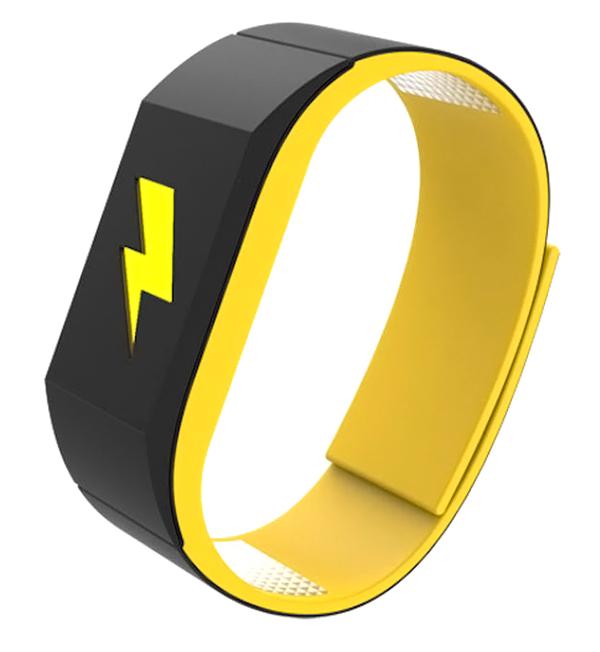
PAVLOK Be it sleeping in or skipping the gym, everyone wishes they could kick those bad habits that hurt productivity and prevent physical activity. Now, a new wearable is bidding to not just track activity, but use pain and shame to ensure users have no choice but to reach their goals.
Due for release in 2015, Pavlok is a fitness tracking wristband that also serves as a behavioural conditioner, with a pre-order price of US$149.99. Aside from the usual tracking of steps, activity and sleep, this wearable has the ability to give away your money, shame you on social media, or even deliver a 340v static shock if you slip back into bad habits. It also offers rewards – as yet unspecified – as well as posting encouraging social media posts if you stay on the straight and narrow.
Triallists have mainly been using the device to help programme their body to wake up earlier and exercise more, although there’s clearly potential for such technology to be applied to diet control and smoking cessation as well.
?Pavlok delivers a short, sharp shock to users who stray off plan
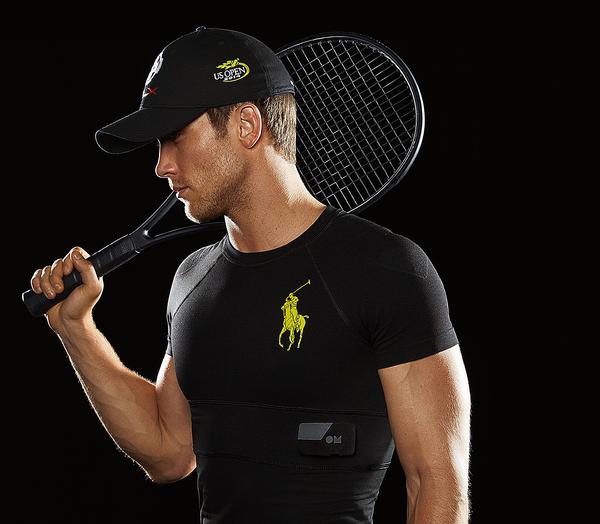
RALlPH LAUREN POLO TECH T-SHIRT From 2015, tennis enthusiasts will be able to record metrics and data from recent performances to improve their game, thanks to a movement tracking shirt from fashion designer Ralph Lauren.
The luxury brand’s Polo Tech T-shirt uses sensors knitted into the fabric to read heartbeat, respiration and other biometrics. Data collected by the shirt is stored by a ‘black box system’, which also captures movement and direction metrics.
These findings, along with data related to energy output and stress levels, are sent to the cloud and are viewable on a tablet or smartphone.
Meanwhile, Sony is preparing to launch its attachable Smart Tennis Sensor early next year. The US$200 device attaches to rackets to record up to 12,000 shots of swing and serve data.
The T-shirt’s sensors can read heartbeat
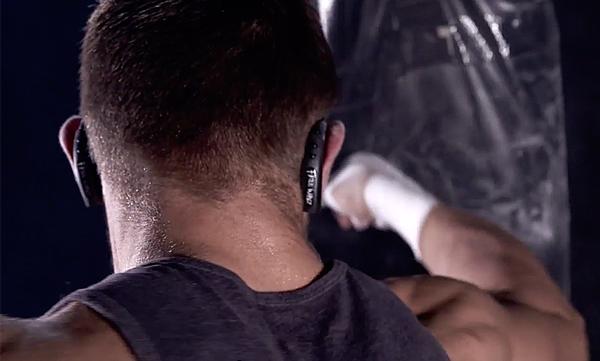
FREEWAVS EARPHONES FreeWavz is creating a set of earphones that will collate health and fitness metrics and audibly relay this information to exercisers – particularly useful for cyclists and joggers, who won’t have to take their eyes off the road.
Designed by otolaryngology specialist Dr Eric Hensen, the earphones will operate without the need for any other wearable tech, also offering wireless connectivity to music streaming, a step counter, plus heart rate and oxygen saturation monitoring.
Hensen was frustrated by poorly-fitting headphones that can disrupt workouts by falling out, or worse still cause injuries when the wires become entangled – hence his invention.
The product will allow exercisers to change or pause music through voice commands and will connect to a smartphone to collate health metrics.
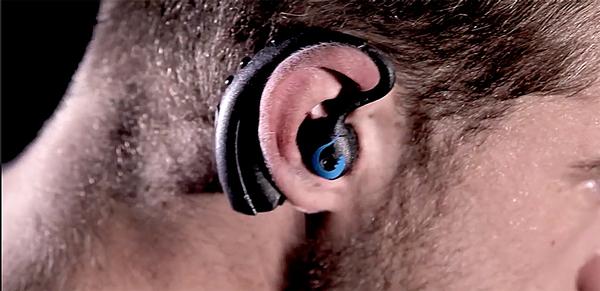
The earphones also feature an extra speaker above the standard earbud, which allows users to listen to music while at the same time keeping ears alive to the sound of passing cars.
The first production run of the headphones is due to commence in January 2015.
Freewavz wireless earphones
The wireless earphones relay health and fitness metrics and stream music via voice commands
Freewavz wireless earphones
BITE COUNTER While many of the wearables featured in this article focus on health from an exercise perspective, the Bite Counter bids to remedy the developed world’s obesity crisis by discouraging overeating.
The counter has been designed as a wristwatch that’s able to detect, count and display the number of bites its wearer takes each day, thereby serving as a visual red flag against over-indulgence.
It uses wrist-motion tracking to count bites and estimate calories, while an alarm buzzer can be set to warn users when they’re near their daily bite count.
Developed at South Carolina’s Clemson University in the US, the Bite Counter tracks consumption levels over long periods. It createsa log from which users can analyse when they’re eating most and least, allowing for changes to be made to manage weight.
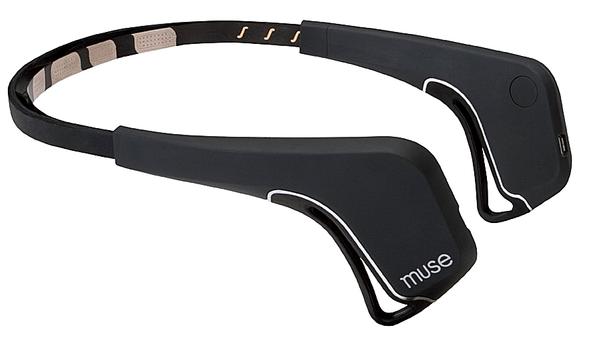
THE MUSE HEADBAND The Muse headband by wearable tech start-up InteraXon helps people meditate, and is marketed as a product to help manage stress.
It reads and measures the user’s brainwaves to paint a picture of how brain activity is affected by emotions. It also comes with an integrated brain health application that teaches meditation.
The device rests on the ears like a pair of sunglasses and teaches users how to calm their brain via computer-guided meditation, in the form of cranial training app Calm. The benefits of decreasing brainwave rhythm using meditative techniques include the production of endorphins and dopamine, better memory, attentiveness and empathy, according to InteraXon.
The device uses a rechargeable battery and is compatible with iOS, Mac and select PC operating systems, retailing at approximately US$299.
The Muse meditative headband rests lightly on the ears, rather like a pair
of sunglasses
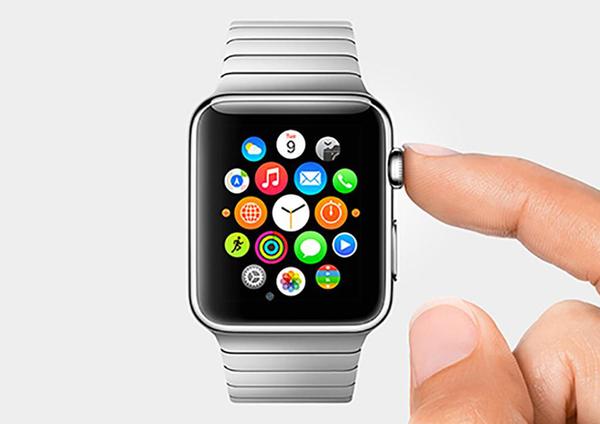
APPLE WATCH Apple debuted its long-awaited smartwatch offering in September, featuring a host of health and fitness-related functions.
Due to ship in early 2015, the Apple Watch features photo- sensitive sensors to record pulse information, while connectivity with an iPhone allows for wifi and GPS usage to track movement, pace and distance travelled. An accelerometer measures total body movement, as well as the quality and intensity of movements made.
The Watch includes two specific health and fitness apps: Fitness and Workout. The Fitness app tracks all types of activity goals, with a series of visual ‘rings’ signifying daily progress. Workout facilitates fitness plans and displays workout metrics in real time on the watch.
With so many apps tracking aspects of wellbeing, Apple has also moved to unify the fragmented market by launching its Healthkit platform (compatible with the watch) that pulls in data from third- party health apps and presents the data in one manageable dashboard.
The device is priced from US$359
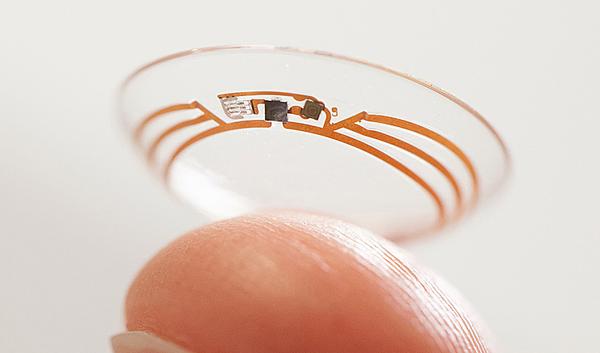
GOOGLE GLASS / SMART LENS In addition to its Glass product – which functions like a hands- free smartphone, with information displayed in the user’s sight line – Google is developing smart contact lenses.
Announced in January, the lenses look set to be able to monitor blood sugar levels via an antenna smaller than a strand of human hair. This will open up new methods of self- management for chronic diseases such as diabetes, as well as tracking uses applicable to fitness.
With a camera potentially being used the lenses could have virtual reality applications in the lenses, people’s vision could be corrected much like the auto-focus on a camera. This could create new interactive opportunities for the visually impaired in terms of sport participation and health and fitness, as well as VR applications.
Google is partnering with pharmaceutical company Novartis to take the project forward, aiming to come up with a prototype in 2015.
The lenses could have virtual reality applications
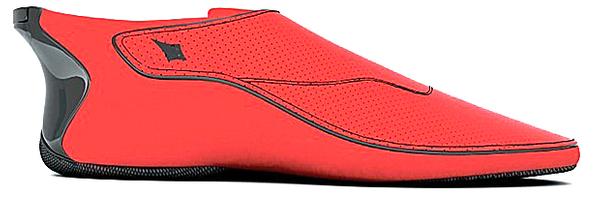
LECHAL TRAINERS While much wearable technology has so far focused on wristwear, a company from India wants to get to the heart and sole of fitness tracking through its Lechal wearable tech trainers.
Ducere is currently taking pre- orders with a view to a late 2014 release for its interactive haptic feedback footwear. The shoes are built with bluetooth-enabled insoles (which can also be bought separately) that connect to a smartphone and provide user feedback through insole vibrations. They can be connected to Google Maps, enabling directions to be disseminated without the need to look at a screen – handy for running in busy streets – while the usual pedometer/ calorie counter is also present.
The company has indicated the insole will be priced at US$100, with the cost of the shoes likely to be similar. The creators were initially developing a shoe designed for the visually impaired, before realising the concept had broader applications.
The shoes have bluetooth- enabled insoles that connect to a smartphone
Active Blackpool is deploying Cornerstone Connect, a new digital interface allowing
disparate information from multiple systems to be aggregated into one dataset, to support
its focus on reducing health inequalities and improving healthy life expectancy. [more...]
Panatta brought together four of the most influential figures in bodybuilding history on the
stage of RiminiWellness 2026: Phil Heath, Lee Haney, Ronnie Coleman and Hany Rambod. [more...]
Tech giants such as Apple and Google are pouring millions into what’s frequently dubbed ‘the next big thing’, while the wearables market is also courting innovation from a host of exciting start-ups. The wearables market is expected to represent at least US$2bn in revenue globally by 2018, with health and fitness trackers currently representing around 61 per cent of the sector.
The ramifications for health and wellbeing are huge. Medical institutions are already using the technology to monitor patients’ vitals – aiming to identify problems early – and there’s potential for spas and health clubs to monitor customer biometrics as well.
Wearables are infiltrating corporate wellness programmes too, as US employers harness information from health trackers to determine employees’ health insurance premiums. And many feel this is just the start for wearable tech, which has the potential for seamless integration with the Internet of Things – the advanced connectivity of devices, systems and services – as it gains momentum.
We look at the latest innovations in health and fitness wearables, to assess which ideas could leave rivals stuck in the starting blocks.
Jak Phillips is head of news at Leisure Media Email: jakphillips@ leisuremedia.com
PAVLOK Be it sleeping in or skipping the gym, everyone wishes they could kick those bad habits that hurt productivity and prevent physical activity. Now, a new wearable is bidding to not just track activity, but use pain and shame to ensure users have no choice but to reach their goals.
Due for release in 2015, Pavlok is a fitness tracking wristband that also serves as a behavioural conditioner, with a pre-order price of US$149.99. Aside from the usual tracking of steps, activity and sleep, this wearable has the ability to give away your money, shame you on social media, or even deliver a 340v static shock if you slip back into bad habits. It also offers rewards – as yet unspecified – as well as posting encouraging social media posts if you stay on the straight and narrow.
Triallists have mainly been using the device to help programme their body to wake up earlier and exercise more, although there’s clearly potential for such technology to be applied to diet control and smoking cessation as well.
?Pavlok delivers a short, sharp shock to users who stray off plan
RALlPH LAUREN POLO TECH T-SHIRT From 2015, tennis enthusiasts will be able to record metrics and data from recent performances to improve their game, thanks to a movement tracking shirt from fashion designer Ralph Lauren.
The luxury brand’s Polo Tech T-shirt uses sensors knitted into the fabric to read heartbeat, respiration and other biometrics. Data collected by the shirt is stored by a ‘black box system’, which also captures movement and direction metrics.
These findings, along with data related to energy output and stress levels, are sent to the cloud and are viewable on a tablet or smartphone.
Meanwhile, Sony is preparing to launch its attachable Smart Tennis Sensor early next year. The US$200 device attaches to rackets to record up to 12,000 shots of swing and serve data.
The T-shirt’s sensors can read heartbeat
FREEWAVS EARPHONES FreeWavz is creating a set of earphones that will collate health and fitness metrics and audibly relay this information to exercisers – particularly useful for cyclists and joggers, who won’t have to take their eyes off the road.
Designed by otolaryngology specialist Dr Eric Hensen, the earphones will operate without the need for any other wearable tech, also offering wireless connectivity to music streaming, a step counter, plus heart rate and oxygen saturation monitoring.
Hensen was frustrated by poorly-fitting headphones that can disrupt workouts by falling out, or worse still cause injuries when the wires become entangled – hence his invention.
The product will allow exercisers to change or pause music through voice commands and will connect to a smartphone to collate health metrics.
The earphones also feature an extra speaker above the standard earbud, which allows users to listen to music while at the same time keeping ears alive to the sound of passing cars.
The first production run of the headphones is due to commence in January 2015.
Freewavz wireless earphones
The wireless earphones relay health and fitness metrics and stream music via voice commands
Freewavz wireless earphones
BITE COUNTER While many of the wearables featured in this article focus on health from an exercise perspective, the Bite Counter bids to remedy the developed world’s obesity crisis by discouraging overeating.
The counter has been designed as a wristwatch that’s able to detect, count and display the number of bites its wearer takes each day, thereby serving as a visual red flag against over-indulgence.
It uses wrist-motion tracking to count bites and estimate calories, while an alarm buzzer can be set to warn users when they’re near their daily bite count.
Developed at South Carolina’s Clemson University in the US, the Bite Counter tracks consumption levels over long periods. It createsa log from which users can analyse when they’re eating most and least, allowing for changes to be made to manage weight.
THE MUSE HEADBAND The Muse headband by wearable tech start-up InteraXon helps people meditate, and is marketed as a product to help manage stress.
It reads and measures the user’s brainwaves to paint a picture of how brain activity is affected by emotions. It also comes with an integrated brain health application that teaches meditation.
The device rests on the ears like a pair of sunglasses and teaches users how to calm their brain via computer-guided meditation, in the form of cranial training app Calm. The benefits of decreasing brainwave rhythm using meditative techniques include the production of endorphins and dopamine, better memory, attentiveness and empathy, according to InteraXon.
The device uses a rechargeable battery and is compatible with iOS, Mac and select PC operating systems, retailing at approximately US$299.
The Muse meditative headband rests lightly on the ears, rather like a pair
of sunglasses
APPLE WATCH Apple debuted its long-awaited smartwatch offering in September, featuring a host of health and fitness-related functions.
Due to ship in early 2015, the Apple Watch features photo- sensitive sensors to record pulse information, while connectivity with an iPhone allows for wifi and GPS usage to track movement, pace and distance travelled. An accelerometer measures total body movement, as well as the quality and intensity of movements made.
The Watch includes two specific health and fitness apps: Fitness and Workout. The Fitness app tracks all types of activity goals, with a series of visual ‘rings’ signifying daily progress. Workout facilitates fitness plans and displays workout metrics in real time on the watch.
With so many apps tracking aspects of wellbeing, Apple has also moved to unify the fragmented market by launching its Healthkit platform (compatible with the watch) that pulls in data from third- party health apps and presents the data in one manageable dashboard.
The device is priced from US$359
GOOGLE GLASS / SMART LENS In addition to its Glass product – which functions like a hands- free smartphone, with information displayed in the user’s sight line – Google is developing smart contact lenses.
Announced in January, the lenses look set to be able to monitor blood sugar levels via an antenna smaller than a strand of human hair. This will open up new methods of self- management for chronic diseases such as diabetes, as well as tracking uses applicable to fitness.
With a camera potentially being used the lenses could have virtual reality applications in the lenses, people’s vision could be corrected much like the auto-focus on a camera. This could create new interactive opportunities for the visually impaired in terms of sport participation and health and fitness, as well as VR applications.
Google is partnering with pharmaceutical company Novartis to take the project forward, aiming to come up with a prototype in 2015.
The lenses could have virtual reality applications
LECHAL TRAINERS While much wearable technology has so far focused on wristwear, a company from India wants to get to the heart and sole of fitness tracking through its Lechal wearable tech trainers.
Ducere is currently taking pre- orders with a view to a late 2014 release for its interactive haptic feedback footwear. The shoes are built with bluetooth-enabled insoles (which can also be bought separately) that connect to a smartphone and provide user feedback through insole vibrations. They can be connected to Google Maps, enabling directions to be disseminated without the need to look at a screen – handy for running in busy streets – while the usual pedometer/ calorie counter is also present.
The company has indicated the insole will be priced at US$100, with the cost of the shoes likely to be similar. The creators were initially developing a shoe designed for the visually impaired, before realising the concept had broader applications.
The shoes have bluetooth- enabled insoles that connect to a smartphone
The UK's four Chief Medical Officers have published a refreshed edition of Physical activity
guidelines: UK Chief Medical Officers' report, updating the evidence that underpins the nation's
physical activity recommendations and placing greater emphasis on strength, balance, reducing
sedentary behaviour and, for the first time, supporting people taking weight loss medications.
Places Leisure has exchanged contracts to build and operate a flagship £60m water and leisure
destination on behalf of Basingstoke and Deane Borough Council.
The Republic of Ireland will become the latest market in PureGym’s expanding international
portfolio, with the first launch planned for Dublin in 2027.
Anytime Fitness opened more than one club a day in 2025 and is on track to maintain this rate
of growth this year, as parent company Purpose Brands targets further international expansion.
The £33.9 million Leighton Leisure and Community Centre has opened in Leighton Buzzard, UK,
creating a next-generation public leisure, health and wellbeing hub for the local community.
Walnuts Leisure Centre in Orpington, in the London Borough of Bromley, has reopened following
a £17m transformation designed to secure the long-term future of the public leisure asset and
reposition it as a community wellbeing hub.
The Gym Group, has announced that it's sustained positive trading momentum has continued
through the first half of 2026 and the company remains confident about the outlook.
Luxury boutique Pilates and wellness studio, X-Club, officially launches a
4,000sq ft flagship at
Marylebone on 16 July Built around X-Club’s four pillars of wellness – mind,
movement,
nutrition and therapy – the facility features two group exercise studi
Active Blackpool is deploying Cornerstone Connect, a new digital interface allowing
disparate information from multiple systems to be aggregated into one dataset, to support
its focus on reducing health inequalities and improving healthy life expectancy. [more...]
Panatta brought together four of the most influential figures in bodybuilding history on the
stage of RiminiWellness 2026: Phil Heath, Lee Haney, Ronnie Coleman and Hany Rambod. [more...]