Jacqueline Bennett looks at whether, by adopting a new approach to design and
city planning, we can make our cities – and their populations – well again
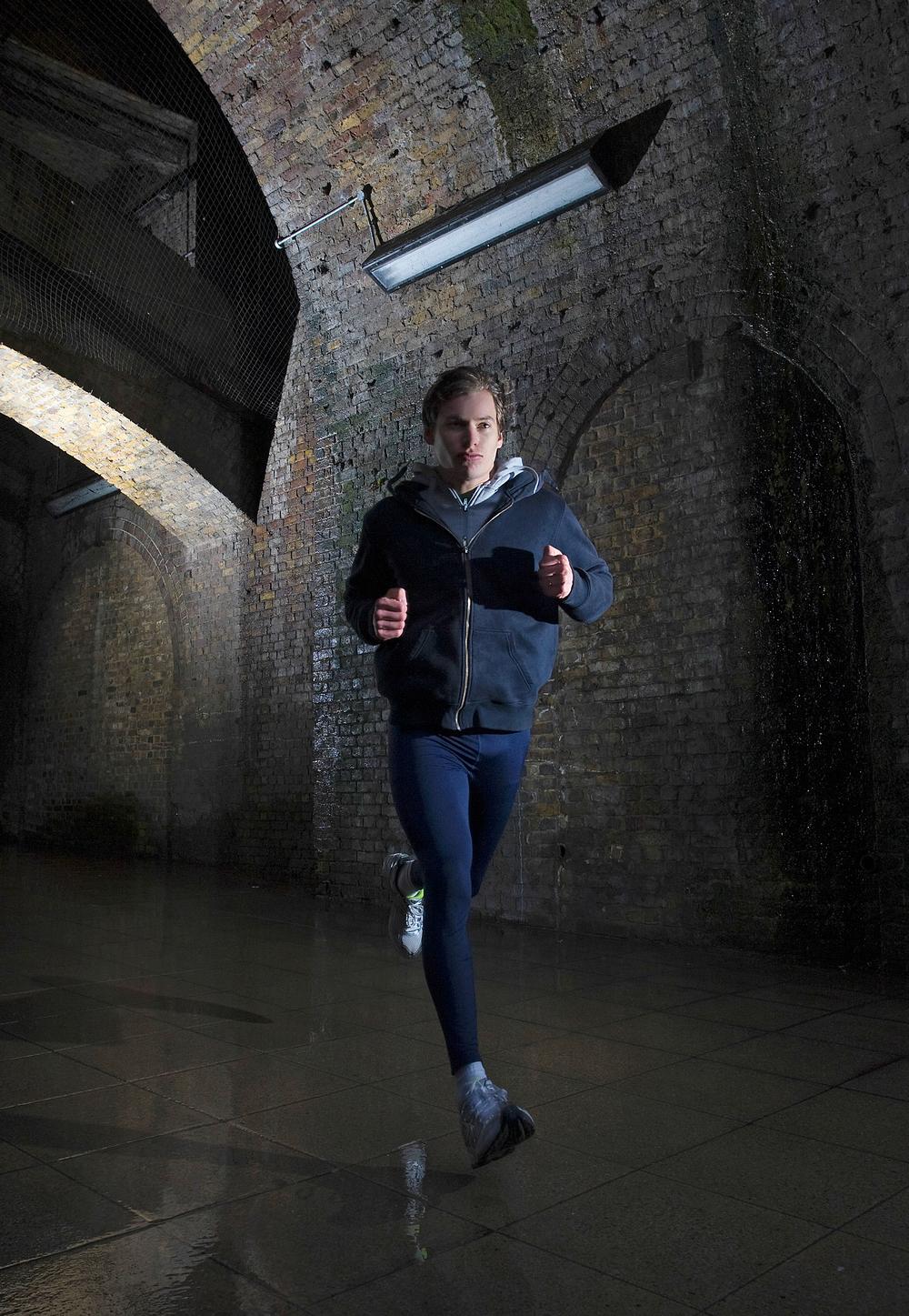
There’s been a huge increase in the number of running groups, clubs and events, showing the public thirst to be more active
Even Mick Cornett, the enterprising mayor of Oklahoma in the US, couldn’t have envisaged the huge impact his ‘We’re going to lose a million pounds’ campaign would have on the city when he launched the initiative in 2008 (www.thiscityisgoingonadiet.com).
After 18 months – with local restaurants providing healthier options and sports facilities offering special discounts – the city’s residents had collectively lost half a million pounds in weight. But it was only after citizens agreed a seven-year, one cent increase in sales tax to fund new bike lanes, sidewalks, hiking trails, ice rinks, green spaces and wellness centres that the city finally reached its target in 2011.
Oklahoma reputedly now has the highest adult employment rate of any city in the US. Firms are keen to invest and relocate there because the workforce is so much fitter than in other cities. Not only has the city become healthier, it has become wealthier too.
Evidence and policy Much is now being written about active design – designing, constructing and managing our environment in such a way as to encourage people to be active (see HCM March 14, p5). It’s an exciting idea and one that has had a long genesis in town planning in the UK.
The National Planning Policy Framework (NPPF) demonstrates how the planning system can play an important role in promoting healthy communities, leading to reductions in health inequalities, better access to healthy food, reduced obesity, more physical activity, better mental health and wellbeing, and improved air quality.
Meanwhile recent major reforms to planning and to health and social care – notably the National Planning Policy Framework 2012, the Health and Social Care Act 2012 (which created local Health and Wellbeing Boards) and the Localism Act 2011, which ushered in neighbourhood planning – now present many opportunities for joined-up thinking to improve people’s health.
These opportunities have been highlighted by, among others, the Town and Country Planning Association through the Reuniting Health with Planning: Healthier Homes, Healthier Communities report. This report offers an overview of how local authorities can improve health and reduce health inequalities by bringing together related disciplines such as housing, transport planning and regeneration. It includes a section designed to help identify links between public health objectives and how places can be shaped to respond to them.
Alongside growing statutory endorsement of the benefits of better town and city planning for improving health, fitness and quality of life, a raft of other documents and initiatives have emerged. In 2003, CABE Space – a specialist unit of CABE – was set up to champion the importance of urban public space, particularly parks and green spaces, in improving quality of life.
Meanwhile, in what has turned out to be a prescient document, Sport England published Active Design: Promoting opportunities for sport and physical activity through good design in the mid-2000s, integrating agendas around design, health and transport and setting out many examples encapsulating the three design objectives of improving accessibility, enhancing amenity and increasing awareness.
In its City Health Check – published in 2012 and analysing health problems correlated to the amount of green and public space available in London and England’s eight ‘core cities’ – the Royal Institute of British Architects (RIBA) found the areas of the UK’s cities with the poorest health outcomes are those with the least green space. Moreover it’s the quality of streets and parks, as much as the quantity, that encourages people to walk more.
Then there’s the Design Council in the UK, which is championing its own Active by Design campaign – including a conference in London next month – to address the serious health issues facing us, brought on by a lack of physical exercise and poor diet. It aims to be a catalyst for change, finding new links and connecting aspects of the planning system, health service and the built environment sector, both public and private, where few currently exist.
There’s a plethora of advice and guidance around improving our environment to benefit health and wellness.
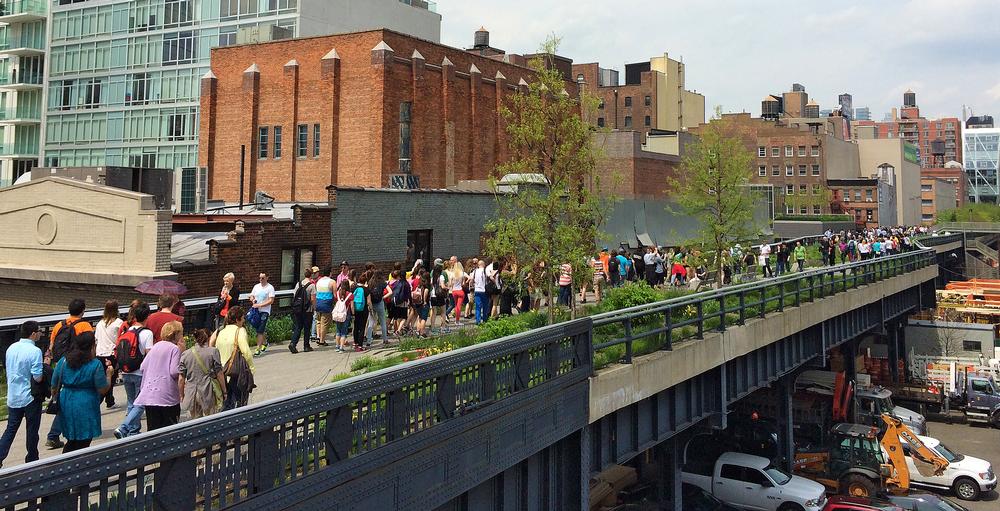
Theory into practice So how is all this manifesting itself in practice? Initiatives range from the quirky – such as designing stairs to look like piano keys – to the grandiose, such as the High Line in New York, US, where the old elevated railway track in lower Manhattan has been resurfaced and turned into a green walkway.
Meanwhile the Movement for Liveable London campaign is aiming for a more pleasant and healthy city by changing the way people move around it. This sits in line with Sport England’s Active Design report, which talks about linking popular “everyday activity destinations” – so that’s shops, schools, doctors’ surgeries and main workplaces – via cyclepaths and good, pedestrian-friendly walkways.
Another example is Living Streets’ Fitter for Walking programme, funded through the Big Lottery’s Wellbeing Programme, which has provided support and information to residents and promoted small-scale enhancements to streets in selected city areas in the UK. Increases in walking were recorded within almost all the targeted areas.
Connect the existing network Now, when we build anything new, we need to be aware of the enormous possibilities out there, and how even small changes to design can have a huge knock-on effect in terms of getting people active. But equally, we must not lose sight of the facilities we already have and how we can integrate them into the brave new world of active design, ensuring they are both viable and sustainable.
For example, the facilities laid out in our traditional recreation grounds during the mid-20th century – typically a couple of football pitches, a cricket square, some tennis courts and a bowling green – represented a ‘keep fit’ package then aspired to, which suited people’s way of life. It would be taken for granted that you would cycle or walk there, although rarely along special cycleways or footpaths. However, their pattern and level of use is changing: for example, there’s a trend away from grass surfaces for adult 11-a-side football towards small-sided soccer on artificial grass pitches. There’s also a drop-off in demand for outdoor public tennis courts and bowling greens, leaving some of them sadly under-used.
Parallel to this, there has been an explosion in the number of running and cycling groups, clubs and events now taking place throughout the UK, catering for all levels of ability and demand.
Recreation grounds have adapted to some extent: adding children’s play areas, changing tennis courts to multi-use games surfaces, installing floodlights to extend hours of use and constructing ‘trim trails’.
But although there’s still a range of funding sources for developing and improving sports facilities, particularly for the voluntary sector, local authorities have seen their budgets for provision, enhancement and maintenance severely reduced, and also have fewer personnel to promote, supervise and manage them. Meanwhile, well over half of all sports facilities are located on school, college and university sites; we need to encourage their use by the wider community, not only to make the best use of resources but also to show young people that being active is important for their whole life.
We need to link all these existing facilities in to the Active Design movement, and try to bridge the divides that exist between fitness and sport, between indoor and outdoor facilities and between public, educational and commercial sites. It’s wonderful to have new cycleways and footpaths, but wherever possible let’s try to link them to other existing activity destinations – sports centres, outdoor and indoor pools, astroturf pitches, grass pitches, tennis courts, allotments, beaches, rivers and school sports facilities.
We can use open space in parks more effectively too, by providing sheltered seating and meeting points, water fountains and outdoor showers, measured walking tracks, wildflower meadows and healthy food outlets. Many such projects are being funded through the Fields in Trust (formerly the NPFA) and its Queen Elizabeth II Fields initiative, which set out to permanently protect outdoor recreational spaces.
On a positive note, some sports centres are already using health sector funding to provide bicycles and setting up local cycling networks; others are increasingly used as bases for running and cycling events. But as further food for thought, how about converting disused tennis courts to small allotment areas? Co-locating facilities in this way can bring many benefits in terms of increased use, more revenue, improved sustainability and better supervision.
Maximising use In its City Health Check document, RIBA recommended the production of Healthy Infrastructure Action Plans in local authorities that comprise less than 50 per cent green space and/or have a housing density of over 5 per cent, with the idea that these might be partly funded through the Community Infrastructure Levy.
A spin-off from this could be the creation of fitness trails that set out measured routes by foot or bicycle linking ‘activity destinations’, with opportunities to stop off along the way. It would be great to encourage people using these to become volunteers and responsibly monitor use of facilities, so that as well as benefiting their own health, they are helping others.
Indeed, some local authorities are already training volunteers to check for litter and damage to play areas and paddling pools, so they can notify the local authority if there’s a problem to attend to, thus making more efficient use of maintenance staff’s time.
As well as taking responsibility for our own health, we need to take responsibility for our active environment, as in this era of reduced public sector expenditure we risk losing any sports and fitness facilities we don’t use. There are already many wonderful opportunities out there – let’s encourage their use as effectively as we can.
Some of the documents referenced in this feature can be found online:
- Reuniting Health with Planning: Healthier Homes, Healthier Communities www.health-club.co.uk/TCPA
- Active Design: Promoting opportunities for sport and physical activity through good design www.health-club.co.uk/sportengland_activedesign
- City Health Check www.health-club.co.uk/cityhealthcheck
A promotional video by the mayor of Oklahoma was aimed at inspiring the US state’s residents to get active and lose weight
There is evidence to suggest that taking active lifestyles into account at an urban planning level leads to healthier communities
Panatta brought together four of the most influential figures in bodybuilding history on the
stage of RiminiWellness 2026: Phil Heath, Lee Haney, Ronnie Coleman and Hany Rambod. [more...]
+ More featured suppliers
COMPANY PROFILES
PSLT Ltd
PSLT Fitness Solutions manufacture, remanufacture and buy back commercial gym equipment. [more...]
Jacqueline Bennett looks at whether, by adopting a new approach to design and
city planning, we can make our cities – and their populations – well again
There’s been a huge increase in the number of running groups, clubs and events, showing the public thirst to be more active
Even Mick Cornett, the enterprising mayor of Oklahoma in the US, couldn’t have envisaged the huge impact his ‘We’re going to lose a million pounds’ campaign would have on the city when he launched the initiative in 2008 (www.thiscityisgoingonadiet.com).
After 18 months – with local restaurants providing healthier options and sports facilities offering special discounts – the city’s residents had collectively lost half a million pounds in weight. But it was only after citizens agreed a seven-year, one cent increase in sales tax to fund new bike lanes, sidewalks, hiking trails, ice rinks, green spaces and wellness centres that the city finally reached its target in 2011.
Oklahoma reputedly now has the highest adult employment rate of any city in the US. Firms are keen to invest and relocate there because the workforce is so much fitter than in other cities. Not only has the city become healthier, it has become wealthier too.
Evidence and policy Much is now being written about active design – designing, constructing and managing our environment in such a way as to encourage people to be active (see HCM March 14, p5). It’s an exciting idea and one that has had a long genesis in town planning in the UK.
The National Planning Policy Framework (NPPF) demonstrates how the planning system can play an important role in promoting healthy communities, leading to reductions in health inequalities, better access to healthy food, reduced obesity, more physical activity, better mental health and wellbeing, and improved air quality.
Meanwhile recent major reforms to planning and to health and social care – notably the National Planning Policy Framework 2012, the Health and Social Care Act 2012 (which created local Health and Wellbeing Boards) and the Localism Act 2011, which ushered in neighbourhood planning – now present many opportunities for joined-up thinking to improve people’s health.
These opportunities have been highlighted by, among others, the Town and Country Planning Association through the Reuniting Health with Planning: Healthier Homes, Healthier Communities report. This report offers an overview of how local authorities can improve health and reduce health inequalities by bringing together related disciplines such as housing, transport planning and regeneration. It includes a section designed to help identify links between public health objectives and how places can be shaped to respond to them.
Alongside growing statutory endorsement of the benefits of better town and city planning for improving health, fitness and quality of life, a raft of other documents and initiatives have emerged. In 2003, CABE Space – a specialist unit of CABE – was set up to champion the importance of urban public space, particularly parks and green spaces, in improving quality of life.
Meanwhile, in what has turned out to be a prescient document, Sport England published Active Design: Promoting opportunities for sport and physical activity through good design in the mid-2000s, integrating agendas around design, health and transport and setting out many examples encapsulating the three design objectives of improving accessibility, enhancing amenity and increasing awareness.
In its City Health Check – published in 2012 and analysing health problems correlated to the amount of green and public space available in London and England’s eight ‘core cities’ – the Royal Institute of British Architects (RIBA) found the areas of the UK’s cities with the poorest health outcomes are those with the least green space. Moreover it’s the quality of streets and parks, as much as the quantity, that encourages people to walk more.
Then there’s the Design Council in the UK, which is championing its own Active by Design campaign – including a conference in London next month – to address the serious health issues facing us, brought on by a lack of physical exercise and poor diet. It aims to be a catalyst for change, finding new links and connecting aspects of the planning system, health service and the built environment sector, both public and private, where few currently exist.
There’s a plethora of advice and guidance around improving our environment to benefit health and wellness.
Theory into practice So how is all this manifesting itself in practice? Initiatives range from the quirky – such as designing stairs to look like piano keys – to the grandiose, such as the High Line in New York, US, where the old elevated railway track in lower Manhattan has been resurfaced and turned into a green walkway.
Meanwhile the Movement for Liveable London campaign is aiming for a more pleasant and healthy city by changing the way people move around it. This sits in line with Sport England’s Active Design report, which talks about linking popular “everyday activity destinations” – so that’s shops, schools, doctors’ surgeries and main workplaces – via cyclepaths and good, pedestrian-friendly walkways.
Another example is Living Streets’ Fitter for Walking programme, funded through the Big Lottery’s Wellbeing Programme, which has provided support and information to residents and promoted small-scale enhancements to streets in selected city areas in the UK. Increases in walking were recorded within almost all the targeted areas.
Connect the existing network Now, when we build anything new, we need to be aware of the enormous possibilities out there, and how even small changes to design can have a huge knock-on effect in terms of getting people active. But equally, we must not lose sight of the facilities we already have and how we can integrate them into the brave new world of active design, ensuring they are both viable and sustainable.
For example, the facilities laid out in our traditional recreation grounds during the mid-20th century – typically a couple of football pitches, a cricket square, some tennis courts and a bowling green – represented a ‘keep fit’ package then aspired to, which suited people’s way of life. It would be taken for granted that you would cycle or walk there, although rarely along special cycleways or footpaths. However, their pattern and level of use is changing: for example, there’s a trend away from grass surfaces for adult 11-a-side football towards small-sided soccer on artificial grass pitches. There’s also a drop-off in demand for outdoor public tennis courts and bowling greens, leaving some of them sadly under-used.
Parallel to this, there has been an explosion in the number of running and cycling groups, clubs and events now taking place throughout the UK, catering for all levels of ability and demand.
Recreation grounds have adapted to some extent: adding children’s play areas, changing tennis courts to multi-use games surfaces, installing floodlights to extend hours of use and constructing ‘trim trails’.
But although there’s still a range of funding sources for developing and improving sports facilities, particularly for the voluntary sector, local authorities have seen their budgets for provision, enhancement and maintenance severely reduced, and also have fewer personnel to promote, supervise and manage them. Meanwhile, well over half of all sports facilities are located on school, college and university sites; we need to encourage their use by the wider community, not only to make the best use of resources but also to show young people that being active is important for their whole life.
We need to link all these existing facilities in to the Active Design movement, and try to bridge the divides that exist between fitness and sport, between indoor and outdoor facilities and between public, educational and commercial sites. It’s wonderful to have new cycleways and footpaths, but wherever possible let’s try to link them to other existing activity destinations – sports centres, outdoor and indoor pools, astroturf pitches, grass pitches, tennis courts, allotments, beaches, rivers and school sports facilities.
We can use open space in parks more effectively too, by providing sheltered seating and meeting points, water fountains and outdoor showers, measured walking tracks, wildflower meadows and healthy food outlets. Many such projects are being funded through the Fields in Trust (formerly the NPFA) and its Queen Elizabeth II Fields initiative, which set out to permanently protect outdoor recreational spaces.
On a positive note, some sports centres are already using health sector funding to provide bicycles and setting up local cycling networks; others are increasingly used as bases for running and cycling events. But as further food for thought, how about converting disused tennis courts to small allotment areas? Co-locating facilities in this way can bring many benefits in terms of increased use, more revenue, improved sustainability and better supervision.
Maximising use In its City Health Check document, RIBA recommended the production of Healthy Infrastructure Action Plans in local authorities that comprise less than 50 per cent green space and/or have a housing density of over 5 per cent, with the idea that these might be partly funded through the Community Infrastructure Levy.
A spin-off from this could be the creation of fitness trails that set out measured routes by foot or bicycle linking ‘activity destinations’, with opportunities to stop off along the way. It would be great to encourage people using these to become volunteers and responsibly monitor use of facilities, so that as well as benefiting their own health, they are helping others.
Indeed, some local authorities are already training volunteers to check for litter and damage to play areas and paddling pools, so they can notify the local authority if there’s a problem to attend to, thus making more efficient use of maintenance staff’s time.
As well as taking responsibility for our own health, we need to take responsibility for our active environment, as in this era of reduced public sector expenditure we risk losing any sports and fitness facilities we don’t use. There are already many wonderful opportunities out there – let’s encourage their use as effectively as we can.
Some of the documents referenced in this feature can be found online:
- Reuniting Health with Planning: Healthier Homes, Healthier Communities www.health-club.co.uk/TCPA
- Active Design: Promoting opportunities for sport and physical activity through good design www.health-club.co.uk/sportengland_activedesign
- City Health Check www.health-club.co.uk/cityhealthcheck
A promotional video by the mayor of Oklahoma was aimed at inspiring the US state’s residents to get active and lose weight
There is evidence to suggest that taking active lifestyles into account at an urban planning level leads to healthier communities
Les Mills has launched a reformer Pilates workout. The 45-minute workout blends traditional
reformer movements and more contemporary exercises, choreographed to music.
According to research which tracked more than 147,000 people for 30 years, 90-120 minutes
of strength training a week may deliver some of the biggest long-term health rewards.
The UK's four Chief Medical Officers have published a refreshed edition of Physical activity
guidelines: UK Chief Medical Officers' report, updating the evidence that underpins the nation's
physical activity recommendations and placing greater emphasis on strength, balance, reducing
sedentary behaviour and, for the first time, supporting people taking weight loss medications.
Places Leisure has exchanged contracts to build and operate a flagship £60m water and leisure
destination on behalf of Basingstoke and Deane Borough Council.
The Republic of Ireland will become the latest market in PureGym’s expanding international
portfolio, with the first launch planned for Dublin in 2027.
Anytime Fitness opened more than one club a day in 2025 and is on track to maintain this rate
of growth this year, as parent company Purpose Brands targets further international expansion.
The £33.9 million Leighton Leisure and Community Centre has opened in Leighton Buzzard, UK,
creating a next-generation public leisure, health and wellbeing hub for the local community.
Walnuts Leisure Centre in Orpington, in the London Borough of Bromley, has reopened following
a £17m transformation designed to secure the long-term future of the public leisure asset and
reposition it as a community wellbeing hub.
Panatta brought together four of the most influential figures in bodybuilding history on the
stage of RiminiWellness 2026: Phil Heath, Lee Haney, Ronnie Coleman and Hany Rambod. [more...]
+ More featured suppliers
COMPANY PROFILES
PSLT Ltd PSLT Fitness Solutions manufacture, remanufacture and buy back commercial gym equipment. [more...]