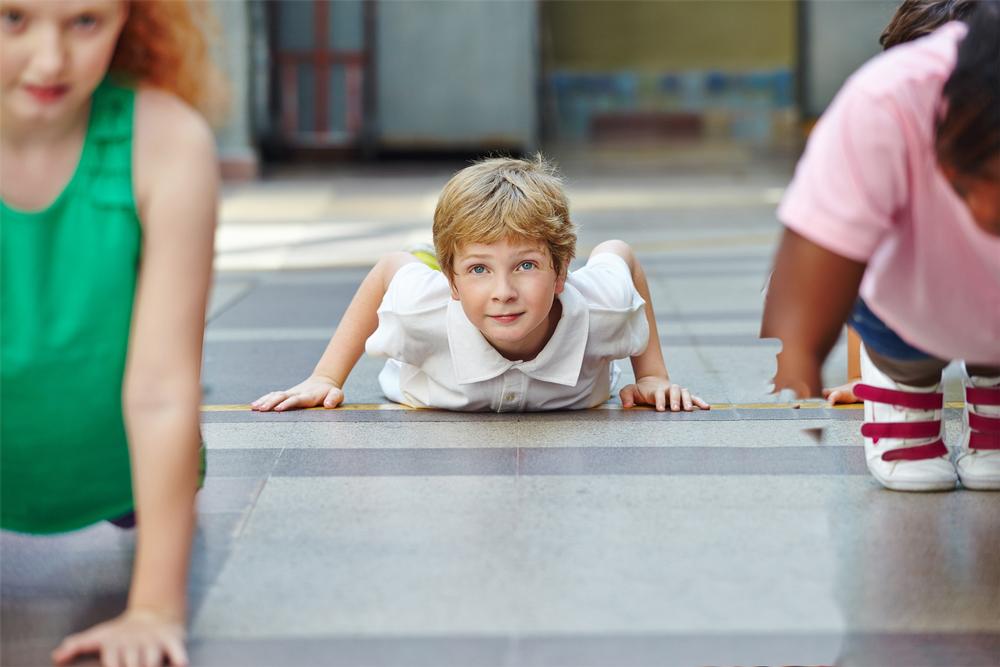
Neurocognitive functions improved when the children with BECTS were prescribed exercise / photo: www.shutterstock.com/Robert Kneschke
It’s estimated that one in 4,800–14,000 children suffer from benign epilepsy with centro-temporal spikes (BECTS), which is one of the most common forms of childhood epilepsy. While the outlook is good – it’s easy to treat using anti-epileptic drugs and in most cases it goes away by the time children are 16 – those with BECTS are at increased risk of depression, anxiety and low self-esteem.
Although many studies have reported the beneficial impact of exercise on seizure control in animals and adults, the effectiveness of exercise therapy on the psychosocial health of children with benign epilepsy has not been fully explored. That’s why a team of scientists at Yonsei University College of Medicine in Seoul decided to focus on the subject. Their findings were published in medical journal Epilepsy and Behavior* in July.
Exercise intervention The small-scale pilot study was based on four boys and six girls aged 8 to 12 years who all had BECTS. All of the children took part in a five-week exercise programme designed by the Yonsei team. There were two fitness sessions a week which lasted around three hours and consisted of two different 90-minute activities such playing basketball, football, table tennis or badminton, or skipping or line dancing. Children were also encouraged to do 15–20 minutes of home-based exercises such as sit-ups. The frequency of seizures and EEG scans were recorded both before and after the programme. Neurocognitive and psychological elements including attention span, executive function, depression, anxiety, behavioural problems and quality of life were also measured.
Cognitive improvements As no clinical symptoms got worse during the intervention, it was first suggested that physical activity is believed to be a safe, feasible way of treating epilepsy. The study also noted improvements in neurocognitive tests and psychosocial factors.
Despite the risk of cognitive, behavioural and attention impairment that comes with BECTS, the children in the study showed average levels of neurocognitive functions. Importantly, however, a number of these functions significantly improved following the exercise therapy, including sustained attention and psychomotor speed and aspects of executive function.
In addition, better ratings for behavioural and social problems, as well as mood-related wellbeing, were reported after the exercise programme.
Although the scientists also noted a slight trend towards improvement of negative mood, body complaints and general health, the differences were not big enough to be considered significant.
“A five-week structured exercise programme was successfully implemented, with preliminary data suggesting beneficial impact on neurocognitive and psychobehavioural function,” the study concluded. “Exercise therapy should be further evaluated as part of a comprehensive treatment programme for children with benign epilepsy.”
*Eom S & Kim HD et al. The Impact of Exercise Therapy on Psychosocial Health of Children with Benign Epilepsy: a Pilot Study. Epilepsy & Behavior, Vol 37, July, 2014
CoverMe, the global leader in fitness workforce management, today launches CoverMe PT, an
on-demand personal training platform that connects the right personal trainer to the right
client in under 10 seconds. [more...]
Active Blackpool is deploying Cornerstone Connect, a new digital interface allowing
disparate information from multiple systems to be aggregated into one dataset, to support
its focus on reducing health inequalities and improving healthy life expectancy. [more...]
Neurocognitive functions improved when the children with BECTS were prescribed exercise / photo: www.shutterstock.com/Robert Kneschke
It’s estimated that one in 4,800–14,000 children suffer from benign epilepsy with centro-temporal spikes (BECTS), which is one of the most common forms of childhood epilepsy. While the outlook is good – it’s easy to treat using anti-epileptic drugs and in most cases it goes away by the time children are 16 – those with BECTS are at increased risk of depression, anxiety and low self-esteem.
Although many studies have reported the beneficial impact of exercise on seizure control in animals and adults, the effectiveness of exercise therapy on the psychosocial health of children with benign epilepsy has not been fully explored. That’s why a team of scientists at Yonsei University College of Medicine in Seoul decided to focus on the subject. Their findings were published in medical journal Epilepsy and Behavior* in July.
Exercise intervention The small-scale pilot study was based on four boys and six girls aged 8 to 12 years who all had BECTS. All of the children took part in a five-week exercise programme designed by the Yonsei team. There were two fitness sessions a week which lasted around three hours and consisted of two different 90-minute activities such playing basketball, football, table tennis or badminton, or skipping or line dancing. Children were also encouraged to do 15–20 minutes of home-based exercises such as sit-ups. The frequency of seizures and EEG scans were recorded both before and after the programme. Neurocognitive and psychological elements including attention span, executive function, depression, anxiety, behavioural problems and quality of life were also measured.
Cognitive improvements As no clinical symptoms got worse during the intervention, it was first suggested that physical activity is believed to be a safe, feasible way of treating epilepsy. The study also noted improvements in neurocognitive tests and psychosocial factors.
Despite the risk of cognitive, behavioural and attention impairment that comes with BECTS, the children in the study showed average levels of neurocognitive functions. Importantly, however, a number of these functions significantly improved following the exercise therapy, including sustained attention and psychomotor speed and aspects of executive function.
In addition, better ratings for behavioural and social problems, as well as mood-related wellbeing, were reported after the exercise programme.
Although the scientists also noted a slight trend towards improvement of negative mood, body complaints and general health, the differences were not big enough to be considered significant.
“A five-week structured exercise programme was successfully implemented, with preliminary data suggesting beneficial impact on neurocognitive and psychobehavioural function,” the study concluded. “Exercise therapy should be further evaluated as part of a comprehensive treatment programme for children with benign epilepsy.”
*Eom S & Kim HD et al. The Impact of Exercise Therapy on Psychosocial Health of Children with Benign Epilepsy: a Pilot Study. Epilepsy & Behavior, Vol 37, July, 2014
The UK's four Chief Medical Officers have published a refreshed edition of Physical activity
guidelines: UK Chief Medical Officers' report, updating the evidence that underpins the nation's
physical activity recommendations and placing greater emphasis on strength, balance, reducing
sedentary behaviour and, for the first time, supporting people taking weight loss medications.
Places Leisure has exchanged contracts to build and operate a flagship £60m water and leisure
destination on behalf of Basingstoke and Deane Borough Council.
The Republic of Ireland will become the latest market in PureGym’s expanding international
portfolio, with the first launch planned for Dublin in 2027.
Anytime Fitness opened more than one club a day in 2025 and is on track to maintain this rate
of growth this year, as parent company Purpose Brands targets further international expansion.
The £33.9 million Leighton Leisure and Community Centre has opened in Leighton Buzzard, UK,
creating a next-generation public leisure, health and wellbeing hub for the local community.
Walnuts Leisure Centre in Orpington, in the London Borough of Bromley, has reopened following
a £17m transformation designed to secure the long-term future of the public leisure asset and
reposition it as a community wellbeing hub.
The Gym Group, has announced that it's sustained positive trading momentum has continued
through the first half of 2026 and the company remains confident about the outlook.
Luxury boutique Pilates and wellness studio, X-Club, officially launches a
4,000sq ft flagship at
Marylebone on 16 July Built around X-Club’s four pillars of wellness – mind,
movement,
nutrition and therapy – the facility features two group exercise studi
CoverMe, the global leader in fitness workforce management, today launches CoverMe PT, an
on-demand personal training platform that connects the right personal trainer to the right
client in under 10 seconds. [more...]
Active Blackpool is deploying Cornerstone Connect, a new digital interface allowing
disparate information from multiple systems to be aggregated into one dataset, to support
its focus on reducing health inequalities and improving healthy life expectancy. [more...]