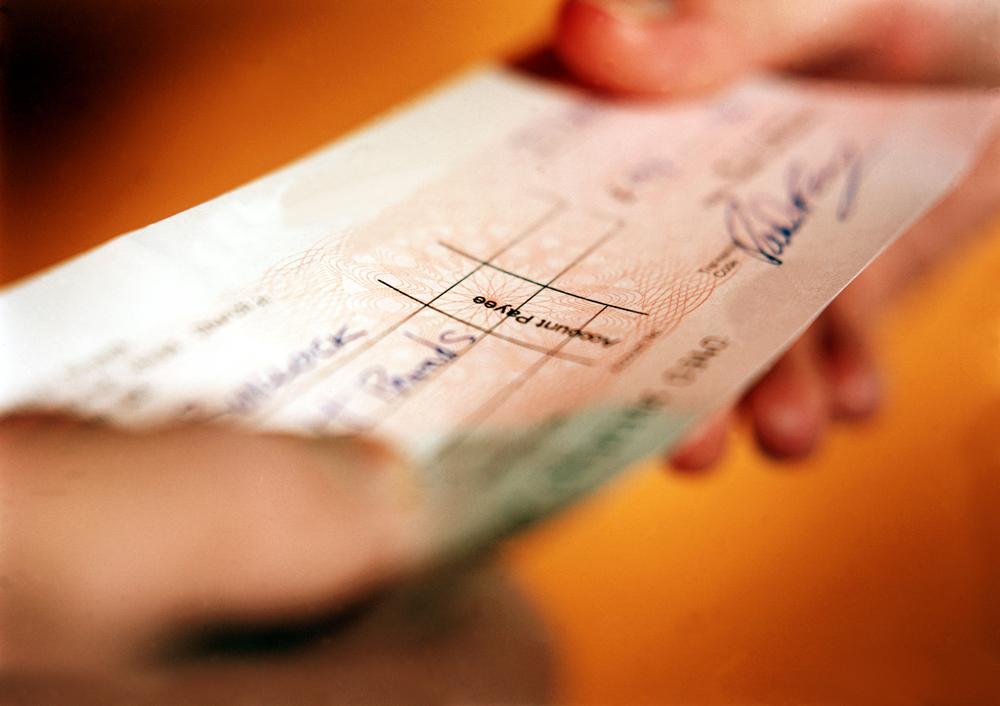
Financial incentives, as well as penalties for not succeeding, changed behaviours / Photo: shutterstock.com/Atlaspix
Earlier this year, research firm Mintel revealed that 30 per cent of people in the UK admit to rarely or never taking part in sport or exercise. In the survey, 24 per cent of Brits said they struggled to motivate themselves to exercise on their own, while the top reason for not using a leisure centre or swimming pool was cost. However, another piece of research – this time by Newcastle University in the UK – has suggested that things could change if people were offered a financial reward.
The university focused on 16 previous studies in which people had been given incentives to improve their health in some way, such as by taking up physical activity, quitting smoking or attending vaccination/disease screening sessions. The studies involved a total of more than 30,000 participants, and the university says its research is the broadest look to date at the impact of incentives.
Money motivation The research, published in the journal PLOS ONE*, was funded by the National Institute of Health Research with a view to finding out how the NHS might save money in the long run.
Overall, financial incentives ranged from £3 (US$5.16) for having a flu vaccination to £467 (US$786) for taking part in an employee scheme to give up smoking for a year. Yet the team found that even in the flu vaccination study, where the reward was just £3, people were 50 per cent more likely to change their behaviour. In fact, it discovered that larger incentives were no more effective than smaller monetary rewards in influencing people’s behaviour.
Financial penalties for not succeeding in the task were also found to work. In these studies, participants had to hand over a set amount of money which they knew they wouldn’t get back if they didn’t fulfil the health behaviour requirements.
Surprise findings Dr Emma Giles, a research associate at Newcastle University and lead author, comments: “This was an interesting finding and we were surprised at just how strong the effect was. People who took part in these reward or penalty schemes were much more likely to adopt healthy behaviours, and if they continued, they would have more chance of remaining healthy for longer.”
She adds: “Many studies used vouchers for supermarkets or similar things rather than actual cash. This might be a more acceptable way of implementing this.”
Dr Jean Adams, a senior lecturer in public health at Newcastle University, comments: “We were surprised how few studies we found which had looked at the impact financial incentives can have. But at this stage, we don’t know the right level that incentives should be at, so it’s not clear if this sort of scheme would save the NHS and country money.”
In addition, the team says it’s not clear whether the effect continues in the long term, after the rewards have stopped. It’s also not clear from the current research whether there’s a bigger impact in certain socioeconomic groups. Both of these areas were highlighted as possible variables to investigate further.
But as Adams concludes: “We try all kinds of techniques to try to help people quit smoking or otherwise live healthy lives, so why not try this? It’s about nudging people into healthier behaviours. There’s a chance this could save the taxpayer money in the long run.”
*Giles, E, et al. The Effectiveness of Financial Incentives for Health Behaviour Change: Systematic Review and Meta-Analysis. PLOS ONE. March 2014
Active Blackpool is deploying Cornerstone Connect, a new digital interface allowing
disparate information from multiple systems to be aggregated into one dataset, to support
its focus on reducing health inequalities and improving healthy life expectancy. [more...]
Panatta brought together four of the most influential figures in bodybuilding history on the
stage of RiminiWellness 2026: Phil Heath, Lee Haney, Ronnie Coleman and Hany Rambod. [more...]
Financial incentives, as well as penalties for not succeeding, changed behaviours / Photo: shutterstock.com/Atlaspix
Earlier this year, research firm Mintel revealed that 30 per cent of people in the UK admit to rarely or never taking part in sport or exercise. In the survey, 24 per cent of Brits said they struggled to motivate themselves to exercise on their own, while the top reason for not using a leisure centre or swimming pool was cost. However, another piece of research – this time by Newcastle University in the UK – has suggested that things could change if people were offered a financial reward.
The university focused on 16 previous studies in which people had been given incentives to improve their health in some way, such as by taking up physical activity, quitting smoking or attending vaccination/disease screening sessions. The studies involved a total of more than 30,000 participants, and the university says its research is the broadest look to date at the impact of incentives.
Money motivation The research, published in the journal PLOS ONE*, was funded by the National Institute of Health Research with a view to finding out how the NHS might save money in the long run.
Overall, financial incentives ranged from £3 (US$5.16) for having a flu vaccination to £467 (US$786) for taking part in an employee scheme to give up smoking for a year. Yet the team found that even in the flu vaccination study, where the reward was just £3, people were 50 per cent more likely to change their behaviour. In fact, it discovered that larger incentives were no more effective than smaller monetary rewards in influencing people’s behaviour.
Financial penalties for not succeeding in the task were also found to work. In these studies, participants had to hand over a set amount of money which they knew they wouldn’t get back if they didn’t fulfil the health behaviour requirements.
Surprise findings Dr Emma Giles, a research associate at Newcastle University and lead author, comments: “This was an interesting finding and we were surprised at just how strong the effect was. People who took part in these reward or penalty schemes were much more likely to adopt healthy behaviours, and if they continued, they would have more chance of remaining healthy for longer.”
She adds: “Many studies used vouchers for supermarkets or similar things rather than actual cash. This might be a more acceptable way of implementing this.”
Dr Jean Adams, a senior lecturer in public health at Newcastle University, comments: “We were surprised how few studies we found which had looked at the impact financial incentives can have. But at this stage, we don’t know the right level that incentives should be at, so it’s not clear if this sort of scheme would save the NHS and country money.”
In addition, the team says it’s not clear whether the effect continues in the long term, after the rewards have stopped. It’s also not clear from the current research whether there’s a bigger impact in certain socioeconomic groups. Both of these areas were highlighted as possible variables to investigate further.
But as Adams concludes: “We try all kinds of techniques to try to help people quit smoking or otherwise live healthy lives, so why not try this? It’s about nudging people into healthier behaviours. There’s a chance this could save the taxpayer money in the long run.”
*Giles, E, et al. The Effectiveness of Financial Incentives for Health Behaviour Change: Systematic Review and Meta-Analysis. PLOS ONE. March 2014
The UK's four Chief Medical Officers have published a refreshed edition of Physical activity
guidelines: UK Chief Medical Officers' report, updating the evidence that underpins the nation's
physical activity recommendations and placing greater emphasis on strength, balance, reducing
sedentary behaviour and, for the first time, supporting people taking weight loss medications.
Places Leisure has exchanged contracts to build and operate a flagship £60m water and leisure
destination on behalf of Basingstoke and Deane Borough Council.
The Republic of Ireland will become the latest market in PureGym’s expanding international
portfolio, with the first launch planned for Dublin in 2027.
Anytime Fitness opened more than one club a day in 2025 and is on track to maintain this rate
of growth this year, as parent company Purpose Brands targets further international expansion.
The £33.9 million Leighton Leisure and Community Centre has opened in Leighton Buzzard, UK,
creating a next-generation public leisure, health and wellbeing hub for the local community.
Walnuts Leisure Centre in Orpington, in the London Borough of Bromley, has reopened following
a £17m transformation designed to secure the long-term future of the public leisure asset and
reposition it as a community wellbeing hub.
The Gym Group, has announced that it's sustained positive trading momentum has continued
through the first half of 2026 and the company remains confident about the outlook.
Luxury boutique Pilates and wellness studio, X-Club, officially launches a
4,000sq ft flagship at
Marylebone on 16 July Built around X-Club’s four pillars of wellness – mind,
movement,
nutrition and therapy – the facility features two group exercise studi
Active Blackpool is deploying Cornerstone Connect, a new digital interface allowing
disparate information from multiple systems to be aggregated into one dataset, to support
its focus on reducing health inequalities and improving healthy life expectancy. [more...]
Panatta brought together four of the most influential figures in bodybuilding history on the
stage of RiminiWellness 2026: Phil Heath, Lee Haney, Ronnie Coleman and Hany Rambod. [more...]