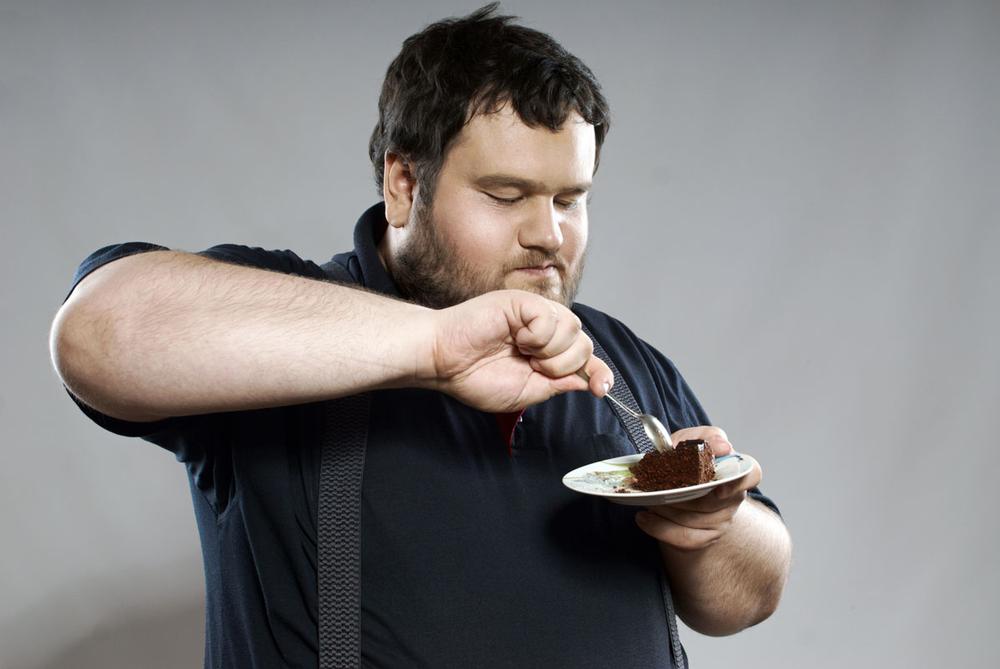
Taste plays a crucial role in regulating the appetite – in dictating what we choose to eat and how much we consume. Now a new study carried out on mice and conducted by biologists at the University of Buffalo, New York, US, has found that our ability to taste – and for our taste buds to detect sweetness in particular – could be altered in people who are severely overweight.
A number of previous studies have indicated that obesity can have an impact on the part of the brain and the nerves that are linked to the peripheral taste system. However, this is the first to look at the cells on the tongue that come into initial contact with food.
Lead scientist Kathryn Medler says: “What we see is that, even at this level – at the first step in the taste pathway – the taste receptor cells themselves are affected by obesity.”
Sweetness and light The study, which was published in the PLOS ONE journal in November, compared 25 normal mice with another 25 that had been fed a high-fat diet and became obese.
The scientists then presented the mice with different tasting solutions – sweet and savoury – and measured their response using a process called calcium signalling (when the cells in the tongue recognise a certain taste, there is a short spike in the calcium levels in them, and this is what the scientists focused on in their study).
The results showed that, in the obese mice, there were a lower number of taste cells that were able to detect sweetness. What’s more, among the obese mice, any tongue cells that did respond to the sweet solution reacted relatively weakly compared to the tongue cells in the normal weight mice.
More taste testing needed The findings from the study lead us a step closer to understanding the effects of obesity on our relationship with food. However, how exactly obesity alters the taste cells is still unknown and requires further investigation, says Medler.
Medler believes that not being able to detect sweetness may lead obese mice to eat more so that they can get the same taste effect.
Meanwhile, growing evidence suggests that overweight people have a yearning for both sweet and savoury food – even if they can’t actually taste the flavours as well as their thinner counterparts.
Learning more about the connection between taste, appetite and obesity is important, adds Medler, as it could lead to new methods for encouraging healthy eating: “If we understand how taste cells are affected and how we can get them back to normal, it could lead to new treatments... These cells are on your tongue and more accessible than cells in other parts of your body like your brain.”
The findings of the study are a timely revelation in view of a new report which indicates that obesity levels in developing countries have nearly quadrupled since 1980. The Overseas Development Institute (ODI) has revealed that one in three people worldwide are now overweight and it’s urging governments to do more in shaping and influencing diets.
*Medler, K et al. Diet-Induced Obesity Reduces the Responsiveness of the Peripheral Taste Receptor Cells. PLOS ONE. November 2013
Panatta brought together four of the most influential figures in bodybuilding history on the
stage of RiminiWellness 2026: Phil Heath, Lee Haney, Ronnie Coleman and Hany Rambod. [more...]
CoverMe, the global leader in fitness workforce management, today launches CoverMe PT, an
on-demand personal training platform that connects the right personal trainer to the right
client in under 10 seconds. [more...]
+ More featured suppliers
COMPANY PROFILES
Alliance Leisure
Alliance Leisure Services was specifically
established to respond to the changing
development need [more...]
Taste plays a crucial role in regulating the appetite – in dictating what we choose to eat and how much we consume. Now a new study carried out on mice and conducted by biologists at the University of Buffalo, New York, US, has found that our ability to taste – and for our taste buds to detect sweetness in particular – could be altered in people who are severely overweight.
A number of previous studies have indicated that obesity can have an impact on the part of the brain and the nerves that are linked to the peripheral taste system. However, this is the first to look at the cells on the tongue that come into initial contact with food.
Lead scientist Kathryn Medler says: “What we see is that, even at this level – at the first step in the taste pathway – the taste receptor cells themselves are affected by obesity.”
Sweetness and light The study, which was published in the PLOS ONE journal in November, compared 25 normal mice with another 25 that had been fed a high-fat diet and became obese.
The scientists then presented the mice with different tasting solutions – sweet and savoury – and measured their response using a process called calcium signalling (when the cells in the tongue recognise a certain taste, there is a short spike in the calcium levels in them, and this is what the scientists focused on in their study).
The results showed that, in the obese mice, there were a lower number of taste cells that were able to detect sweetness. What’s more, among the obese mice, any tongue cells that did respond to the sweet solution reacted relatively weakly compared to the tongue cells in the normal weight mice.
More taste testing needed The findings from the study lead us a step closer to understanding the effects of obesity on our relationship with food. However, how exactly obesity alters the taste cells is still unknown and requires further investigation, says Medler.
Medler believes that not being able to detect sweetness may lead obese mice to eat more so that they can get the same taste effect.
Meanwhile, growing evidence suggests that overweight people have a yearning for both sweet and savoury food – even if they can’t actually taste the flavours as well as their thinner counterparts.
Learning more about the connection between taste, appetite and obesity is important, adds Medler, as it could lead to new methods for encouraging healthy eating: “If we understand how taste cells are affected and how we can get them back to normal, it could lead to new treatments... These cells are on your tongue and more accessible than cells in other parts of your body like your brain.”
The findings of the study are a timely revelation in view of a new report which indicates that obesity levels in developing countries have nearly quadrupled since 1980. The Overseas Development Institute (ODI) has revealed that one in three people worldwide are now overweight and it’s urging governments to do more in shaping and influencing diets.
*Medler, K et al. Diet-Induced Obesity Reduces the Responsiveness of the Peripheral Taste Receptor Cells. PLOS ONE. November 2013
The UK's four Chief Medical Officers have published a refreshed edition of Physical activity
guidelines: UK Chief Medical Officers' report, updating the evidence that underpins the nation's
physical activity recommendations and placing greater emphasis on strength, balance, reducing
sedentary behaviour and, for the first time, supporting people taking weight loss medications.
Places Leisure has exchanged contracts to build and operate a flagship £60m water and leisure
destination on behalf of Basingstoke and Deane Borough Council.
The Republic of Ireland will become the latest market in PureGym’s expanding international
portfolio, with the first launch planned for Dublin in 2027.
Anytime Fitness opened more than one club a day in 2025 and is on track to maintain this rate
of growth this year, as parent company Purpose Brands targets further international expansion.
The £33.9 million Leighton Leisure and Community Centre has opened in Leighton Buzzard, UK,
creating a next-generation public leisure, health and wellbeing hub for the local community.
Walnuts Leisure Centre in Orpington, in the London Borough of Bromley, has reopened following
a £17m transformation designed to secure the long-term future of the public leisure asset and
reposition it as a community wellbeing hub.
The Gym Group, has announced that it's sustained positive trading momentum has continued
through the first half of 2026 and the company remains confident about the outlook.
Luxury boutique Pilates and wellness studio, X-Club, officially launches a
4,000sq ft flagship at
Marylebone on 16 July Built around X-Club’s four pillars of wellness – mind,
movement,
nutrition and therapy – the facility features two group exercise studi
Panatta brought together four of the most influential figures in bodybuilding history on the
stage of RiminiWellness 2026: Phil Heath, Lee Haney, Ronnie Coleman and Hany Rambod. [more...]
CoverMe, the global leader in fitness workforce management, today launches CoverMe PT, an
on-demand personal training platform that connects the right personal trainer to the right
client in under 10 seconds. [more...]
+ More featured suppliers
COMPANY PROFILES
Alliance Leisure Alliance Leisure Services was specifically
established to respond to the changing
development need [more...]