With consumer expectations ever rising, yet subsidies being reduced, choosing a fixed price route for new leisure developments can give local authorities a high quality product at a guaranteed price. Alliance Leisure’s Paul Cluett explains
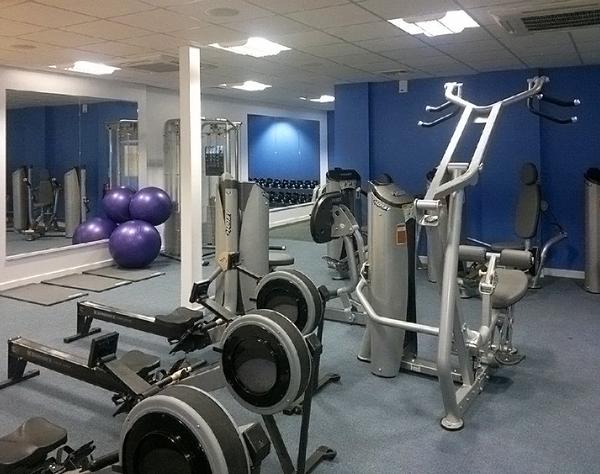
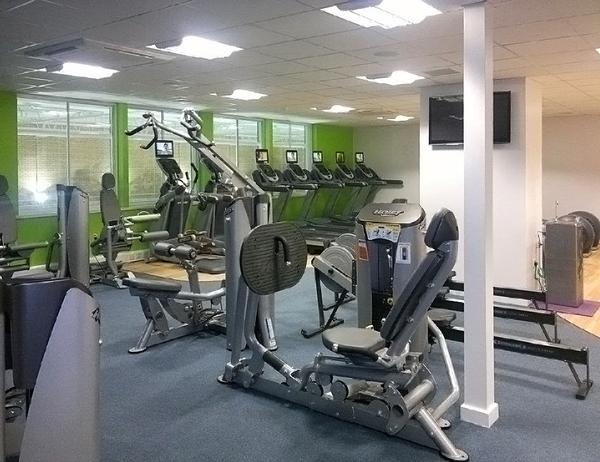
Churchill Leisure Centre is a dual-use site attached to a local school. The remodelling included a new fitness suite, exercise studio and dedicated fitness changing rooms
Alliance Leisure offers local authorities a fixed price cost on leisure projects. Why do you prefer this route? Quite simply, it offers the greatest benefits and peace of mind for our clients, as they know exactly what they will receive and at what cost. We don’t just de-risk the development process for them – we take on the entire contractual risk. Experience shows that procurement in the public sector often suffers significant price creep (otherwise referred to as Optimism Bias).
Are fixed price contracts standard practice in this industry? A traditional approach would be for a local authority to decide that it wants to build something, commission an architect to draw up plans, invite building companies to tender. Very often, at this stage, they may find out that their dream scheme cannot be delivered within their original budget parameters. They either have to walk away from it, having already wasted a lot of time and spent a large sum on design fees, find more money to pay for it, or go back to the drawing board and spend more money coming up with a scheme that they can afford.
There are GMP contracts (Guaranteed Maximum Price) which may be offered by contractors, but at Alliance our fixed price contracts have a lot more built-in flexibility.
Can you explain more? We always start with affordability and what’s achievable, and then we begin to scope the scheme in close collaboration with the client.
Taking this route, we’re able to shape the project so it’s affordable. In addition, if any showstoppers arise, there are opportunities along the way to halt the process or to take another direction, without incurring significant costs.
By offering every stage of the process in bite-sized pieces, we can more or less ensure that there will be no really nasty surprises further down the line, for our clients or for us.
Surely you can’t plan for every possible circumstance? There are always unknowns with every project, and of course no contractor can know if they’re going to hit on hidden archaeological remains or sink holes the minute that they start excavating the site.
But we aim to be as realistic as possible with our contracts. For example, you may well find that other fixed price contracts contain a long list of exclusions, with clauses for ‘unexpected’ eventualities that in our view might be entirely expected over the course of a typical building project.
That’s why you’ll find our list of exclusions is always kept to a minimum.
Do you always bring your projects in on budget? The vast majority of projects are brought in on time and on budget. On the very rare occasions where we do have overspends, we absorb those costs.
Of course, we also fix any problems at our own cost. For example, we recently completed a leisure centre project where the newly-fitted aerobics floor was found to have too much spring in it. It wasn’t that any one of our team had made a mistake at some stage in the build process – it was a problem that really only emerged when the floor started to be used and was caused by unforeseeable structural issues.
Had the centre taken a traditional building route, they would have had two options at this stage – either to live with it or else pay for it to be changed.
We took the whole floor up again for our client and fitted an additional structural beam to fix the problem, at a cost of around £30,000.
Do projects ever come in under budget? To be honest, this doesn’t happen too often, but it does happen. For example, a recent refurbishment project we completed at the Jade Jones Pavilion Flint in North Wales came in with an £8,000 under-spend.
The client could have simply taken the saving and said ‘thank you very much’, but we always suggest it’s much more cost-effective to add something extra to the project that they’ll really benefit from in the long term. While we have builders and the infrastructure on site, any additions can be made easily at a much lower cost. Finding new builders to come into the centre 12 months later will always be much more expensive.
In the case of the Flint centre, the client decided to refurbish an unused exercise studio, which has now turned into a source of extra revenue for the centre – all at a cost of just £8,000, which other contractors might never have disclosed!
Follow the series
1. Scoping / Investigation 2. Conceptualisation 3. Viability assessment & full feasibility 4. Site investigation 5. Fixed price contracts 6. Overseeing the building work 7. Ordering phase 8. Client support (part 1) 9. Client support (part 2)
CASE STUDY – Somerset project delivered under budget Churchill Leisure Centre in north Somerset, operated by Tone Leisure, underwent a major refurbishment in 2011, funded by North Somerset District Council and delivered by Alliance Leisure on a fixed cost basis.
Attached to the local secondary school, the dual-use leisure centre needed to be developed within a very tight affordability envelope of under £850,000. The contract included the refurbishment of most of the existing leisure centre, including a new fitness suite and exercise studio, dedicated fitness changing rooms, a multi-purpose room and an all-weather sports pitch.
The site was extensively re-structured, including the repositioning of staircases and reception area, so public users and schoolchildren could have separate access depending on the time of day. Alliance business development manager, Julia Goddard, says: “The agreed cost of the redevelopment was £850,000, but with very careful project management we were able to bring it in £25,000 under budget.
“Both Tone Leisure and North Somerset District Council were very pleased with the final scheme and the savings were able to go back into the council budgets.”
Churchill Leisure Centre is a dual-use site attached to a local school. The remodelling included a new fitness suite, exercise studio and dedicated fitness changing rooms
Active Blackpool is deploying Cornerstone Connect, a new digital interface allowing
disparate information from multiple systems to be aggregated into one dataset, to support
its focus on reducing health inequalities and improving healthy life expectancy. [more...]
CoverMe, the global leader in fitness workforce management, today launches CoverMe PT, an
on-demand personal training platform that connects the right personal trainer to the right
client in under 10 seconds. [more...]
+ More featured suppliers
COMPANY PROFILES
ukactive
ukactive is the UK’s leading trade body for the physical activity sector, bringing together more tha [more...]
PSLT Ltd
PSLT Fitness Solutions manufacture, remanufacture and buy back commercial gym equipment. [more...]
With consumer expectations ever rising, yet subsidies being reduced, choosing a fixed price route for new leisure developments can give local authorities a high quality product at a guaranteed price. Alliance Leisure’s Paul Cluett explains
Churchill Leisure Centre is a dual-use site attached to a local school. The remodelling included a new fitness suite, exercise studio and dedicated fitness changing rooms
Alliance Leisure offers local authorities a fixed price cost on leisure projects. Why do you prefer this route? Quite simply, it offers the greatest benefits and peace of mind for our clients, as they know exactly what they will receive and at what cost. We don’t just de-risk the development process for them – we take on the entire contractual risk. Experience shows that procurement in the public sector often suffers significant price creep (otherwise referred to as Optimism Bias).
Are fixed price contracts standard practice in this industry? A traditional approach would be for a local authority to decide that it wants to build something, commission an architect to draw up plans, invite building companies to tender. Very often, at this stage, they may find out that their dream scheme cannot be delivered within their original budget parameters. They either have to walk away from it, having already wasted a lot of time and spent a large sum on design fees, find more money to pay for it, or go back to the drawing board and spend more money coming up with a scheme that they can afford.
There are GMP contracts (Guaranteed Maximum Price) which may be offered by contractors, but at Alliance our fixed price contracts have a lot more built-in flexibility.
Can you explain more? We always start with affordability and what’s achievable, and then we begin to scope the scheme in close collaboration with the client.
Taking this route, we’re able to shape the project so it’s affordable. In addition, if any showstoppers arise, there are opportunities along the way to halt the process or to take another direction, without incurring significant costs.
By offering every stage of the process in bite-sized pieces, we can more or less ensure that there will be no really nasty surprises further down the line, for our clients or for us.
Surely you can’t plan for every possible circumstance? There are always unknowns with every project, and of course no contractor can know if they’re going to hit on hidden archaeological remains or sink holes the minute that they start excavating the site.
But we aim to be as realistic as possible with our contracts. For example, you may well find that other fixed price contracts contain a long list of exclusions, with clauses for ‘unexpected’ eventualities that in our view might be entirely expected over the course of a typical building project.
That’s why you’ll find our list of exclusions is always kept to a minimum.
Do you always bring your projects in on budget? The vast majority of projects are brought in on time and on budget. On the very rare occasions where we do have overspends, we absorb those costs.
Of course, we also fix any problems at our own cost. For example, we recently completed a leisure centre project where the newly-fitted aerobics floor was found to have too much spring in it. It wasn’t that any one of our team had made a mistake at some stage in the build process – it was a problem that really only emerged when the floor started to be used and was caused by unforeseeable structural issues.
Had the centre taken a traditional building route, they would have had two options at this stage – either to live with it or else pay for it to be changed.
We took the whole floor up again for our client and fitted an additional structural beam to fix the problem, at a cost of around £30,000.
Do projects ever come in under budget? To be honest, this doesn’t happen too often, but it does happen. For example, a recent refurbishment project we completed at the Jade Jones Pavilion Flint in North Wales came in with an £8,000 under-spend.
The client could have simply taken the saving and said ‘thank you very much’, but we always suggest it’s much more cost-effective to add something extra to the project that they’ll really benefit from in the long term. While we have builders and the infrastructure on site, any additions can be made easily at a much lower cost. Finding new builders to come into the centre 12 months later will always be much more expensive.
In the case of the Flint centre, the client decided to refurbish an unused exercise studio, which has now turned into a source of extra revenue for the centre – all at a cost of just £8,000, which other contractors might never have disclosed!
Follow the series
1. Scoping / Investigation 2. Conceptualisation 3. Viability assessment & full feasibility 4. Site investigation 5. Fixed price contracts 6. Overseeing the building work 7. Ordering phase 8. Client support (part 1) 9. Client support (part 2)
CASE STUDY – Somerset project delivered under budget Churchill Leisure Centre in north Somerset, operated by Tone Leisure, underwent a major refurbishment in 2011, funded by North Somerset District Council and delivered by Alliance Leisure on a fixed cost basis.
Attached to the local secondary school, the dual-use leisure centre needed to be developed within a very tight affordability envelope of under £850,000. The contract included the refurbishment of most of the existing leisure centre, including a new fitness suite and exercise studio, dedicated fitness changing rooms, a multi-purpose room and an all-weather sports pitch.
The site was extensively re-structured, including the repositioning of staircases and reception area, so public users and schoolchildren could have separate access depending on the time of day. Alliance business development manager, Julia Goddard, says: “The agreed cost of the redevelopment was £850,000, but with very careful project management we were able to bring it in £25,000 under budget.
“Both Tone Leisure and North Somerset District Council were very pleased with the final scheme and the savings were able to go back into the council budgets.”
Churchill Leisure Centre is a dual-use site attached to a local school. The remodelling included a new fitness suite, exercise studio and dedicated fitness changing rooms
The UK's four Chief Medical Officers have published a refreshed edition of Physical activity
guidelines: UK Chief Medical Officers' report, updating the evidence that underpins the nation's
physical activity recommendations and placing greater emphasis on strength, balance, reducing
sedentary behaviour and, for the first time, supporting people taking weight loss medications.
Places Leisure has exchanged contracts to build and operate a flagship £60m water and leisure
destination on behalf of Basingstoke and Deane Borough Council.
The Republic of Ireland will become the latest market in PureGym’s expanding international
portfolio, with the first launch planned for Dublin in 2027.
Anytime Fitness opened more than one club a day in 2025 and is on track to maintain this rate
of growth this year, as parent company Purpose Brands targets further international expansion.
The £33.9 million Leighton Leisure and Community Centre has opened in Leighton Buzzard, UK,
creating a next-generation public leisure, health and wellbeing hub for the local community.
Walnuts Leisure Centre in Orpington, in the London Borough of Bromley, has reopened following
a £17m transformation designed to secure the long-term future of the public leisure asset and
reposition it as a community wellbeing hub.
The Gym Group, has announced that it's sustained positive trading momentum has continued
through the first half of 2026 and the company remains confident about the outlook.
Luxury boutique Pilates and wellness studio, X-Club, officially launches a
4,000sq ft flagship at
Marylebone on 16 July Built around X-Club’s four pillars of wellness – mind,
movement,
nutrition and therapy – the facility features two group exercise studi
Active Blackpool is deploying Cornerstone Connect, a new digital interface allowing
disparate information from multiple systems to be aggregated into one dataset, to support
its focus on reducing health inequalities and improving healthy life expectancy. [more...]
CoverMe, the global leader in fitness workforce management, today launches CoverMe PT, an
on-demand personal training platform that connects the right personal trainer to the right
client in under 10 seconds. [more...]
+ More featured suppliers
COMPANY PROFILES
ukactive ukactive is the UK’s leading trade body for the physical activity sector, bringing together more tha [more...]