How do you assess whether your desired leisure scheme is viable, and where do you go from there? Alliance Leisure’s Sarah Watts explains why this early part of the process is key to future success.
How do you begin to assess the viability of a leisure scheme? We meet the client at the stage they’re at – some may have started to develop a plan and want to know if their scheme could be viable, while others are starting with an under-used space – often something like a number of ageing sports courts – and want to explore potential opportunities to increase revenue.
What is the approach used by Alliance Leisure? In these times of reduced subsidy, it’s really all about the money and the space. How much additional revenue can be generated from the square footage that needs to be transformed?
For example, in one scheme we completed there was great controversy among the local senior population, because the council wanted to do away with the indoor bowls rinks (used mostly for just five months of the year) and create a 10-pin bowling facility.
Obviously you do have to think what else you can provide for the older age group, but the reality was that the same amount of space went from generating £38k a year to £300k a year.
That large boost in revenue may in turn allow a leisure site to broaden its social offering to different groups, making it more inclusive – ultimately protecting the service.
What are the most ‘viable’ leisure options these days? That’s not something you can really state or quantify – it depends on the individual site, and local demand and needs. A 10-pin bowling facility may be a huge success for one leisure site but not for another. That’s where thorough viability and feasibility studies will pay dividends.
For example, we’re currently talking to a client who wants to put a 50m pool in a new mixed leisure development. But all our research shows that an aquatics leisure pool would be by far the better choice to satisfy demand and give the best return on investment.
What are the key steps in the feasibility process? To begin with, it’s very important to use an independent party. We commission this process out to leading leisure consultants such as FMG, Max Associates, Robin Thompson, and the Sports and Leisure Group. It’s important that the feasibility is totally impartial in order that all decision makers, as well as Alliance’s funders, can be confident in its robustness.
It’s a complex analysis made up of different parts. It starts with going to the site and physically looking at the local area. If you’re planning to build a play centre, it’s no good just looking on paper, seeing there’s a big play centre just down the road and deciding there’s too much competition. That existing play centre may be scruffy, overpriced and not really serving its customers.
That’s why it’s so important to pay a mystery shopper visit. We believe, where there’s competition, there can often be opportunity.
How long does feasibility take and what are the challenges? An average feasibility report takes around five weeks. On the cost savings side, some benefits are easy to show because we can relate back to existing data – so for example, the savings to be made in the areas of utilities, staff, cleaning services, etc – as these are evidence-based.
The future potential benefits are harder to quantify because there are so many variables, and it will depend on how that facility is run in future. We can’t predict, for example, if a budget gym might open down the road from a newly developed fitness facility. That’s why we generally develop a range of new complementary facilities which protect our clients, so they become less dependent on any one revenue stream.
However, as Alliance Leisure has now completed over 100 projects, we have the experience of many successful models to draw upon, providing a type of evidence base that may be referred to for future projects.
What else does Alliance offer at the viability/feasibility stage? As well as commissioning external reports, such as latent demand reports, we also proactively commission independent market reports so we can better advise our clients at this stage.
For example, while the market for local authority spas is growing rapidly, there is very little data available on these developments. So we’ve just commissioned our own report from Leisure-net Solutions to look at the public sector spa market. This data will prove invaluable for our clients considering this type of development.
Do clients need to pay out a lot of money at this stage? No, not really. The process can be funded by either party or a shared process – sometimes it’s shared 50:50, depending on the scheme and situation. The initial headline figures are provided by Alliance for free, which help shape the early thoughts and inform the decision to proceed to full feasibility.
It’s important to note that this is the stage where the financial success of a new facility or an add-on facility is really secured. It could save clients a huge amount in the long term.
For example, do you keep a squash court that generates £8–12k a year, or do you turn the space into a toning table facility? Toning tables may be for a niche, older market, but they’re relatively cheap to install, and even with a small membership of 250 people paying £25–£30 a month, that same space could potentially generate £70–80k a year.
As we said before, it’s all about the money for the space, and being realistic about revenues. We’d never lead a client to believe they could make £1m when we know quite clearly from the feasibility that it will be closer to £300k.
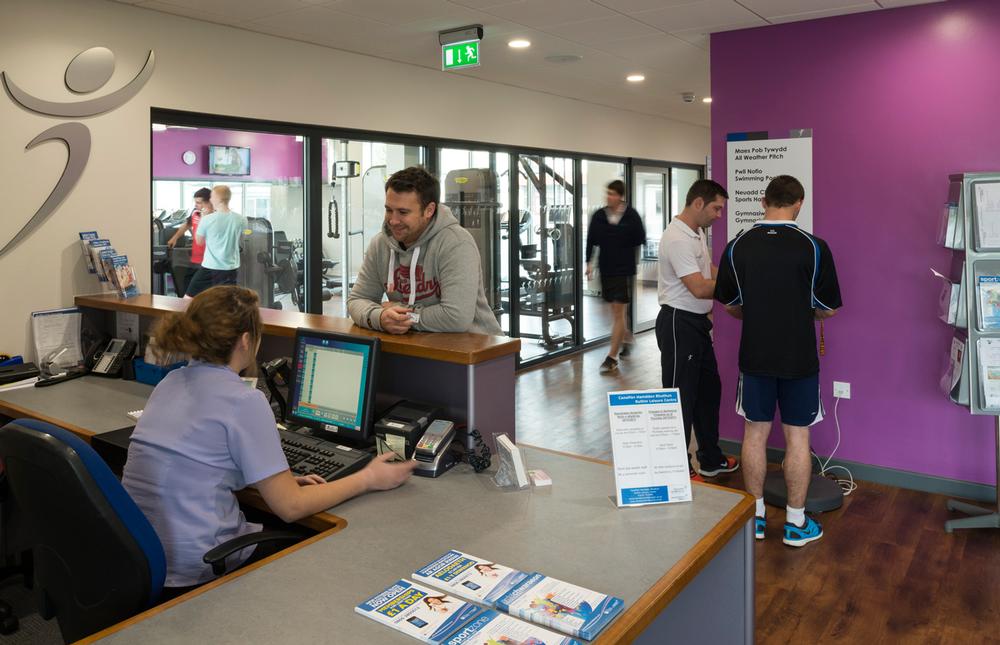
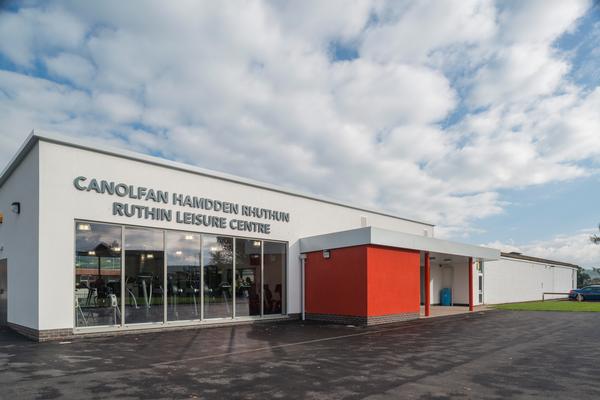
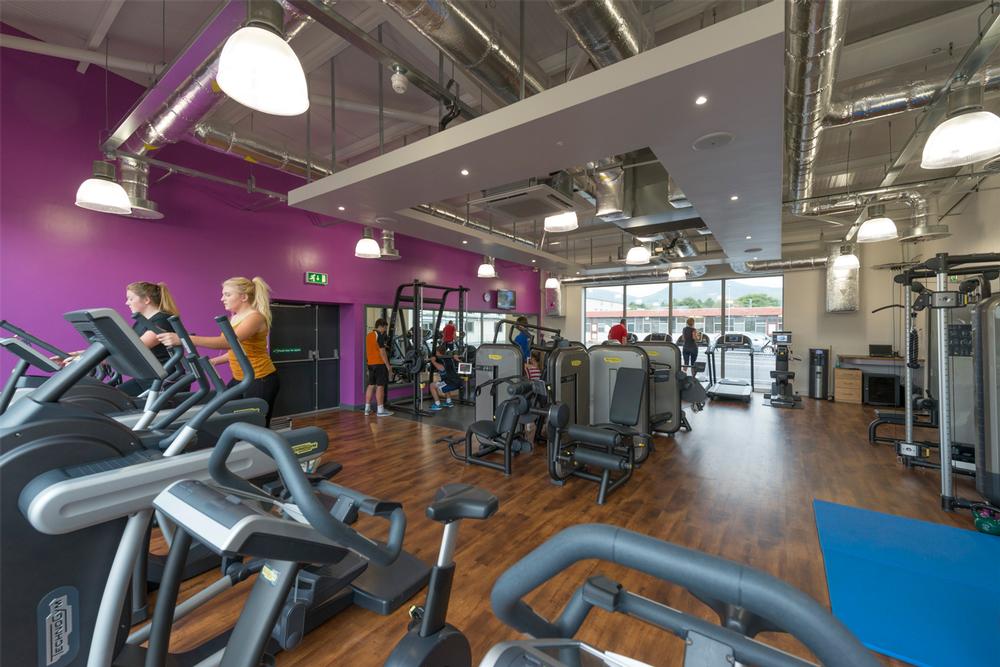
CASE STUDY – Feasibility at Ruthin Leisure Centre After a £1.4m revamp managed by Alliance Leisure, Ruthin Leisure Centre in Denbighshire opened its new facilities in September 2013. Additions to the centre, which is attached to a local school, include a new all-weather pitch, and an extension with a new reception area, changing rooms and gym.
The feasibility report indicated a latent demand of 675 new users. After affordability was assessed, the decision was made to work to a business plan of 475 members. Julia Goddard, business development manager for Alliance Leisure, says: “There was a target of 350 new members prior to opening, and our team actually sold 400. One month later the centre is about to reach 500 members.
“This puts a really good revenue stream in place right from the outset, plus our schemes almost always exceed the latent demand predictions within six to nine months.”
Ruthin Leisure Centre: Exceeding targets
It’s hard to predict future competition, so Alliance develops complementary facilities to avoid reliance on one revenue stream
Active Blackpool is deploying Cornerstone Connect, a new digital interface allowing
disparate information from multiple systems to be aggregated into one dataset, to support
its focus on reducing health inequalities and improving healthy life expectancy. [more...]
CoverMe, the global leader in fitness workforce management, today launches CoverMe PT, an
on-demand personal training platform that connects the right personal trainer to the right
client in under 10 seconds. [more...]
+ More featured suppliers
COMPANY PROFILES
ukactive
ukactive is the UK’s leading trade body for the physical activity sector, bringing together more tha [more...]
Safe Space Lockers
We provide a full turn-key solution for clients from design and consultation, through to bespoke man [more...]
How do you assess whether your desired leisure scheme is viable, and where do you go from there? Alliance Leisure’s Sarah Watts explains why this early part of the process is key to future success.
How do you begin to assess the viability of a leisure scheme? We meet the client at the stage they’re at – some may have started to develop a plan and want to know if their scheme could be viable, while others are starting with an under-used space – often something like a number of ageing sports courts – and want to explore potential opportunities to increase revenue.
What is the approach used by Alliance Leisure? In these times of reduced subsidy, it’s really all about the money and the space. How much additional revenue can be generated from the square footage that needs to be transformed?
For example, in one scheme we completed there was great controversy among the local senior population, because the council wanted to do away with the indoor bowls rinks (used mostly for just five months of the year) and create a 10-pin bowling facility.
Obviously you do have to think what else you can provide for the older age group, but the reality was that the same amount of space went from generating £38k a year to £300k a year.
That large boost in revenue may in turn allow a leisure site to broaden its social offering to different groups, making it more inclusive – ultimately protecting the service.
What are the most ‘viable’ leisure options these days? That’s not something you can really state or quantify – it depends on the individual site, and local demand and needs. A 10-pin bowling facility may be a huge success for one leisure site but not for another. That’s where thorough viability and feasibility studies will pay dividends.
For example, we’re currently talking to a client who wants to put a 50m pool in a new mixed leisure development. But all our research shows that an aquatics leisure pool would be by far the better choice to satisfy demand and give the best return on investment.
What are the key steps in the feasibility process? To begin with, it’s very important to use an independent party. We commission this process out to leading leisure consultants such as FMG, Max Associates, Robin Thompson, and the Sports and Leisure Group. It’s important that the feasibility is totally impartial in order that all decision makers, as well as Alliance’s funders, can be confident in its robustness.
It’s a complex analysis made up of different parts. It starts with going to the site and physically looking at the local area. If you’re planning to build a play centre, it’s no good just looking on paper, seeing there’s a big play centre just down the road and deciding there’s too much competition. That existing play centre may be scruffy, overpriced and not really serving its customers.
That’s why it’s so important to pay a mystery shopper visit. We believe, where there’s competition, there can often be opportunity.
How long does feasibility take and what are the challenges? An average feasibility report takes around five weeks. On the cost savings side, some benefits are easy to show because we can relate back to existing data – so for example, the savings to be made in the areas of utilities, staff, cleaning services, etc – as these are evidence-based.
The future potential benefits are harder to quantify because there are so many variables, and it will depend on how that facility is run in future. We can’t predict, for example, if a budget gym might open down the road from a newly developed fitness facility. That’s why we generally develop a range of new complementary facilities which protect our clients, so they become less dependent on any one revenue stream.
However, as Alliance Leisure has now completed over 100 projects, we have the experience of many successful models to draw upon, providing a type of evidence base that may be referred to for future projects.
What else does Alliance offer at the viability/feasibility stage? As well as commissioning external reports, such as latent demand reports, we also proactively commission independent market reports so we can better advise our clients at this stage.
For example, while the market for local authority spas is growing rapidly, there is very little data available on these developments. So we’ve just commissioned our own report from Leisure-net Solutions to look at the public sector spa market. This data will prove invaluable for our clients considering this type of development.
Do clients need to pay out a lot of money at this stage? No, not really. The process can be funded by either party or a shared process – sometimes it’s shared 50:50, depending on the scheme and situation. The initial headline figures are provided by Alliance for free, which help shape the early thoughts and inform the decision to proceed to full feasibility.
It’s important to note that this is the stage where the financial success of a new facility or an add-on facility is really secured. It could save clients a huge amount in the long term.
For example, do you keep a squash court that generates £8–12k a year, or do you turn the space into a toning table facility? Toning tables may be for a niche, older market, but they’re relatively cheap to install, and even with a small membership of 250 people paying £25–£30 a month, that same space could potentially generate £70–80k a year.
As we said before, it’s all about the money for the space, and being realistic about revenues. We’d never lead a client to believe they could make £1m when we know quite clearly from the feasibility that it will be closer to £300k.
CASE STUDY – Feasibility at Ruthin Leisure Centre After a £1.4m revamp managed by Alliance Leisure, Ruthin Leisure Centre in Denbighshire opened its new facilities in September 2013. Additions to the centre, which is attached to a local school, include a new all-weather pitch, and an extension with a new reception area, changing rooms and gym.
The feasibility report indicated a latent demand of 675 new users. After affordability was assessed, the decision was made to work to a business plan of 475 members. Julia Goddard, business development manager for Alliance Leisure, says: “There was a target of 350 new members prior to opening, and our team actually sold 400. One month later the centre is about to reach 500 members.
“This puts a really good revenue stream in place right from the outset, plus our schemes almost always exceed the latent demand predictions within six to nine months.”
Ruthin Leisure Centre: Exceeding targets
It’s hard to predict future competition, so Alliance develops complementary facilities to avoid reliance on one revenue stream
The UK's four Chief Medical Officers have published a refreshed edition of Physical activity
guidelines: UK Chief Medical Officers' report, updating the evidence that underpins the nation's
physical activity recommendations and placing greater emphasis on strength, balance, reducing
sedentary behaviour and, for the first time, supporting people taking weight loss medications.
Places Leisure has exchanged contracts to build and operate a flagship £60m water and leisure
destination on behalf of Basingstoke and Deane Borough Council.
The Republic of Ireland will become the latest market in PureGym’s expanding international
portfolio, with the first launch planned for Dublin in 2027.
Anytime Fitness opened more than one club a day in 2025 and is on track to maintain this rate
of growth this year, as parent company Purpose Brands targets further international expansion.
The £33.9 million Leighton Leisure and Community Centre has opened in Leighton Buzzard, UK,
creating a next-generation public leisure, health and wellbeing hub for the local community.
Walnuts Leisure Centre in Orpington, in the London Borough of Bromley, has reopened following
a £17m transformation designed to secure the long-term future of the public leisure asset and
reposition it as a community wellbeing hub.
The Gym Group, has announced that it's sustained positive trading momentum has continued
through the first half of 2026 and the company remains confident about the outlook.
Luxury boutique Pilates and wellness studio, X-Club, officially launches a
4,000sq ft flagship at
Marylebone on 16 July Built around X-Club’s four pillars of wellness – mind,
movement,
nutrition and therapy – the facility features two group exercise studi
Active Blackpool is deploying Cornerstone Connect, a new digital interface allowing
disparate information from multiple systems to be aggregated into one dataset, to support
its focus on reducing health inequalities and improving healthy life expectancy. [more...]
CoverMe, the global leader in fitness workforce management, today launches CoverMe PT, an
on-demand personal training platform that connects the right personal trainer to the right
client in under 10 seconds. [more...]
+ More featured suppliers
COMPANY PROFILES
ukactive ukactive is the UK’s leading trade body for the physical activity sector, bringing together more tha [more...]