Currently, doctors view age as a key determinant in deciding if someone is suitable for surgery. Older people, they believe, have a lower survival rate after operations and are more likely to have complications and take longer to recover.
However, now researchers from Newcastle University in the UK and the Newcastle Hospitals Foundation Trust have found that being physically fit is a more important factor than age when it comes to the outcome of surgery.
The research, published in Annals of Surgery*, could lead to changes in hospital procedure, such as prescribing exercise programmes before operations.
Fitness test The study was focused on 389 adults who had liver surgery at the Freeman Hospital in Newcastle upon Tyne over a three-year period. Their ages ranged from 26–86 years, with a mean of age of 66.
Before their operation, each patient’s physical fitness capacity was measured via a maximal exercise test. Taking into account age, weight and height, they cycled to exhaustion up a virtual hill that got progressively harder while their breathing and heart rate were monitored. Their fitness level was calculated based on their anaerobic threshold and peak oxygen consumption during the final 30 seconds of exercise. After the operation, their outcomes were measured via hospital records.
Multiple benefits Fit patients, the study found, had a significantly lower risk of dying after surgery. The best results were for those who were fit and under 75 years old, where the mortality rate was less than 1 per cent. This rose slightly to 4 per cent for patients who were fit and aged over 75. For patients who were unfit and aged under 75, the mortality rate was 11 per cent, jumping to 21 per cent for those who were aged over 75 years and unfit.
And the benefits of being fit didn’t stop there. Regardless of age, people who were physically unfit took longer to recover from their operation. They spent an average of 11 days longer in hospital after surgery – at a cost of £6,000 each – than fitter patients.
Professor Mike Trenell, who led the research, says: “The results of this study show quite clearly that physical fitness plays a powerful role in surviving major surgery, no matter how old you are. Being fit also costs less, both individually as you have fewer complications, and financially to the NHS.”
Dr Chris Snowden, a senior lecturer at Newcastle University, adds that the data “also emphasises the importance of making an objective measurement of fitness to classify pre-operative risk. Optimistically, it means there’s an exciting opportunity to improve surgical outcome by improving pre-operative fitness.”
Meanwhile, another study – published in the American Journal of Cardiology in August – showed that the chance of fit heart bypass patients dying after surgery was only 1 per cent, going up to 5 per cent among unfit patients.
Stress-related Trenell believes that one way fitness can aid surgery is that it helps the body to cope with stress. More research is needed, however, to see if pre-operative fitness benefits are the same across types of surgery. It may be less effective for those with a head or brain injury, Trenell says, as these tend to be more complex than surgical interventions.
He adds: “The question is whether we can help people who aren’t physically fit become ‘fit for surgery’. That will involve working with patients, care teams and exercise professionals – an exciting challenge to work on.”
*Trenell, M and Snowden, C et al. Cardiorespiratory Fitness Predicts Mortality and Hospital Length of Stay After Major Elective Surgery in Older People. Annals of Surgery, June 2013
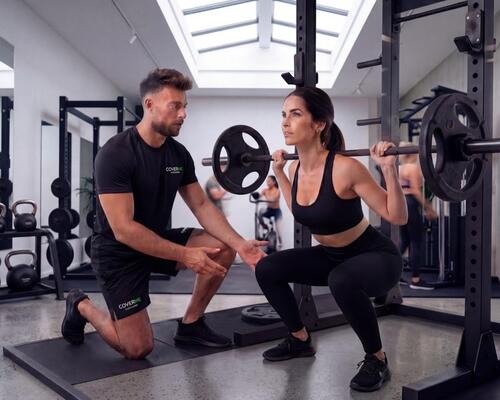
CoverMe, the global leader in fitness workforce management, today launches CoverMe PT, an
on-demand personal training platform that connects the right personal trainer to the right
client in under 10 seconds. [more...]
Panatta brought together four of the most influential figures in bodybuilding history on the
stage of RiminiWellness 2026: Phil Heath, Lee Haney, Ronnie Coleman and Hany Rambod. [more...]
+ More featured suppliers
COMPANY PROFILES
Alliance Leisure
Alliance Leisure Services was specifically
established to respond to the changing
development need [more...]
Precor
Precor promises precision-quality products with steadfast reliability that are inspired by exerciser [more...]
Currently, doctors view age as a key determinant in deciding if someone is suitable for surgery. Older people, they believe, have a lower survival rate after operations and are more likely to have complications and take longer to recover.
However, now researchers from Newcastle University in the UK and the Newcastle Hospitals Foundation Trust have found that being physically fit is a more important factor than age when it comes to the outcome of surgery.
The research, published in Annals of Surgery*, could lead to changes in hospital procedure, such as prescribing exercise programmes before operations.
Fitness test The study was focused on 389 adults who had liver surgery at the Freeman Hospital in Newcastle upon Tyne over a three-year period. Their ages ranged from 26–86 years, with a mean of age of 66.
Before their operation, each patient’s physical fitness capacity was measured via a maximal exercise test. Taking into account age, weight and height, they cycled to exhaustion up a virtual hill that got progressively harder while their breathing and heart rate were monitored. Their fitness level was calculated based on their anaerobic threshold and peak oxygen consumption during the final 30 seconds of exercise. After the operation, their outcomes were measured via hospital records.
Multiple benefits Fit patients, the study found, had a significantly lower risk of dying after surgery. The best results were for those who were fit and under 75 years old, where the mortality rate was less than 1 per cent. This rose slightly to 4 per cent for patients who were fit and aged over 75. For patients who were unfit and aged under 75, the mortality rate was 11 per cent, jumping to 21 per cent for those who were aged over 75 years and unfit.
And the benefits of being fit didn’t stop there. Regardless of age, people who were physically unfit took longer to recover from their operation. They spent an average of 11 days longer in hospital after surgery – at a cost of £6,000 each – than fitter patients.
Professor Mike Trenell, who led the research, says: “The results of this study show quite clearly that physical fitness plays a powerful role in surviving major surgery, no matter how old you are. Being fit also costs less, both individually as you have fewer complications, and financially to the NHS.”
Dr Chris Snowden, a senior lecturer at Newcastle University, adds that the data “also emphasises the importance of making an objective measurement of fitness to classify pre-operative risk. Optimistically, it means there’s an exciting opportunity to improve surgical outcome by improving pre-operative fitness.”
Meanwhile, another study – published in the American Journal of Cardiology in August – showed that the chance of fit heart bypass patients dying after surgery was only 1 per cent, going up to 5 per cent among unfit patients.
Stress-related Trenell believes that one way fitness can aid surgery is that it helps the body to cope with stress. More research is needed, however, to see if pre-operative fitness benefits are the same across types of surgery. It may be less effective for those with a head or brain injury, Trenell says, as these tend to be more complex than surgical interventions.
He adds: “The question is whether we can help people who aren’t physically fit become ‘fit for surgery’. That will involve working with patients, care teams and exercise professionals – an exciting challenge to work on.”
*Trenell, M and Snowden, C et al. Cardiorespiratory Fitness Predicts Mortality and Hospital Length of Stay After Major Elective Surgery in Older People. Annals of Surgery, June 2013
The UK's four Chief Medical Officers have published a refreshed edition of Physical activity
guidelines: UK Chief Medical Officers' report, updating the evidence that underpins the nation's
physical activity recommendations and placing greater emphasis on strength, balance, reducing
sedentary behaviour and, for the first time, supporting people taking weight loss medications.
Places Leisure has exchanged contracts to build and operate a flagship £60m water and leisure
destination on behalf of Basingstoke and Deane Borough Council.
The Republic of Ireland will become the latest market in PureGym’s expanding international
portfolio, with the first launch planned for Dublin in 2027.
Anytime Fitness opened more than one club a day in 2025 and is on track to maintain this rate
of growth this year, as parent company Purpose Brands targets further international expansion.
The £33.9 million Leighton Leisure and Community Centre has opened in Leighton Buzzard, UK,
creating a next-generation public leisure, health and wellbeing hub for the local community.
Walnuts Leisure Centre in Orpington, in the London Borough of Bromley, has reopened following
a £17m transformation designed to secure the long-term future of the public leisure asset and
reposition it as a community wellbeing hub.
The Gym Group, has announced that it's sustained positive trading momentum has continued
through the first half of 2026 and the company remains confident about the outlook.
Luxury boutique Pilates and wellness studio, X-Club, officially launches a
4,000sq ft flagship at
Marylebone on 16 July Built around X-Club’s four pillars of wellness – mind,
movement,
nutrition and therapy – the facility features two group exercise studi
CoverMe, the global leader in fitness workforce management, today launches CoverMe PT, an
on-demand personal training platform that connects the right personal trainer to the right
client in under 10 seconds. [more...]
Panatta brought together four of the most influential figures in bodybuilding history on the
stage of RiminiWellness 2026: Phil Heath, Lee Haney, Ronnie Coleman and Hany Rambod. [more...]
+ More featured suppliers
COMPANY PROFILES
Alliance Leisure Alliance Leisure Services was specifically
established to respond to the changing
development need [more...]