Group exercise members are loyal, attend regularly and are less price-sensitive than other members. But are operators maximising the potential of group exercise in their clubs? Kath Hudson reports
By Kath Hudson | Published in Health Club Management 2013 issue 10
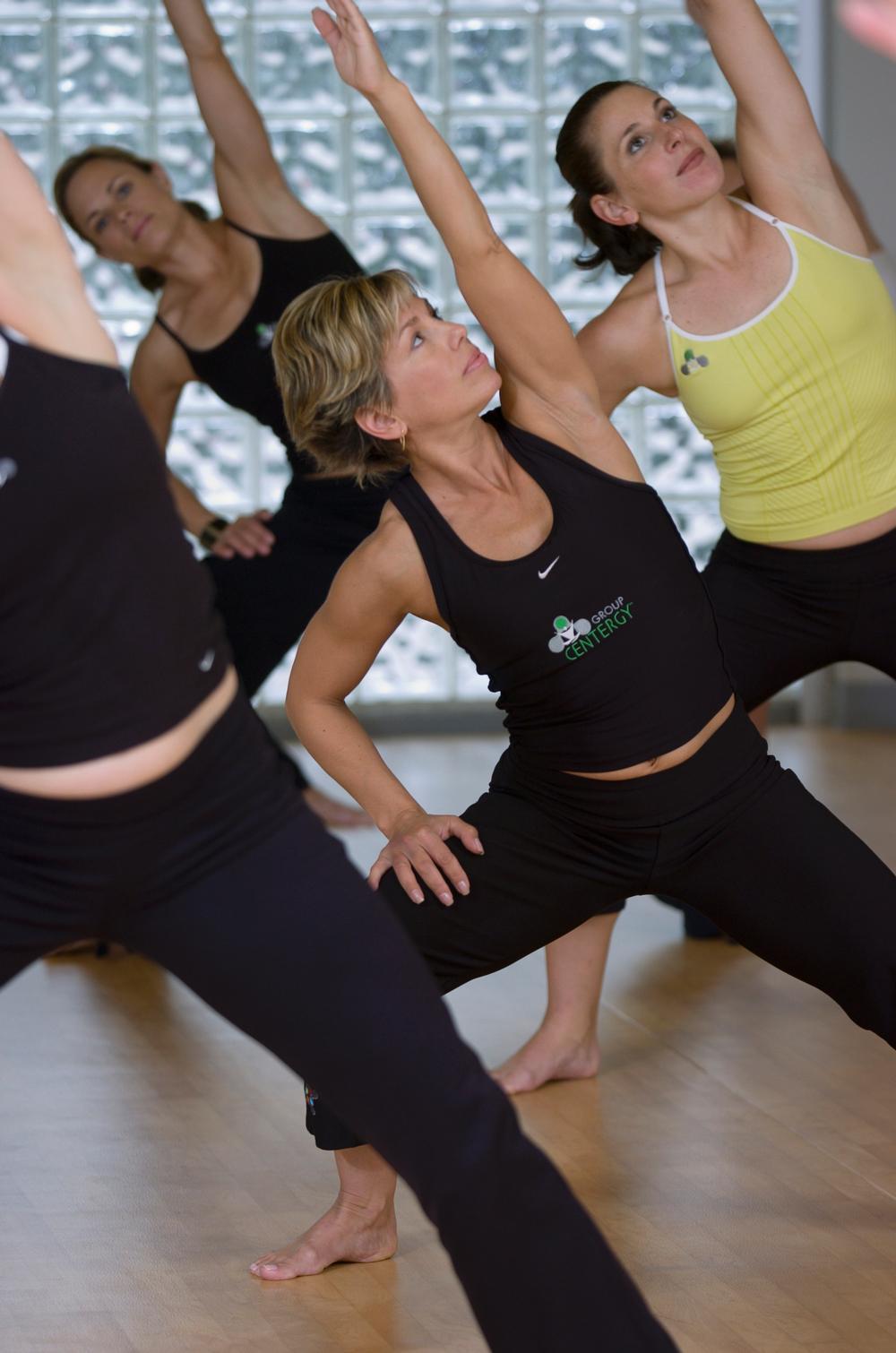
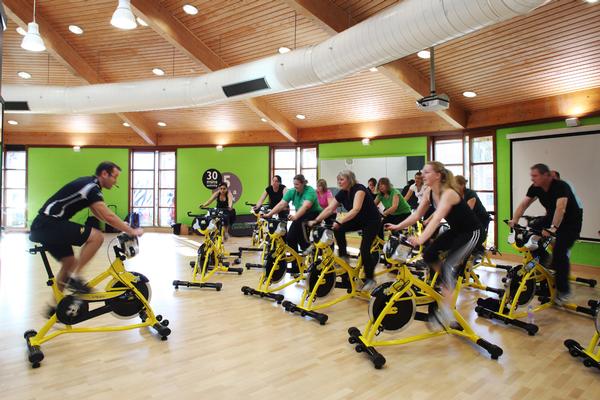
Group exercise attendees tend to be very loyal members
According to Vanessa Jodar, head of global sales and club performance at Les Mills, very few fitness facility managers truly understand how to offer stimulating group exercise experiences that will continue to keep members engaged.
In fact, because group exercise members tend to be regular, motivated attendees already, they’re frequently left to it. The studio is too often seen as an add-on to the club, a scheduling task – juggling popular classes against peak times, studio capacity and instructor availability – rather than the very heart of the offering.
But with the loyalty of group exercise members driving improved retention rates, and with it profitability, it makes commercial sense for operators to engage with group exercise. So how can operators better use the power of the studio to promote their clubs? How can they push up participation, ensuring as high a percentage of the membership as possible takes part in classes, rather than just the old faithfuls? How can they sell the studio, both internally and externally? And how do they maintain consistent instructor and class quality? We ask the experts…
Fergus AhernManaging DirectorGroup X Systems
Fergus Ahern
Operators need to truly understand the power of group exercise and its importance to their facility. Research shows that, in the US, our classes have enabled health clubs to service 200 per cent more members in group fitness and become 46 per cent more profitable than the average facility.
However, many clubs just let classes run without knowing whether they’re truly successful – ie what percentage of total visits are for group exercise, whether classes are simply servicing the same members or attracting new ones, and so on. Some clubs have the same 15–20 per cent of members using classes, when the goal should be to have 50 per cent participating.
In order to compete with budget brands, clubs should focus on selling memberships around their group exercise classes. Strong programming makes members more resilient to price change, so they’re less likely to join the newly launched local budget club than a treadmill user.
Take a scientific approach: monitor the timetable, understand the ROIs and analyse KPIs such as cost per head, capacity and percentage of members using group exercise. Keep shaking it up. By introducing new programmes on a quarterly basis, you can drive anticipation, excitement and awareness to retain fans and attract new ones, as well as increasing the perception of value offered by your classes.
And for broad audience appeal, make sure you build a team of instructors across all ages, both male and female. The more diverse your instructors, the more diverse your participants will be.
Strong programming makes members more resilient to price change
Vanessa JodarHead of Global Sales and Club PerformanceLes Mills
Vanessa Jodar
Some facilities understand the high value to their business of offering members a motivating, inspiring environment – an amazing fitness destination. After all, growing membership and profit is all about motivating more members to come to the club more often.
Unfortunately, many fitness facilities and group fitness studios we see are about as exciting as hospital rooms. They’re just places to go to exercise, which shouldn’t be the case as they share so many points in common with a theatrical experience: the music, the lights, the instructor, the moves, the stage. The impact on the business of improving the studio environment can be massive. When the Les Mills club in Auckland, New Zealand, created a new cycling studio a few years ago, it jumped from 1,200 attendances at its RPM classes each week to 2,000, generating an additional income of NZ$4,000 (US$3,200 / £2,070 / €2,400) a week.
To start with, go big. Currently we’re finding, worldwide, that studios are too small to take advantage of economies of scale. More attendees means more revenue to pay better instructors, which leads to even more attendees. If your existing studio is too small, can you re-arrange storage? Change the position of the stage? Swap spaces in the club? Use the gym floor or the car park?
Create an experience: make it immersive and exciting, with the instructor and stage the centre of the focus. Don’t make the common mistake of scrimping on the sound system: you really need a professional system that can handle a high level of usage in a humid environment.
Creative lighting can add a lot to the experience. You need some theatre and the ability to play with colours and intensity, all of which creates energy and movement in the room. A dimmer switch can be a cheap solution to bring about a big show effect.
And think about the décor: using different graphics, colours, patterns and shapes can create a huge amount of impact and energy.
Is your group exercise studio large enough? Les Mills believes many studios around the world are too small to take advantage of economies of scale
Lee MatthewsUK Head of FitnessFitness First
Lee Matthews
Generally I think operators are complacent about their group exercise offering and assume it’s working well if the core classes are full.
As fitness industry professionals, it’s our job to keep introducing the latest trends and help members achieve the best results, so we have to keep moving and evolving. There are certain classes such as Les Mills and yoga that are always popular, so timetables should include about 80 per cent of the solid favourites – but then have about 20 per cent new classes. Push members out of their comfort zones by putting a different class in a popular slot and making them try something else.
In terms of getting more members to try classes, this comes down to face-to-face interaction, engaging with people on the gym floor and persuading them to come along. There’s also a lot that can be done via tailored CRM communications and social media.
At Fitness First, we run a major campaign every two months. These used to be offer-led, but for the past year have been product-led. Our current campaign is creating a buzz for the Victoria Pendleton pro-cycling class. We’re also piloting virtual class options, looking for the right product to roll out.
Matthews: Popular classes like Les Mills should make up 80 per cent of the timetable
Greg SellarDirectorGreg Sellar Ltd
Greg Sellar
Clubs should in principle be using group exercise as a marketing tool, but at present there’s little to differentiate the offerings of the major public and private sector chains – they all offer the same classes, which hardly makes for a USP to shout about, and essentially appeal to the converted.
A good exercise programme should include statement and signature classes that are unique to that club brand, with programmes renewed annually, either by talent within the chain or by external consultants. The timetable shouldn’t look the same year on year, let alone decade on decade. The plan should cater to all fitness levels, but each class should unapologetically not have to cater to all.
To ensure quality control, club co-ordinators should attend classes on a monthly basis to provide constructive feedback. All clubs should have an in-house programme running that constantly assesses and monitors instructors delivering all sessions.
Any member of a qualified team with a passion for studio classes should be able to step in and deliver a great experience: most new concepts taught in a studio can be delivered by group exercise instructors, gym instructors or personal trainers alike.
Clubs should hold monthly meetings, listen to the instructors, invest in their training and incentivise them. A solid team ethos driven by the club and overseen by a proactive co-ordinator will ensure quality. There has to be some ownership from clubs, which need to realise they have a responsibility for their instructors and trainers – to help them develop and ensure their success.
Elaine DentonRegional Fitness ManagerEveryone Active
Elaine Denton
To mobilise as many club members into group exercise as possible, and maximise the potential of the studio, the timetable needs to be strong. Strike a balance between calorie killers, toning and strength, unwinding and energising classes, and specialities like Zumba and Bokwa.
Staff interaction is key to persuading people to try classes. Everyone Active has timetables and posters to promote classes and new launches, but we also ensure colleagues know what the classes are, and the benefits of each programme, so they can interact with customers and introduce them to a new experience.
The quality of the instructor is paramount. All of our instructors are REPS-registered and each centre has extensive cover lists with approved instructors to ensure the quality of instruction remains the same.
Assessment and instructor feedback are important to ensure instruction quality remains high and to monitor attendance, making sure we offer the right classes at the right time, getting as many people active per session as possible.
We provide small group training sessions on the gym floor so people can see what it’s like to exercise as part of a group, and the social interaction and support it provides. We try and make our group cycling studios visible from the gym floor too, with glass walls for example, so other members can see what the classes involve. We find this helps break down the perceived barriers to attending an exercise class, making members feel more confident and comfortable about attending their first session.
Denton: Make your group areas, such as the cycling studio, visible from the gym
Panatta brought together four of the most influential figures in bodybuilding history on the
stage of RiminiWellness 2026: Phil Heath, Lee Haney, Ronnie Coleman and Hany Rambod. [more...]
Active Blackpool is deploying Cornerstone Connect, a new digital interface allowing
disparate information from multiple systems to be aggregated into one dataset, to support
its focus on reducing health inequalities and improving healthy life expectancy. [more...]
+ More featured suppliers
COMPANY PROFILES
Alliance Leisure
Alliance Leisure Services was specifically
established to respond to the changing
development need [more...]
Group exercise members are loyal, attend regularly and are less price-sensitive than other members. But are operators maximising the potential of group exercise in their clubs? Kath Hudson reports
By Kath Hudson | Published in Health Club Management 2013 issue 10
Group exercise attendees tend to be very loyal members
According to Vanessa Jodar, head of global sales and club performance at Les Mills, very few fitness facility managers truly understand how to offer stimulating group exercise experiences that will continue to keep members engaged.
In fact, because group exercise members tend to be regular, motivated attendees already, they’re frequently left to it. The studio is too often seen as an add-on to the club, a scheduling task – juggling popular classes against peak times, studio capacity and instructor availability – rather than the very heart of the offering.
But with the loyalty of group exercise members driving improved retention rates, and with it profitability, it makes commercial sense for operators to engage with group exercise. So how can operators better use the power of the studio to promote their clubs? How can they push up participation, ensuring as high a percentage of the membership as possible takes part in classes, rather than just the old faithfuls? How can they sell the studio, both internally and externally? And how do they maintain consistent instructor and class quality? We ask the experts…
Fergus AhernManaging DirectorGroup X Systems
Fergus Ahern
Operators need to truly understand the power of group exercise and its importance to their facility. Research shows that, in the US, our classes have enabled health clubs to service 200 per cent more members in group fitness and become 46 per cent more profitable than the average facility.
However, many clubs just let classes run without knowing whether they’re truly successful – ie what percentage of total visits are for group exercise, whether classes are simply servicing the same members or attracting new ones, and so on. Some clubs have the same 15–20 per cent of members using classes, when the goal should be to have 50 per cent participating.
In order to compete with budget brands, clubs should focus on selling memberships around their group exercise classes. Strong programming makes members more resilient to price change, so they’re less likely to join the newly launched local budget club than a treadmill user.
Take a scientific approach: monitor the timetable, understand the ROIs and analyse KPIs such as cost per head, capacity and percentage of members using group exercise. Keep shaking it up. By introducing new programmes on a quarterly basis, you can drive anticipation, excitement and awareness to retain fans and attract new ones, as well as increasing the perception of value offered by your classes.
And for broad audience appeal, make sure you build a team of instructors across all ages, both male and female. The more diverse your instructors, the more diverse your participants will be.
Strong programming makes members more resilient to price change
Vanessa JodarHead of Global Sales and Club PerformanceLes Mills
Vanessa Jodar
Some facilities understand the high value to their business of offering members a motivating, inspiring environment – an amazing fitness destination. After all, growing membership and profit is all about motivating more members to come to the club more often.
Unfortunately, many fitness facilities and group fitness studios we see are about as exciting as hospital rooms. They’re just places to go to exercise, which shouldn’t be the case as they share so many points in common with a theatrical experience: the music, the lights, the instructor, the moves, the stage. The impact on the business of improving the studio environment can be massive. When the Les Mills club in Auckland, New Zealand, created a new cycling studio a few years ago, it jumped from 1,200 attendances at its RPM classes each week to 2,000, generating an additional income of NZ$4,000 (US$3,200 / £2,070 / €2,400) a week.
To start with, go big. Currently we’re finding, worldwide, that studios are too small to take advantage of economies of scale. More attendees means more revenue to pay better instructors, which leads to even more attendees. If your existing studio is too small, can you re-arrange storage? Change the position of the stage? Swap spaces in the club? Use the gym floor or the car park?
Create an experience: make it immersive and exciting, with the instructor and stage the centre of the focus. Don’t make the common mistake of scrimping on the sound system: you really need a professional system that can handle a high level of usage in a humid environment.
Creative lighting can add a lot to the experience. You need some theatre and the ability to play with colours and intensity, all of which creates energy and movement in the room. A dimmer switch can be a cheap solution to bring about a big show effect.
And think about the décor: using different graphics, colours, patterns and shapes can create a huge amount of impact and energy.
Is your group exercise studio large enough? Les Mills believes many studios around the world are too small to take advantage of economies of scale
Lee MatthewsUK Head of FitnessFitness First
Lee Matthews
Generally I think operators are complacent about their group exercise offering and assume it’s working well if the core classes are full.
As fitness industry professionals, it’s our job to keep introducing the latest trends and help members achieve the best results, so we have to keep moving and evolving. There are certain classes such as Les Mills and yoga that are always popular, so timetables should include about 80 per cent of the solid favourites – but then have about 20 per cent new classes. Push members out of their comfort zones by putting a different class in a popular slot and making them try something else.
In terms of getting more members to try classes, this comes down to face-to-face interaction, engaging with people on the gym floor and persuading them to come along. There’s also a lot that can be done via tailored CRM communications and social media.
At Fitness First, we run a major campaign every two months. These used to be offer-led, but for the past year have been product-led. Our current campaign is creating a buzz for the Victoria Pendleton pro-cycling class. We’re also piloting virtual class options, looking for the right product to roll out.
Matthews: Popular classes like Les Mills should make up 80 per cent of the timetable
Greg SellarDirectorGreg Sellar Ltd
Greg Sellar
Clubs should in principle be using group exercise as a marketing tool, but at present there’s little to differentiate the offerings of the major public and private sector chains – they all offer the same classes, which hardly makes for a USP to shout about, and essentially appeal to the converted.
A good exercise programme should include statement and signature classes that are unique to that club brand, with programmes renewed annually, either by talent within the chain or by external consultants. The timetable shouldn’t look the same year on year, let alone decade on decade. The plan should cater to all fitness levels, but each class should unapologetically not have to cater to all.
To ensure quality control, club co-ordinators should attend classes on a monthly basis to provide constructive feedback. All clubs should have an in-house programme running that constantly assesses and monitors instructors delivering all sessions.
Any member of a qualified team with a passion for studio classes should be able to step in and deliver a great experience: most new concepts taught in a studio can be delivered by group exercise instructors, gym instructors or personal trainers alike.
Clubs should hold monthly meetings, listen to the instructors, invest in their training and incentivise them. A solid team ethos driven by the club and overseen by a proactive co-ordinator will ensure quality. There has to be some ownership from clubs, which need to realise they have a responsibility for their instructors and trainers – to help them develop and ensure their success.
Elaine DentonRegional Fitness ManagerEveryone Active
Elaine Denton
To mobilise as many club members into group exercise as possible, and maximise the potential of the studio, the timetable needs to be strong. Strike a balance between calorie killers, toning and strength, unwinding and energising classes, and specialities like Zumba and Bokwa.
Staff interaction is key to persuading people to try classes. Everyone Active has timetables and posters to promote classes and new launches, but we also ensure colleagues know what the classes are, and the benefits of each programme, so they can interact with customers and introduce them to a new experience.
The quality of the instructor is paramount. All of our instructors are REPS-registered and each centre has extensive cover lists with approved instructors to ensure the quality of instruction remains the same.
Assessment and instructor feedback are important to ensure instruction quality remains high and to monitor attendance, making sure we offer the right classes at the right time, getting as many people active per session as possible.
We provide small group training sessions on the gym floor so people can see what it’s like to exercise as part of a group, and the social interaction and support it provides. We try and make our group cycling studios visible from the gym floor too, with glass walls for example, so other members can see what the classes involve. We find this helps break down the perceived barriers to attending an exercise class, making members feel more confident and comfortable about attending their first session.
Denton: Make your group areas, such as the cycling studio, visible from the gym
The UK's four Chief Medical Officers have published a refreshed edition of Physical activity
guidelines: UK Chief Medical Officers' report, updating the evidence that underpins the nation's
physical activity recommendations and placing greater emphasis on strength, balance, reducing
sedentary behaviour and, for the first time, supporting people taking weight loss medications.
Places Leisure has exchanged contracts to build and operate a flagship £60m water and leisure
destination on behalf of Basingstoke and Deane Borough Council.
The Republic of Ireland will become the latest market in PureGym’s expanding international
portfolio, with the first launch planned for Dublin in 2027.
Anytime Fitness opened more than one club a day in 2025 and is on track to maintain this rate
of growth this year, as parent company Purpose Brands targets further international expansion.
The £33.9 million Leighton Leisure and Community Centre has opened in Leighton Buzzard, UK,
creating a next-generation public leisure, health and wellbeing hub for the local community.
Walnuts Leisure Centre in Orpington, in the London Borough of Bromley, has reopened following
a £17m transformation designed to secure the long-term future of the public leisure asset and
reposition it as a community wellbeing hub.
The Gym Group, has announced that it's sustained positive trading momentum has continued
through the first half of 2026 and the company remains confident about the outlook.
Luxury boutique Pilates and wellness studio, X-Club, officially launches a
4,000sq ft flagship at
Marylebone on 16 July Built around X-Club’s four pillars of wellness – mind,
movement,
nutrition and therapy – the facility features two group exercise studi
Panatta brought together four of the most influential figures in bodybuilding history on the
stage of RiminiWellness 2026: Phil Heath, Lee Haney, Ronnie Coleman and Hany Rambod. [more...]
Active Blackpool is deploying Cornerstone Connect, a new digital interface allowing
disparate information from multiple systems to be aggregated into one dataset, to support
its focus on reducing health inequalities and improving healthy life expectancy. [more...]
+ More featured suppliers
COMPANY PROFILES
Alliance Leisure Alliance Leisure Services was specifically
established to respond to the changing
development need [more...]