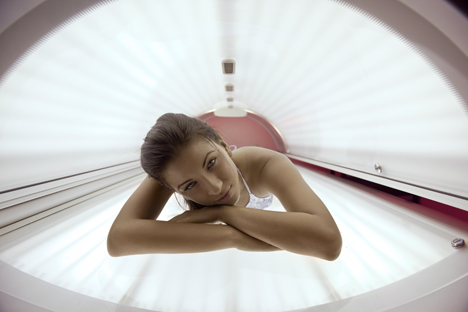
Sunbeds have been linked with melanoma risks in the past, but new research suggests they may offer health benefits / main photo: shutterstock.com/dotshock
With the high levels of vitamin D deficiency among the UK population highlighted in numerous media channels over recent months, is it time for health clubs and leisure centres to put their focus back on sunbeds – for so many years handled with caution following warnings from the likes of cancer charities? If used properly, can sunbeds be used for positive health reasons, giving people a little dose of the otherwise scarce ‘sunshine vitamin’ (see also HCM Jan 13, p60)? Or should they still be avoided in favour of a spray tan and a daily vitamin D tablet? We ask the experts.
Against
Deborah Mason
Deborah MasonCommunications ManagerBritish Association of Dermatologists
Most people are now aware that exposure to sunlight helps to create vitamin D in their bodies – but this vitamin is also available through diet and supplementation.
Perhaps what people are less aware of is that a sunbed does not emit ‘sunlight’: it puts out a mixture of UVA and UVB rays (which are constituents of sunlight) that have been specifically calibrated to make the skin tan quickly. It’s also worth noting that a recent study by CRUK (published in the British Journal of Dermatology earlier this year) found that nearly 90 per cent of sunbeds in the UK did not comply with EU regulations, and that the cancer risk for comparable time of exposure on these sunbeds was up to six times higher than Mediterranean sunlight; while it might be safe enough for many people to sit in the midday sun for eight to 10 minutes, the equivalent on a sunbed is not the same.
Research linking sunbeds to skin cancer is often dismissed by the sunbed industry, perhaps because they don’t really understand how the research works. The most widely quoted paper (by Mathieu Boniol et al) is a meta-analysis, which means it has looked at many different pieces of research to see if there are common findings. They found 13 different studies that all came to the same conclusion: using sunbeds before the age of 35 increases your risk of skin cancer by 75 per cent. It’s also important to look at non-melanoma skin cancer; the sunbed industry tends to focus on melanoma only.
Also, recent Advertising Standards Authority rulings say that a sunbed is not a medical device, and that under advertising laws no health benefits can be advertised as arising from its use.
For
Oliver Gillie BSc PhD FRSA
Oliver Gillie BSc PhD FRSA Health Research Forum
For many years, sunbeds have been condemned on the grounds that their use can cause melanoma, the serious form of skin cancer that costs lives. Now we have new scientific evidence from the UK that suggests this view is not necessarily correct and that sunbeds, when used carefully, are generally safe.
Even more surprising, we now know that the vitamin D produced in skin during a sunbed session probably protects us from a variety of cancers.
Scientists at Leeds University have shown that regular exposure to the sun, and use of sunbeds, doesn’t generally cause melanoma in the UK. In fact, people who work outdoors and get lots of sunshine, and those who spend weekends outdoors, get less melanoma. Greater exposure to UV light means they make more vitamin D, which almost certainly protects against several cancers, including melanoma, and protects against common infections such as ‘flu and many other diseases.
However, a link between use of sunbeds and melanoma has been found by the International Agency for Research on Cancer, a prestigious body. IARC calculated that exposure to sunbeds would increase risk of melanoma by 15 per cent. However, this figure probably does not reflect modern sunbeds and modern usage in the UK. A favoured explanation is that risk of melanoma comes primarily from burning, or excessive exposure to UV light, when the skin has had little or no previous exposure.
Care always needs to be taken to begin any sun exposure with small doses: then the benefits in terms of the prevention of cancer greatly exceed the risks.
"now we have new scientific evidence from the UK which suggests that sunbeds, when used carefully, are generally safe"
For
Gary Lipman
Gary LipmanChairThe Sunbed Association
For many years, sunbeds were a significant secondary revenue generator in the vast majority of health clubs across the UK. The anti-tanning campaigns vociferously attacked sunbeds, lobbying for their withdrawal on alleged health grounds, with much success. Now the tide is turning. What we have always known is now backed up with published scientific evidence: there is no correlation between responsible sunbed use and skin cancer. Indeed, recent studies have shown that responsible tanning can help prevent melanoma.
In addition, the world’s leading experts on vitamin D advocate use of a sunbed to ensure optimum vitamin D status when living in countries with latitudes such as the UK, where regular exposure to the correct intensity of UV just isn’t possible for more than six months of the year. Vitamin D deficiency is linked to many health issues and diseases – as well as, interestingly, athletic performance.
As in any successful gym environment, properly trained staff and well-maintained equipment are at the core of responsible sunbed provision. For health clubs keen to ensure their sunbed provision operates to best practice, membership of The Sunbed Association provides the necessary tools, information and support.
Given all the above – and with regulatory maximum UV irradiance levels in place to remove the risk of burning, legislation to prohibit under-age use of sunbeds, and a code of practice ensuring optimum customer care – there is considerable synergy to be derived from the provision of sunbeds in a health club environment.
Against
Jordan Smithies
Jordan SmithiesMDElite Fitness
I’m not personally heavily in favour of, or heavily against, sunbeds, but in 2010 I made the decision to remove them from my club – then known as Tara Leisure and Sports, in Oldham.
That decision was the result of very passionate campaigning by one of our members – a lady called Gill Nuttall, who was the founder of skin cancer charity Factor 50. She had originally just wanted to do more to raise awareness of skin cancer, and specifically draw our members’ attention to the potential risks associated with sunbed use. However, based on what she was telling me I felt that, as a health centre owner, I had a duty to remove sunbeds altogether.
Although the decision mainly came about thanks to Gill’s efforts, in the end we all know someone who’s suffered from cancer. I wanted to do my bit. When there are other risk-free alternatives out there like spray tans, I felt it was right thing to do to remove our sunbeds.
At the time, we did look into offering spray tans instead, but in the end that didn’t happen. We didn’t experience any negative impact as a result of our decision though. Sunbeds were never really a core part of the business, and in fact members seemed to appreciate what we’d done – as did the local press, who gave our decision a lot of very positive coverage.
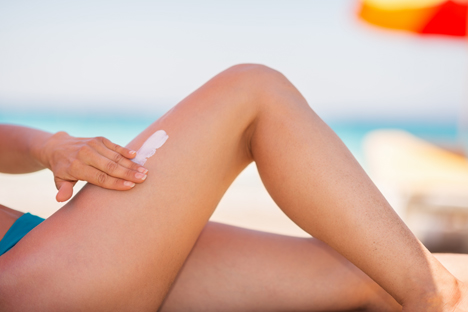
Exposure to sunlight produces vitamin D, which helps protect against disease
Panatta brought together four of the most influential figures in bodybuilding history on the
stage of RiminiWellness 2026: Phil Heath, Lee Haney, Ronnie Coleman and Hany Rambod. [more...]
Active Blackpool is deploying Cornerstone Connect, a new digital interface allowing
disparate information from multiple systems to be aggregated into one dataset, to support
its focus on reducing health inequalities and improving healthy life expectancy. [more...]
+ More featured suppliers
COMPANY PROFILES
Serco Leisure
Serco Leisure Operating Limited is one of the UK’s leading national operators of leisure centres, de [more...]
Precor
Precor promises precision-quality products with steadfast reliability that are inspired by exerciser [more...]
Sunbeds have been linked with melanoma risks in the past, but new research suggests they may offer health benefits / main photo: shutterstock.com/dotshock
With the high levels of vitamin D deficiency among the UK population highlighted in numerous media channels over recent months, is it time for health clubs and leisure centres to put their focus back on sunbeds – for so many years handled with caution following warnings from the likes of cancer charities? If used properly, can sunbeds be used for positive health reasons, giving people a little dose of the otherwise scarce ‘sunshine vitamin’ (see also HCM Jan 13, p60)? Or should they still be avoided in favour of a spray tan and a daily vitamin D tablet? We ask the experts.
Against
Deborah Mason
Deborah MasonCommunications ManagerBritish Association of Dermatologists
Most people are now aware that exposure to sunlight helps to create vitamin D in their bodies – but this vitamin is also available through diet and supplementation.
Perhaps what people are less aware of is that a sunbed does not emit ‘sunlight’: it puts out a mixture of UVA and UVB rays (which are constituents of sunlight) that have been specifically calibrated to make the skin tan quickly. It’s also worth noting that a recent study by CRUK (published in the British Journal of Dermatology earlier this year) found that nearly 90 per cent of sunbeds in the UK did not comply with EU regulations, and that the cancer risk for comparable time of exposure on these sunbeds was up to six times higher than Mediterranean sunlight; while it might be safe enough for many people to sit in the midday sun for eight to 10 minutes, the equivalent on a sunbed is not the same.
Research linking sunbeds to skin cancer is often dismissed by the sunbed industry, perhaps because they don’t really understand how the research works. The most widely quoted paper (by Mathieu Boniol et al) is a meta-analysis, which means it has looked at many different pieces of research to see if there are common findings. They found 13 different studies that all came to the same conclusion: using sunbeds before the age of 35 increases your risk of skin cancer by 75 per cent. It’s also important to look at non-melanoma skin cancer; the sunbed industry tends to focus on melanoma only.
Also, recent Advertising Standards Authority rulings say that a sunbed is not a medical device, and that under advertising laws no health benefits can be advertised as arising from its use.
For
Oliver Gillie BSc PhD FRSA
Oliver Gillie BSc PhD FRSA Health Research Forum
For many years, sunbeds have been condemned on the grounds that their use can cause melanoma, the serious form of skin cancer that costs lives. Now we have new scientific evidence from the UK that suggests this view is not necessarily correct and that sunbeds, when used carefully, are generally safe.
Even more surprising, we now know that the vitamin D produced in skin during a sunbed session probably protects us from a variety of cancers.
Scientists at Leeds University have shown that regular exposure to the sun, and use of sunbeds, doesn’t generally cause melanoma in the UK. In fact, people who work outdoors and get lots of sunshine, and those who spend weekends outdoors, get less melanoma. Greater exposure to UV light means they make more vitamin D, which almost certainly protects against several cancers, including melanoma, and protects against common infections such as ‘flu and many other diseases.
However, a link between use of sunbeds and melanoma has been found by the International Agency for Research on Cancer, a prestigious body. IARC calculated that exposure to sunbeds would increase risk of melanoma by 15 per cent. However, this figure probably does not reflect modern sunbeds and modern usage in the UK. A favoured explanation is that risk of melanoma comes primarily from burning, or excessive exposure to UV light, when the skin has had little or no previous exposure.
Care always needs to be taken to begin any sun exposure with small doses: then the benefits in terms of the prevention of cancer greatly exceed the risks.
"now we have new scientific evidence from the UK which suggests that sunbeds, when used carefully, are generally safe"
For
Gary Lipman
Gary LipmanChairThe Sunbed Association
For many years, sunbeds were a significant secondary revenue generator in the vast majority of health clubs across the UK. The anti-tanning campaigns vociferously attacked sunbeds, lobbying for their withdrawal on alleged health grounds, with much success. Now the tide is turning. What we have always known is now backed up with published scientific evidence: there is no correlation between responsible sunbed use and skin cancer. Indeed, recent studies have shown that responsible tanning can help prevent melanoma.
In addition, the world’s leading experts on vitamin D advocate use of a sunbed to ensure optimum vitamin D status when living in countries with latitudes such as the UK, where regular exposure to the correct intensity of UV just isn’t possible for more than six months of the year. Vitamin D deficiency is linked to many health issues and diseases – as well as, interestingly, athletic performance.
As in any successful gym environment, properly trained staff and well-maintained equipment are at the core of responsible sunbed provision. For health clubs keen to ensure their sunbed provision operates to best practice, membership of The Sunbed Association provides the necessary tools, information and support.
Given all the above – and with regulatory maximum UV irradiance levels in place to remove the risk of burning, legislation to prohibit under-age use of sunbeds, and a code of practice ensuring optimum customer care – there is considerable synergy to be derived from the provision of sunbeds in a health club environment.
Against
Jordan Smithies
Jordan SmithiesMDElite Fitness
I’m not personally heavily in favour of, or heavily against, sunbeds, but in 2010 I made the decision to remove them from my club – then known as Tara Leisure and Sports, in Oldham.
That decision was the result of very passionate campaigning by one of our members – a lady called Gill Nuttall, who was the founder of skin cancer charity Factor 50. She had originally just wanted to do more to raise awareness of skin cancer, and specifically draw our members’ attention to the potential risks associated with sunbed use. However, based on what she was telling me I felt that, as a health centre owner, I had a duty to remove sunbeds altogether.
Although the decision mainly came about thanks to Gill’s efforts, in the end we all know someone who’s suffered from cancer. I wanted to do my bit. When there are other risk-free alternatives out there like spray tans, I felt it was right thing to do to remove our sunbeds.
At the time, we did look into offering spray tans instead, but in the end that didn’t happen. We didn’t experience any negative impact as a result of our decision though. Sunbeds were never really a core part of the business, and in fact members seemed to appreciate what we’d done – as did the local press, who gave our decision a lot of very positive coverage.
Exposure to sunlight produces vitamin D, which helps protect against disease
The UK's four Chief Medical Officers have published a refreshed edition of Physical activity
guidelines: UK Chief Medical Officers' report, updating the evidence that underpins the nation's
physical activity recommendations and placing greater emphasis on strength, balance, reducing
sedentary behaviour and, for the first time, supporting people taking weight loss medications.
Places Leisure has exchanged contracts to build and operate a flagship £60m water and leisure
destination on behalf of Basingstoke and Deane Borough Council.
The Republic of Ireland will become the latest market in PureGym’s expanding international
portfolio, with the first launch planned for Dublin in 2027.
Anytime Fitness opened more than one club a day in 2025 and is on track to maintain this rate
of growth this year, as parent company Purpose Brands targets further international expansion.
The £33.9 million Leighton Leisure and Community Centre has opened in Leighton Buzzard, UK,
creating a next-generation public leisure, health and wellbeing hub for the local community.
Walnuts Leisure Centre in Orpington, in the London Borough of Bromley, has reopened following
a £17m transformation designed to secure the long-term future of the public leisure asset and
reposition it as a community wellbeing hub.
The Gym Group, has announced that it's sustained positive trading momentum has continued
through the first half of 2026 and the company remains confident about the outlook.
Luxury boutique Pilates and wellness studio, X-Club, officially launches a
4,000sq ft flagship at
Marylebone on 16 July Built around X-Club’s four pillars of wellness – mind,
movement,
nutrition and therapy – the facility features two group exercise studi
Panatta brought together four of the most influential figures in bodybuilding history on the
stage of RiminiWellness 2026: Phil Heath, Lee Haney, Ronnie Coleman and Hany Rambod. [more...]
Active Blackpool is deploying Cornerstone Connect, a new digital interface allowing
disparate information from multiple systems to be aggregated into one dataset, to support
its focus on reducing health inequalities and improving healthy life expectancy. [more...]
+ More featured suppliers
COMPANY PROFILES
Serco Leisure Serco Leisure Operating Limited is one of the UK’s leading national operators of leisure centres, de [more...]