I was interested to read your recent feature on barefoot running (see HCM July 13, p38). Benno Nigg and Henrik Enders, from the Human Performance Laboratory at the University of Calgary, recently published an article entitled ‘Barefoot running – some critical considerations’ in the journal Footwear Science. This examined the known research into barefoot running’s effects on foot motion, training, running economy and injury.
Nigg and Enders dispute claims that running without shoes encourages a forefoot rather than a heel landing, making runners less prone to injury. They state that not only does the available research not prove any reduced injury risk, but also that other factors – such as the running surface, shoe choice, speed and individual preferences – play too large a role to make such generalisations possible. Likewise, the researchers found no difference between shod and barefoot movements in their ability to strengthen certain muscles.
They also question the main claim of barefoot supporters: that running without shoes leads to fewer injuries. They point to problems with the research on which the original claims were based and note that, while existing articles address the different injuries caused by different landing styles, they know of “no publication that provides hard evidence that people running barefoot have fewer injuries than people running in running shoes”. They conclude that “it is not known whether people running barefoot have more, equal, or fewer injuries than people running in conventional running shoes”.
When it comes to performance and injury, Nigg and Enders suggest that individual preference and running style is what matters: in the end, runners run best when they’re comfortable – whatever they’re wearing (or not) on their feet.
Ben Hudson, Marketing exec, Taylor & Francis Group
Swimming needs a centralised database The findings of the recent ASA survey, which suggest that less than 60 per cent of 10- to 11-year-olds can swim just 25 metres, is incredibly worrying (see HCM July 13, p17). Swimming is a life skill and should be actively encouraged, with a firm place on the curriculum. It’s vital that PE funding is increased.
However, while I’m pleased the ASA has taken the initiative to carry out this survey, there are two major issues that mean the facts are based on speculation.
Firstly, the way school swimming is run across the country differs massively. Some operators hire out their pool space to schools; others actively run the sessions. We need to gain an understanding of which works best.
Secondly, data is collected in different ways by different organisations – some are still paper-based! – so it would be impossible to analyse the statistics collectively in their current format. The only way to truly understand current trends would be to have one central database of all swimmers across England.
The government must focus its efforts on enforcing the capture of information via a centralised database, so we have clear access to accurate data. Then we can focus on ensuring schools reach the target of 22 hours of lessons a year.
Ross McCaw, Director, Cap2 Solutions
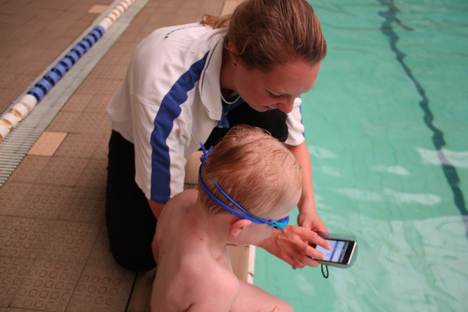
Swimming is a life skill and there should be more funding for classes
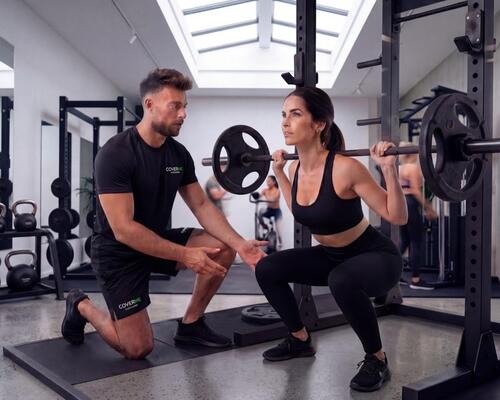
CoverMe, the global leader in fitness workforce management, today launches CoverMe PT, an
on-demand personal training platform that connects the right personal trainer to the right
client in under 10 seconds. [more...]
Active Blackpool is deploying Cornerstone Connect, a new digital interface allowing
disparate information from multiple systems to be aggregated into one dataset, to support
its focus on reducing health inequalities and improving healthy life expectancy. [more...]
+ More featured suppliers
COMPANY PROFILES
ukactive
ukactive is the UK’s leading trade body for the physical activity sector, bringing together more tha [more...]
I was interested to read your recent feature on barefoot running (see HCM July 13, p38). Benno Nigg and Henrik Enders, from the Human Performance Laboratory at the University of Calgary, recently published an article entitled ‘Barefoot running – some critical considerations’ in the journal Footwear Science. This examined the known research into barefoot running’s effects on foot motion, training, running economy and injury.
Nigg and Enders dispute claims that running without shoes encourages a forefoot rather than a heel landing, making runners less prone to injury. They state that not only does the available research not prove any reduced injury risk, but also that other factors – such as the running surface, shoe choice, speed and individual preferences – play too large a role to make such generalisations possible. Likewise, the researchers found no difference between shod and barefoot movements in their ability to strengthen certain muscles.
They also question the main claim of barefoot supporters: that running without shoes leads to fewer injuries. They point to problems with the research on which the original claims were based and note that, while existing articles address the different injuries caused by different landing styles, they know of “no publication that provides hard evidence that people running barefoot have fewer injuries than people running in running shoes”. They conclude that “it is not known whether people running barefoot have more, equal, or fewer injuries than people running in conventional running shoes”.
When it comes to performance and injury, Nigg and Enders suggest that individual preference and running style is what matters: in the end, runners run best when they’re comfortable – whatever they’re wearing (or not) on their feet.
Ben Hudson, Marketing exec, Taylor & Francis Group
Swimming needs a centralised database The findings of the recent ASA survey, which suggest that less than 60 per cent of 10- to 11-year-olds can swim just 25 metres, is incredibly worrying (see HCM July 13, p17). Swimming is a life skill and should be actively encouraged, with a firm place on the curriculum. It’s vital that PE funding is increased.
However, while I’m pleased the ASA has taken the initiative to carry out this survey, there are two major issues that mean the facts are based on speculation.
Firstly, the way school swimming is run across the country differs massively. Some operators hire out their pool space to schools; others actively run the sessions. We need to gain an understanding of which works best.
Secondly, data is collected in different ways by different organisations – some are still paper-based! – so it would be impossible to analyse the statistics collectively in their current format. The only way to truly understand current trends would be to have one central database of all swimmers across England.
The government must focus its efforts on enforcing the capture of information via a centralised database, so we have clear access to accurate data. Then we can focus on ensuring schools reach the target of 22 hours of lessons a year.
Ross McCaw, Director, Cap2 Solutions
Swimming is a life skill and there should be more funding for classes
The UK's four Chief Medical Officers have published a refreshed edition of Physical activity
guidelines: UK Chief Medical Officers' report, updating the evidence that underpins the nation's
physical activity recommendations and placing greater emphasis on strength, balance, reducing
sedentary behaviour and, for the first time, supporting people taking weight loss medications.
Places Leisure has exchanged contracts to build and operate a flagship £60m water and leisure
destination on behalf of Basingstoke and Deane Borough Council.
The Republic of Ireland will become the latest market in PureGym’s expanding international
portfolio, with the first launch planned for Dublin in 2027.
Anytime Fitness opened more than one club a day in 2025 and is on track to maintain this rate
of growth this year, as parent company Purpose Brands targets further international expansion.
The £33.9 million Leighton Leisure and Community Centre has opened in Leighton Buzzard, UK,
creating a next-generation public leisure, health and wellbeing hub for the local community.
Walnuts Leisure Centre in Orpington, in the London Borough of Bromley, has reopened following
a £17m transformation designed to secure the long-term future of the public leisure asset and
reposition it as a community wellbeing hub.
The Gym Group, has announced that it's sustained positive trading momentum has continued
through the first half of 2026 and the company remains confident about the outlook.
Luxury boutique Pilates and wellness studio, X-Club, officially launches a
4,000sq ft flagship at
Marylebone on 16 July Built around X-Club’s four pillars of wellness – mind,
movement,
nutrition and therapy – the facility features two group exercise studi
CoverMe, the global leader in fitness workforce management, today launches CoverMe PT, an
on-demand personal training platform that connects the right personal trainer to the right
client in under 10 seconds. [more...]
Active Blackpool is deploying Cornerstone Connect, a new digital interface allowing
disparate information from multiple systems to be aggregated into one dataset, to support
its focus on reducing health inequalities and improving healthy life expectancy. [more...]
+ More featured suppliers
COMPANY PROFILES
ukactive ukactive is the UK’s leading trade body for the physical activity sector, bringing together more tha [more...]