The benefits attributed to exercise may not be the same across genders / Photo: shutterstock.com/ Robert Kneschke
Exercise is one of the key interventions suggested to help people with Type 2 diabetes – a disease that’s often linked with the escalating numbers of obese people. However, a new study – which shows that women suffering from Type 2 diabetes need to work out harder than men to reap the same benefits – suggests that simply prescribing exercise isn’t enough. Programmes should be targeted to suit individuals to make a real difference.
Exercise test The study*, conducted by researchers at the University of Missouri in the US, was based on 22 obese men and women diagnosed with Type 2 diabetes. They were aged between 40 and 60 years and were previously physically inactive.
All of the participants were put on a 16-week exercise training programme where they walked, either on a treadmill or outside, for 30 minutes four days a week at 65 per cent capacity.
At the start and end of the training programme, many measurements were taken including weight, BMI and glucose and insulin levels. The impact of the training on cardiovascular fitness was also recorded, by running a three-minute isometric handgrip test before and after the training programme. The handgrip test involves continually and forcefully squeezing an object, and is considered a clinically useful, static exercise tool for measuring heart rate and blood pressure.
Male benefits Results from the study showed no significant increase or decrease in weight, BMI, glucose or insulin levels in response to the training programme in either men or women. Likewise, resting blood pressure and heart rates showed no notable differences.
Where marked changes did occur, however, was in the results of the handgrip test. In the test that took place after training, men had a greater reduction in diastolic blood pressure and dilation of the blood vessels – but there was no improvement in women. This indicates that, cardiovascularly, the women did not recover as quickly as the men, suggesting that their fitness levels had not increased.
Lead researcher Jill Kanaley says: “This research highlights that the advantages we think exercise is going to give individuals may not be the same across genders, particularly for those who have Type 2 diabetes. This is a concern, because there are high mortality rates with Type 2 diabetes, especially for women.
“We keep assuming that exercise will do the trick – we think, when we tell people to ‘go train’ regardless of gender, that everyone will get the same results. Our research indicates certain exercises may not be enough for women.”
Kanaley goes on to suggest that obese women with Type 2 diabetes may benefit from longer durations of exercise, or physical activity that is of a higher intensity than 65 per cent, if they want to see benefits.
She also says that, based on the significant variances in cardiovascular recovery rates between men and women, more focus should be placed on measuring this in future studies. “A lot of people focus on how high individuals’ heart rates get during exercise, but their recovery rates should also be monitored. When you exercise, you want your blood pressure to rise, but you don’t want it to get too high. Your blood pressure should also return to normal relatively quickly after you stop exercise. In our study, the recovery rate for women was not as rapid as for men.”
*Kanaley, JA et al. Exercise training improves hemodynamic recovery to isometric exercise in obese men with type 2 diabetes but not women. Metabolism. Sept 2012
Active Blackpool is deploying Cornerstone Connect, a new digital interface allowing
disparate information from multiple systems to be aggregated into one dataset, to support
its focus on reducing health inequalities and improving healthy life expectancy. [more...]
CoverMe, the global leader in fitness workforce management, today launches CoverMe PT, an
on-demand personal training platform that connects the right personal trainer to the right
client in under 10 seconds. [more...]
The benefits attributed to exercise may not be the same across genders / Photo: shutterstock.com/ Robert Kneschke
Exercise is one of the key interventions suggested to help people with Type 2 diabetes – a disease that’s often linked with the escalating numbers of obese people. However, a new study – which shows that women suffering from Type 2 diabetes need to work out harder than men to reap the same benefits – suggests that simply prescribing exercise isn’t enough. Programmes should be targeted to suit individuals to make a real difference.
Exercise test The study*, conducted by researchers at the University of Missouri in the US, was based on 22 obese men and women diagnosed with Type 2 diabetes. They were aged between 40 and 60 years and were previously physically inactive.
All of the participants were put on a 16-week exercise training programme where they walked, either on a treadmill or outside, for 30 minutes four days a week at 65 per cent capacity.
At the start and end of the training programme, many measurements were taken including weight, BMI and glucose and insulin levels. The impact of the training on cardiovascular fitness was also recorded, by running a three-minute isometric handgrip test before and after the training programme. The handgrip test involves continually and forcefully squeezing an object, and is considered a clinically useful, static exercise tool for measuring heart rate and blood pressure.
Male benefits Results from the study showed no significant increase or decrease in weight, BMI, glucose or insulin levels in response to the training programme in either men or women. Likewise, resting blood pressure and heart rates showed no notable differences.
Where marked changes did occur, however, was in the results of the handgrip test. In the test that took place after training, men had a greater reduction in diastolic blood pressure and dilation of the blood vessels – but there was no improvement in women. This indicates that, cardiovascularly, the women did not recover as quickly as the men, suggesting that their fitness levels had not increased.
Lead researcher Jill Kanaley says: “This research highlights that the advantages we think exercise is going to give individuals may not be the same across genders, particularly for those who have Type 2 diabetes. This is a concern, because there are high mortality rates with Type 2 diabetes, especially for women.
“We keep assuming that exercise will do the trick – we think, when we tell people to ‘go train’ regardless of gender, that everyone will get the same results. Our research indicates certain exercises may not be enough for women.”
Kanaley goes on to suggest that obese women with Type 2 diabetes may benefit from longer durations of exercise, or physical activity that is of a higher intensity than 65 per cent, if they want to see benefits.
She also says that, based on the significant variances in cardiovascular recovery rates between men and women, more focus should be placed on measuring this in future studies. “A lot of people focus on how high individuals’ heart rates get during exercise, but their recovery rates should also be monitored. When you exercise, you want your blood pressure to rise, but you don’t want it to get too high. Your blood pressure should also return to normal relatively quickly after you stop exercise. In our study, the recovery rate for women was not as rapid as for men.”
*Kanaley, JA et al. Exercise training improves hemodynamic recovery to isometric exercise in obese men with type 2 diabetes but not women. Metabolism. Sept 2012
The UK's four Chief Medical Officers have published a refreshed edition of Physical activity
guidelines: UK Chief Medical Officers' report, updating the evidence that underpins the nation's
physical activity recommendations and placing greater emphasis on strength, balance, reducing
sedentary behaviour and, for the first time, supporting people taking weight loss medications.
Places Leisure has exchanged contracts to build and operate a flagship £60m water and leisure
destination on behalf of Basingstoke and Deane Borough Council.
The Republic of Ireland will become the latest market in PureGym’s expanding international
portfolio, with the first launch planned for Dublin in 2027.
Anytime Fitness opened more than one club a day in 2025 and is on track to maintain this rate
of growth this year, as parent company Purpose Brands targets further international expansion.
The £33.9 million Leighton Leisure and Community Centre has opened in Leighton Buzzard, UK,
creating a next-generation public leisure, health and wellbeing hub for the local community.
Walnuts Leisure Centre in Orpington, in the London Borough of Bromley, has reopened following
a £17m transformation designed to secure the long-term future of the public leisure asset and
reposition it as a community wellbeing hub.
The Gym Group, has announced that it's sustained positive trading momentum has continued
through the first half of 2026 and the company remains confident about the outlook.
Luxury boutique Pilates and wellness studio, X-Club, officially launches a
4,000sq ft flagship at
Marylebone on 16 July Built around X-Club’s four pillars of wellness – mind,
movement,
nutrition and therapy – the facility features two group exercise studi
Active Blackpool is deploying Cornerstone Connect, a new digital interface allowing
disparate information from multiple systems to be aggregated into one dataset, to support
its focus on reducing health inequalities and improving healthy life expectancy. [more...]
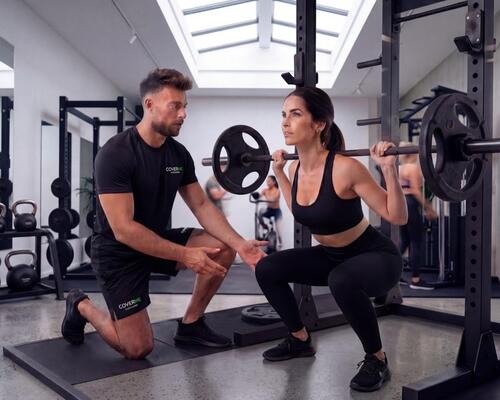
CoverMe, the global leader in fitness workforce management, today launches CoverMe PT, an
on-demand personal training platform that connects the right personal trainer to the right
client in under 10 seconds. [more...]