For a fitness industry veteran like David “Patch” Patchell-Evans – founder and CEO of Canada’s largest health club chain, former chair of IHRSA and long-time industry stalwart – being in a situation where he’s doing something in his business for the first time must come as something of a novelty. Yet that’s what was happening when I interviewed in May: his company, GoodLife Fitness, was that very day announcing plans to open its first ever in-airport club, at Toronto Pearson International Airport.
Due to open in September, the 1,115sq m club will not offer group exercise, but there will be a fully-equipped gym, luggage storage, lounge area with massage chairs, changing rooms with private showers and lockers, and a towel service. Workout apparel will also be available to purchase.
“There are 40,000 people working in the airport, so there’s plenty of demand for this new club,” says Patchell-Evans. “In addition, members of any of our 300+ clubs across the country will be able to use the facilities. Our vision is to give every Canadian the opportunity to live a fit and healthy good life. Providing a club at Toronto Pearson is another great way we can work toward this vision.”
Talking to Patchell-Evans, it’s clear that this vision is a genuine one: that at the heart of his business lies a desire not just to make money, but to make a difference to people’s lives. “The company runs on core values, and the strongest core value is caring,” he explains. “That’s quite unusual in a world where things are run on numbers.
“Of course, you absolutely need to know your numbers – you have to be accountable – but at the same time you have to understand why the numbers work, what the numbers mean. I think there’s a real failure in a lot of organisations in that respect: they know numbers mean profit and loss, but they don’t talk about what the numbers mean in terms of lives changed, relationships built, happy staff, etc. They don’t get into what the numbers really represent.
“There’s been a delusion of purpose in the industry, and I think our strength lies in the fact that my focus is on understanding and caring about what lies behind the numbers. Passion is the real driver in this industry.”
A personal journey For Patchell-Evans, the passion for fitness stemmed from an event in his own life: just two weeks into his first year at university, he was involved in a serious motorcycle accident that led to eight months of rehabilitation. Watching elite athletes going through rehab around him, he was inspired to follow suit and push his own body to train harder, becoming inspired by the healing properties of exercise and subsequently switching the focus of his studies from business studies to physical education.
He also took up rowing to strengthen his shoulder after the accident and quickly took to the sport, going on to join Canada’s national rowing team. As part of this, he trained at the first fitness club in London, Ontario – while at the same time studying for his Masters in Exercise Physiology – and an interest in the health club industry was born.
“I looked at how that club was being run and it was obvious they were just going through the motions: they didn’t really understand their members. The fact that I was an academic in the field of exercise, as well as an athlete, meant people used to ask me a lot of questions, and one day the club owners approached me and asked if I wanted to buy the club.
“I had a successful snow ploughing business while I was studying. It allowed me to put myself through university, but it also meant I had some money to invest, so I bought the club in 1979. It was a small facility – 200sq m – and it went on to become the first ever GoodLife Fitness Club.
“At first I was driven to train everyone as if they were athletes, but after a while I realised that didn’t suit everyone. I started to adjust the training, treating members as normal people. But it wasn’t until I developed arthritis seven years later – for a long time I couldn’t function, couldn’t even open the door – that I felt an empathy for the majority of the population who aren’t athletes, and who just want to look and feel good.
“I finally understood how hard it is for the average person. As a result, I changed the clubs and the attitudes: caring became the foremost thing.”
Caring comes first That culture of caring now lies at the heart of the GoodLife philosophy. “Culture in my company is everything,” says Patchell-Evans. “That’s why it’s hard for other companies to compete against us: I know how to create culture and how to keep it, which is something most people can’t do. Most people focus on creating a business – something they’ll ultimately sell; I focus on creating a culture for staff and for members.
“My arthritis led me to develop a slogan for myself: focus on what you can do, not what you can’t do. Then, about 14 years ago, I discovered my daughter was autistic, and I found the same approach was needed there: to help an autistic child to develop, you have to focus on the positive and look for what’s working.
“The culture of my company is the same: we always look at what’s working. You’ll find the culture in most companies is about how to fix problems. We focus on how to grow our strengths.”
High quality staffing is one of those strengths. Patchell-Evans continues: “I actually view my staff as my members, and the company is built around giving them the best opportunities, with a consistent opportunity for personal growth. We believe in letting great people develop, and as a result GoodLife has been on the list of Canada’s 50 Best Managed Companies for 10 years, and has been named as one of the country’s 10 Most Admired Corporate Cultures.”
Caring is also embodied in the high levels of charity and community initiatives in which the company gets involved. Running alongside that is GoodLife Kids Foundation, a private foundation set up by Patchell-Evans in 1998 with a view to addressing the issues of overweight and inactivity among Canada’s children. The vision is for every Canadian child to have the opportunity to live a fit and healthy good life, inspiring parents, role models and mentors to deliver the message to kids that being active is not only good for their body and mind, but also a lot of fun.
So far, so good. But in an industry where customer service is often found lacking, how does caring manifest itself to members? How do they ensure every member feels personally looked after?
“Ours are clubs where people care about you. That’s our USP. I know we don’t do it perfectly – no-one in the industry does – but it starts with me. If I don’t lead the way properly, if I’m not excited and enthusiastic and energetic, why would my staff be? I’ve even got back into teaching classes – I teach at least one BODYFLOW class a week and am just starting to take yoga training.
“Delivering better fitness results is also key. Fitness means different things to different people, and when I started out in this industry I realised we had to focus more on identifying the needs of each individual. That’s still my driver – I still think we can deliver even better fitness results for our members – but we’re going in the right direction.”
Growth plans Given that better results for members tends to mean better retention levels, it’s not hard to see how the GoodLife culture – and its founder’s focus on the story behind the figures – still translates into a very healthy bottom line.
Already with over 300 clubs – “probably more like 320 by the time you publish this” – the GoodLife estate has grown particularly rapidly in recent months via a number of acquisitions: 13 Extreme Fitness Sites in the Toronto area, 11 former Gold’s Gyms in Alberta and Ontario, and Women Only – a ladies-only operation in Vancouver – to sit within GoodLife’s existing portfolio of For Women Clubs.
“But we’re actually building more clubs than we acquire,” says Patchell-Evans. “We built about 15 new clubs last year and we’ll build about 20 this year.
“I always look 100 clubs ahead: it used to be an objective to open 100 clubs in 10 years, then it became 100 clubs in five years. Now we’re at the stage where we’ll probably open about 100 clubs in the next two and a half, maybe three years. We’re not bound by the timeframe though, and I don’t have a board of directors I have to respond to: if market conditions allow it, great; if we can go faster, we do; and if it doesn’t make sense, we go slower.
“There are about 6,000 clubs of different kinds in Canada, so we still account for a small percentage of the total. One in every 39 Canadians is currently a GoodLife member, but I think we could get a lot bigger.”
Would he also consider branching out into new markets, either geographically or in terms of user groups? “If I look forward a year, five years, 10 years, I see the business going in the same direction as it is now, only bigger and stronger.
“Although you never say never, my focus has always been Canada – I don’t have any plans to expand internationally. In terms of new user groups, I did once consider opening clubs for older people, but in the end I’d rather be the best at one thing than trying to do everything.”
That ‘one thing’ is nevertheless a broad offering: an estate of over 300 clubs, of which around 75 are For Women Clubs, with For Women areas in another 75 facilities; clubs located within Loblaws retail outlets as part of a partnership agreement; and a strong corporate offering, from workshops to web-based wellness to walking programmes. “We have more corporate members than anyone else in the country because we pay attention to what they say. They just want to keep it simple and be looked after.”
There are also in-house health centres, but even here, Patchell-Evans’ focus on keeping things simple is evident. “I just regard it as part of the package: you should do cardio, you should do flexibility, you should do strength, and you should do stress release and mobility. Having a massage is just part of looking after yourself. We’re not operating a spa though – we offer pretty straightforward stress-release, make-you-feel-good, functional massage.”
He continues: “We’re differentiated by culture rather than price or even facilities: ultimately somebody else is going to have a better box at a better price point.
“Membership at our clubs costs C$30–60 a month, depending on the size of the club and the area, so we’re kind of middle of the road. Marketers will tell you it’s not good to be in the middle, but we’re doing well there, even though there have always been plenty of budget offerings in Canada to cater for those looking for a cheaper deal.
“For me, the opportunity is to offer what a very high-end club has, but at a reasonable price. That’s my strategy. Most people don’t think it’s a good strategy, but then most people wouldn’t agree with IKEA’s model either.”
Technological innovation Where GoodLife is notably experimenting is in the area of technology. Steve Groves, the company’s head of IT, has long been an advocate of social media, cottoning on to its potential many years before it hit the mainstream, and GoodLife is also currently trialling virtual classes through the Wexer Virtual system.
“The key is to look at technology as an asset, not a threat. You have to look at how things like Wexer reinforce the club experience. People still want classes run by live instructors, but we can now give members access to classes at any time of day. We employ every bit of technology we can – we’re always looking for an edge, provided it’s an edge that enhances the member experience. The whole purpose of technology is to allow for more, not less, human interaction.”
Patchell-Evans is equally unfazed by what others see as the threat of fitness apps. “People have always been able to exercise outside on their own, for free. It’s no big deal. We can’t keep up with the speed of apps, but in any case we should just enjoy it. Ultimately, the more reasons people come up with to motivate themselves to exercise, the better it is for us.”
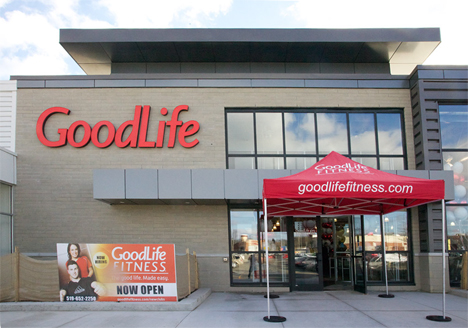
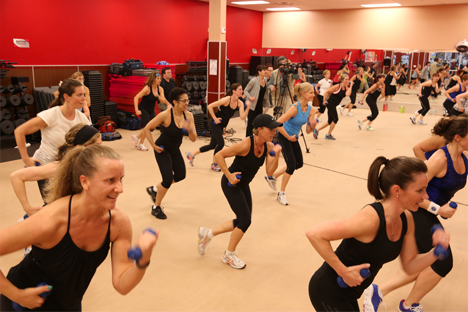
GoodLife Fitness, Canada’s largest health club chain, currently has over 300 clubs across the country
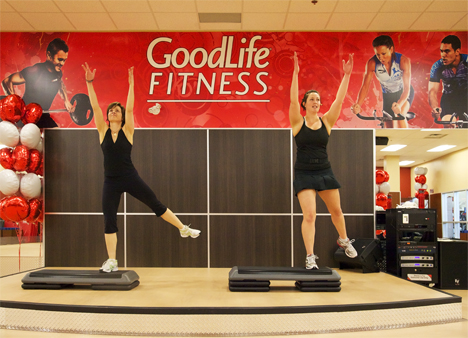
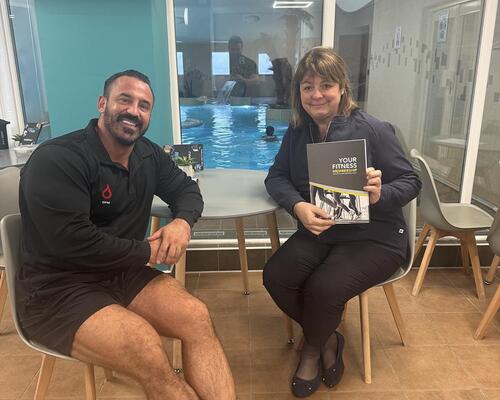
Patchell-Evans says that the GoodLife vision is to enable all Canadians to experience a fit and healthy life
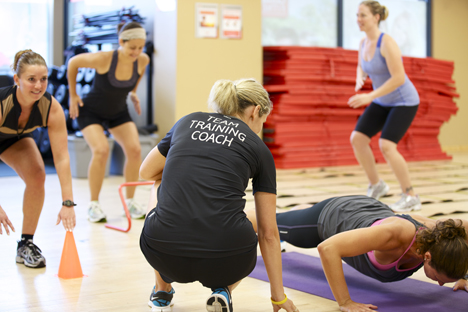
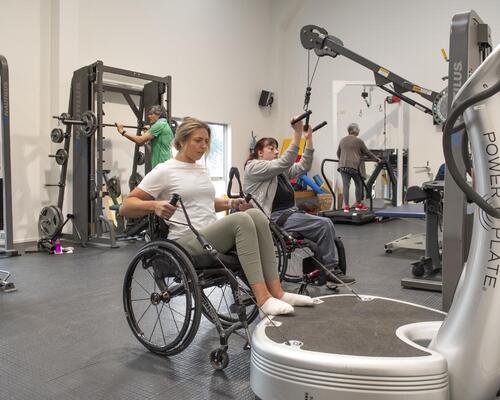
GoodLife Fitness has been on the list of Canada’s 50 Best Managed Companies for the past decade
Increasing penetration: GoodLife has plans to open around 100 clubs across Canada in the next two to three years
One of the biggest mistakes the fitness industry still makes is advertising almost
exclusively to people who already look and live like gym members. [more...]
As healthcare continues to shift towards prevention, there’s a growing focus on helping
people stay active, independent and feeling good for longer. [more...]
For a fitness industry veteran like David “Patch” Patchell-Evans – founder and CEO of Canada’s largest health club chain, former chair of IHRSA and long-time industry stalwart – being in a situation where he’s doing something in his business for the first time must come as something of a novelty. Yet that’s what was happening when I interviewed in May: his company, GoodLife Fitness, was that very day announcing plans to open its first ever in-airport club, at Toronto Pearson International Airport.
Due to open in September, the 1,115sq m club will not offer group exercise, but there will be a fully-equipped gym, luggage storage, lounge area with massage chairs, changing rooms with private showers and lockers, and a towel service. Workout apparel will also be available to purchase.
“There are 40,000 people working in the airport, so there’s plenty of demand for this new club,” says Patchell-Evans. “In addition, members of any of our 300+ clubs across the country will be able to use the facilities. Our vision is to give every Canadian the opportunity to live a fit and healthy good life. Providing a club at Toronto Pearson is another great way we can work toward this vision.”
Talking to Patchell-Evans, it’s clear that this vision is a genuine one: that at the heart of his business lies a desire not just to make money, but to make a difference to people’s lives. “The company runs on core values, and the strongest core value is caring,” he explains. “That’s quite unusual in a world where things are run on numbers.
“Of course, you absolutely need to know your numbers – you have to be accountable – but at the same time you have to understand why the numbers work, what the numbers mean. I think there’s a real failure in a lot of organisations in that respect: they know numbers mean profit and loss, but they don’t talk about what the numbers mean in terms of lives changed, relationships built, happy staff, etc. They don’t get into what the numbers really represent.
“There’s been a delusion of purpose in the industry, and I think our strength lies in the fact that my focus is on understanding and caring about what lies behind the numbers. Passion is the real driver in this industry.”
A personal journey For Patchell-Evans, the passion for fitness stemmed from an event in his own life: just two weeks into his first year at university, he was involved in a serious motorcycle accident that led to eight months of rehabilitation. Watching elite athletes going through rehab around him, he was inspired to follow suit and push his own body to train harder, becoming inspired by the healing properties of exercise and subsequently switching the focus of his studies from business studies to physical education.
He also took up rowing to strengthen his shoulder after the accident and quickly took to the sport, going on to join Canada’s national rowing team. As part of this, he trained at the first fitness club in London, Ontario – while at the same time studying for his Masters in Exercise Physiology – and an interest in the health club industry was born.
“I looked at how that club was being run and it was obvious they were just going through the motions: they didn’t really understand their members. The fact that I was an academic in the field of exercise, as well as an athlete, meant people used to ask me a lot of questions, and one day the club owners approached me and asked if I wanted to buy the club.
“I had a successful snow ploughing business while I was studying. It allowed me to put myself through university, but it also meant I had some money to invest, so I bought the club in 1979. It was a small facility – 200sq m – and it went on to become the first ever GoodLife Fitness Club.
“At first I was driven to train everyone as if they were athletes, but after a while I realised that didn’t suit everyone. I started to adjust the training, treating members as normal people. But it wasn’t until I developed arthritis seven years later – for a long time I couldn’t function, couldn’t even open the door – that I felt an empathy for the majority of the population who aren’t athletes, and who just want to look and feel good.
“I finally understood how hard it is for the average person. As a result, I changed the clubs and the attitudes: caring became the foremost thing.”
Caring comes first That culture of caring now lies at the heart of the GoodLife philosophy. “Culture in my company is everything,” says Patchell-Evans. “That’s why it’s hard for other companies to compete against us: I know how to create culture and how to keep it, which is something most people can’t do. Most people focus on creating a business – something they’ll ultimately sell; I focus on creating a culture for staff and for members.
“My arthritis led me to develop a slogan for myself: focus on what you can do, not what you can’t do. Then, about 14 years ago, I discovered my daughter was autistic, and I found the same approach was needed there: to help an autistic child to develop, you have to focus on the positive and look for what’s working.
“The culture of my company is the same: we always look at what’s working. You’ll find the culture in most companies is about how to fix problems. We focus on how to grow our strengths.”
High quality staffing is one of those strengths. Patchell-Evans continues: “I actually view my staff as my members, and the company is built around giving them the best opportunities, with a consistent opportunity for personal growth. We believe in letting great people develop, and as a result GoodLife has been on the list of Canada’s 50 Best Managed Companies for 10 years, and has been named as one of the country’s 10 Most Admired Corporate Cultures.”
Caring is also embodied in the high levels of charity and community initiatives in which the company gets involved. Running alongside that is GoodLife Kids Foundation, a private foundation set up by Patchell-Evans in 1998 with a view to addressing the issues of overweight and inactivity among Canada’s children. The vision is for every Canadian child to have the opportunity to live a fit and healthy good life, inspiring parents, role models and mentors to deliver the message to kids that being active is not only good for their body and mind, but also a lot of fun.
So far, so good. But in an industry where customer service is often found lacking, how does caring manifest itself to members? How do they ensure every member feels personally looked after?
“Ours are clubs where people care about you. That’s our USP. I know we don’t do it perfectly – no-one in the industry does – but it starts with me. If I don’t lead the way properly, if I’m not excited and enthusiastic and energetic, why would my staff be? I’ve even got back into teaching classes – I teach at least one BODYFLOW class a week and am just starting to take yoga training.
“Delivering better fitness results is also key. Fitness means different things to different people, and when I started out in this industry I realised we had to focus more on identifying the needs of each individual. That’s still my driver – I still think we can deliver even better fitness results for our members – but we’re going in the right direction.”
Growth plans Given that better results for members tends to mean better retention levels, it’s not hard to see how the GoodLife culture – and its founder’s focus on the story behind the figures – still translates into a very healthy bottom line.
Already with over 300 clubs – “probably more like 320 by the time you publish this” – the GoodLife estate has grown particularly rapidly in recent months via a number of acquisitions: 13 Extreme Fitness Sites in the Toronto area, 11 former Gold’s Gyms in Alberta and Ontario, and Women Only – a ladies-only operation in Vancouver – to sit within GoodLife’s existing portfolio of For Women Clubs.
“But we’re actually building more clubs than we acquire,” says Patchell-Evans. “We built about 15 new clubs last year and we’ll build about 20 this year.
“I always look 100 clubs ahead: it used to be an objective to open 100 clubs in 10 years, then it became 100 clubs in five years. Now we’re at the stage where we’ll probably open about 100 clubs in the next two and a half, maybe three years. We’re not bound by the timeframe though, and I don’t have a board of directors I have to respond to: if market conditions allow it, great; if we can go faster, we do; and if it doesn’t make sense, we go slower.
“There are about 6,000 clubs of different kinds in Canada, so we still account for a small percentage of the total. One in every 39 Canadians is currently a GoodLife member, but I think we could get a lot bigger.”
Would he also consider branching out into new markets, either geographically or in terms of user groups? “If I look forward a year, five years, 10 years, I see the business going in the same direction as it is now, only bigger and stronger.
“Although you never say never, my focus has always been Canada – I don’t have any plans to expand internationally. In terms of new user groups, I did once consider opening clubs for older people, but in the end I’d rather be the best at one thing than trying to do everything.”
That ‘one thing’ is nevertheless a broad offering: an estate of over 300 clubs, of which around 75 are For Women Clubs, with For Women areas in another 75 facilities; clubs located within Loblaws retail outlets as part of a partnership agreement; and a strong corporate offering, from workshops to web-based wellness to walking programmes. “We have more corporate members than anyone else in the country because we pay attention to what they say. They just want to keep it simple and be looked after.”
There are also in-house health centres, but even here, Patchell-Evans’ focus on keeping things simple is evident. “I just regard it as part of the package: you should do cardio, you should do flexibility, you should do strength, and you should do stress release and mobility. Having a massage is just part of looking after yourself. We’re not operating a spa though – we offer pretty straightforward stress-release, make-you-feel-good, functional massage.”
He continues: “We’re differentiated by culture rather than price or even facilities: ultimately somebody else is going to have a better box at a better price point.
“Membership at our clubs costs C$30–60 a month, depending on the size of the club and the area, so we’re kind of middle of the road. Marketers will tell you it’s not good to be in the middle, but we’re doing well there, even though there have always been plenty of budget offerings in Canada to cater for those looking for a cheaper deal.
“For me, the opportunity is to offer what a very high-end club has, but at a reasonable price. That’s my strategy. Most people don’t think it’s a good strategy, but then most people wouldn’t agree with IKEA’s model either.”
Technological innovation Where GoodLife is notably experimenting is in the area of technology. Steve Groves, the company’s head of IT, has long been an advocate of social media, cottoning on to its potential many years before it hit the mainstream, and GoodLife is also currently trialling virtual classes through the Wexer Virtual system.
“The key is to look at technology as an asset, not a threat. You have to look at how things like Wexer reinforce the club experience. People still want classes run by live instructors, but we can now give members access to classes at any time of day. We employ every bit of technology we can – we’re always looking for an edge, provided it’s an edge that enhances the member experience. The whole purpose of technology is to allow for more, not less, human interaction.”
Patchell-Evans is equally unfazed by what others see as the threat of fitness apps. “People have always been able to exercise outside on their own, for free. It’s no big deal. We can’t keep up with the speed of apps, but in any case we should just enjoy it. Ultimately, the more reasons people come up with to motivate themselves to exercise, the better it is for us.”
GoodLife Fitness, Canada’s largest health club chain, currently has over 300 clubs across the country
Patchell-Evans says that the GoodLife vision is to enable all Canadians to experience a fit and healthy life
GoodLife Fitness has been on the list of Canada’s 50 Best Managed Companies for the past decade
Increasing penetration: GoodLife has plans to open around 100 clubs across Canada in the next two to three years
Nuffield Health has told HCM that it takes its responsibilities towards its colleagues seriously
and is committed to meeting all legal obligations after news of a tribunal has made national
headlines.
Technogym has announced the launch of the Run X World Treadmill Championship, the first
world championship for running on connected treadmills over five kilometres.
PureGym is encouraging people to step away from their screens and go for a walk, in a new initiative timed
to coincide with Mental Health Awareness Month.
Small improvements to sleep, diet quality, and physical activity, made in combination lead to a
significantly reduced risk of major cardiovascular events, including heart attacks and strokes,
according to new research.
One of the biggest mistakes the fitness industry still makes is advertising almost
exclusively to people who already look and live like gym members. [more...]
As healthcare continues to shift towards prevention, there’s a growing focus on helping
people stay active, independent and feeling good for longer. [more...]