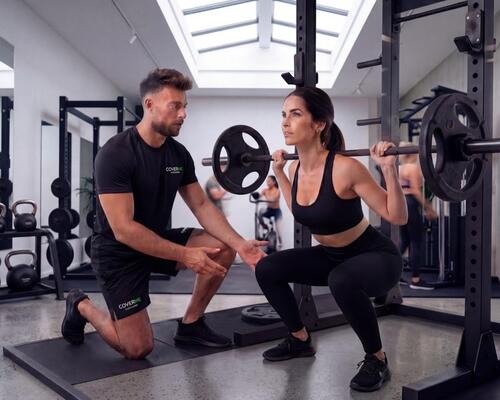
Is there a ‘correct’ time to exercise based on our internal body clocks? Kate Cracknell reports on recent findings and asks HCM’s panel of experts for their thoughts
By Kate Cracknell | Published in Health Club Management 2013 issue 4
Studies suggest that joints are 20 per cent more flexible in the evening
Is there a correct time to exercise – a time at which we can reap more benefits from our activity than if we exercise at another time of day? And if so, is that correct time universal or specific to the individual?
Two US newspapers published interesting articles on this topic towards the end of last year. The Wall Street Journal looked at the positive impact of organising all daily schedules around the body’s natural rhythms, noting everything from improved mental alertness to enhanced creative thinking if we synch the relevant activities with our body clocks – our circadian rhythms. A recent study by Yale University in the US, published in the journal Immunity, even indicates a direct link between circadian rhythms and the immune system.
The problem is that these rhythms can be easily disrupted, whether as a result of our daily schedules being dictated more by school timetables and work deadlines than by our natural body clocks, or the prevalence of artificial light in today’s society which throws our inner clocks out of synch.
Broken body clocks The Wall Street Journal article quoted Dr Steve Kay, a professor of molecular and computational biology at the University of Southern California in the US. Kay observed that a disruption of circadian rhythms has been linked to problems such as diabetes, depression, dementia and obesity, adding that when the body’s master clock can synchronise the functioning of all its metabolic, CV and behavioural rhythms in response to light and other natural stimuli, it gives people “an edge in daily life”.
The article also looked specifically at how to select the ‘correct’ time of day to exercise, quoting a number of sports science experts. Michael Smolensky, an adjunct professor of biomedical engineering at the University of Texas, pointed to 3.00pm–6.00pm as the best time for physical performance, as well as the lowest risk of injury. Muscle strength was said to peak between 2.00pm and 6.00pm, at levels as much as 6 per cent above the day’s lows, while joints and muscles were reported to be 20 per cent more flexible in the evening. Meanwhile a study of 4,756 patients led by Boris Medarov, an assistant professor of medicine at Albany Medical College in New York, suggested that the lungs function 17.6 per cent more efficiently at 5.00pm than at midday.
The New York Times, meanwhile, asked whether exercise can influence the body’s internal clock. Our bodies and therefore our health are ruled by rhythms, explained the article, quoting Christopher Colwell, a professor of psychiatry at the University of California: “The heart, the liver, the brain – all are controlled by an endogenous circadian rhythm.” As with Kay, Colwell noted the potential for serious health consequences resulting from a disruption in circadian rhythm, from obesity to certain types of cancer. He and his team therefore set out to investigate whether it was possible to ‘fix’ a broken clock, specifically looking at exercise as a possible solution.
The studies – published in the Journal of Physiology in December 2012 – were conducted on mice. However, the findings suggest exercise does affect circadian rhythms, and that the effect may be most beneficial if physical activity is undertaken in the afternoon. This was, says Colwell, a surprise; he and his colleagues had expected morning exercise to be most productive.
However, Colwell acknowledged that the implications for humans aren’t yet clear, and that it’s impossible to say at this point whether we should favour afternoon exercise over a morning workout. All he could say with certainty was that exercise is a good idea to avoid health problems linked to a disrupted circadian rhythm; further research might show afternoon workouts to lead to better results, but any exercise was likely to be better than none.
Health Club Management decided to investigate further, asking an expert panel for their thoughts on the question: is there a correct time to exercise?
DR Chris BeedieHead of ukactive Research Institute and senior lecturer, Department of Sport & Exercise Science Aberystwyth University – UK
DR Chris Beedie
Is there a correct time to exercise? It’s a good question and the answer – as with so many of life’s big questions – is ‘yes but...’.
It’s highly likely that, for a range of reasons, there is an optimum time to exercise for each person. What time of day that is, however, will depend on such a large number of factors that it’s likely that – for anyone but the elite athlete, competitive bodybuilder or exercise obsessive – identification of the time in question is more trouble than it’s worth.
For example, while research suggests that the lungs function best late in the day, certain hormones that regulate response and adaptation to exercise peak in the morning. Likewise, while muscle force might peak in the evening, motor co-ordination and concentration are way past their best by this time, as is pain tolerance.
If you know the exact balance of physiological, cognitive, emotional and performance variables required to perform at your best and to recover optimally, you might be able to identify the optimal time of day for your specific goals. But here’s the problem: you probably can’t rely on the published research to do so. Research conducted on large populations rarely generalises to individuals, meaning that you will have to use a lot of trial and error to identify the optimal times of day for each variable for you. And to make things even worse, there’s a strong chance that relationships between time of day and performance variables might change with the season, temperature, stress and a number of other factors.
Train when you can as best you can. If you feel better training in the morning, if you see results, and if it works for your lifestyle, that’s the time to train, irrespective of what the research says. If you want to be a champion, you may need to look deeper into your internal rhythms, but be prepared for a complex journey!
Jim Gavin Professor of Applied Human SciencesConcordia University – Canada
Jim Gavin
The best answer I can give to this question is: ‘it depends.’ Humans are both complex and adaptive. We have diverse patterns and personalities, and we’re constantly adjusting to shifting life conditions. Time is only one factor to consider in relation to exercising – and it’s not necessarily the dominant one. As personal validation, I dislike evening exercise, yet that’s when my aikido classes are. Will I give up my beloved aikido because of its timing? Never. For people who have a particular practice or sport, time is not the pivotal factor.
Let’s consider personality. My research shows that we gravitate toward activities that mirror our psychology. If you’re extroverted and a thrill-seeker, you want to be social and stimulated. Your biological clock may urge you to exercise at 2.00pm, but friends you ‘play’ with aren’t around then, and the exercise world at that time looks like a treadmill. So you’ll need to apologise to your internal clock and exercise when the racquet court – and your preferred partner – are available.
Here’s another thought: exercise has many faces. No matter what, I cannot get myself to reliably tie on my running shoes at 6.00am, but I do exercise in the morning. I do yoga and, in the summer, I eagerly leap into the lake for a half-hour swim. However, I don’t think I’ve ever pumped iron before breakfast. Some movement forms feel better to us at different times of day, and these can slide in seamlessly at appropriate moments.
Final comment: is your life schedule predictable and totally under your control? If so, you’re in a distinct minority. It’s increasingly a 24/7 world that we have to navigate as best we can. Embrace diversity and broaden your definition of exercise.
Jan De JongCEO Vital Balance Group – Netherlands
Jan De Jong
The ideal training time is different for each muscle group. According to the Chinese Organ Clock philosophy, each muscle is associated with an internal organ in the body, and each organ has a circadian rhythm that includes daily phases of elevated activity (ideal training time) and recuperation (unfavourable training time). While muscles are improved by physical activity and sports, the state of organ function is therefore co-responsible for muscle health.
This is valuable information when it comes to drawing up a personalised training schedule, as it means there are ideal times to train each muscle group. For example, avoid isolated training of hamstrings and biceps femoris between 5.00pm and 7.00pm (recovery phase of connected large intestines), and focus on training abdominal and quadriceps muscles between 1.00pm and 3.00pm (optimal time for small intestine).
If a person has muscular problems, this may be due to anomalous stress or injury, but it might also be related to hidden problems with the organ associated with that muscle group. Muscle regions identified as problematic therefore need to be trained gently and at the right times: if function-impaired muscles are stressed by inappropriate training, then (besides unsatisfactory training results) negative repercussions in the associated organ system cannot be ruled out.
Of course, it isn’t always possible to train at the ideal time for each individual muscle. In this case, when working out at less favourable training times, the training should support the muscle’s recuperation through stretching and light, steady work designed primarily to stimulate metabolic exchange.
“It’s increasingly a 24/7 world – embrace diversity, broaden your definition of exercise”
Complex issue: There’s a Chinese philosophy which maintains that there’s an ideal training time for each muscle group
Active Blackpool is deploying Cornerstone Connect, a new digital interface allowing
disparate information from multiple systems to be aggregated into one dataset, to support
its focus on reducing health inequalities and improving healthy life expectancy. [more...]
CoverMe, the global leader in fitness workforce management, today launches CoverMe PT, an
on-demand personal training platform that connects the right personal trainer to the right
client in under 10 seconds. [more...]
+ More featured suppliers
COMPANY PROFILES
ukactive
ukactive is the UK’s leading trade body for the physical activity sector, bringing together more tha [more...]
Precor
Precor promises precision-quality products with steadfast reliability that are inspired by exerciser [more...]
Is there a ‘correct’ time to exercise based on our internal body clocks? Kate Cracknell reports on recent findings and asks HCM’s panel of experts for their thoughts
By Kate Cracknell | Published in Health Club Management 2013 issue 4
Studies suggest that joints are 20 per cent more flexible in the evening
Is there a correct time to exercise – a time at which we can reap more benefits from our activity than if we exercise at another time of day? And if so, is that correct time universal or specific to the individual?
Two US newspapers published interesting articles on this topic towards the end of last year. The Wall Street Journal looked at the positive impact of organising all daily schedules around the body’s natural rhythms, noting everything from improved mental alertness to enhanced creative thinking if we synch the relevant activities with our body clocks – our circadian rhythms. A recent study by Yale University in the US, published in the journal Immunity, even indicates a direct link between circadian rhythms and the immune system.
The problem is that these rhythms can be easily disrupted, whether as a result of our daily schedules being dictated more by school timetables and work deadlines than by our natural body clocks, or the prevalence of artificial light in today’s society which throws our inner clocks out of synch.
Broken body clocks The Wall Street Journal article quoted Dr Steve Kay, a professor of molecular and computational biology at the University of Southern California in the US. Kay observed that a disruption of circadian rhythms has been linked to problems such as diabetes, depression, dementia and obesity, adding that when the body’s master clock can synchronise the functioning of all its metabolic, CV and behavioural rhythms in response to light and other natural stimuli, it gives people “an edge in daily life”.
The article also looked specifically at how to select the ‘correct’ time of day to exercise, quoting a number of sports science experts. Michael Smolensky, an adjunct professor of biomedical engineering at the University of Texas, pointed to 3.00pm–6.00pm as the best time for physical performance, as well as the lowest risk of injury. Muscle strength was said to peak between 2.00pm and 6.00pm, at levels as much as 6 per cent above the day’s lows, while joints and muscles were reported to be 20 per cent more flexible in the evening. Meanwhile a study of 4,756 patients led by Boris Medarov, an assistant professor of medicine at Albany Medical College in New York, suggested that the lungs function 17.6 per cent more efficiently at 5.00pm than at midday.
The New York Times, meanwhile, asked whether exercise can influence the body’s internal clock. Our bodies and therefore our health are ruled by rhythms, explained the article, quoting Christopher Colwell, a professor of psychiatry at the University of California: “The heart, the liver, the brain – all are controlled by an endogenous circadian rhythm.” As with Kay, Colwell noted the potential for serious health consequences resulting from a disruption in circadian rhythm, from obesity to certain types of cancer. He and his team therefore set out to investigate whether it was possible to ‘fix’ a broken clock, specifically looking at exercise as a possible solution.
The studies – published in the Journal of Physiology in December 2012 – were conducted on mice. However, the findings suggest exercise does affect circadian rhythms, and that the effect may be most beneficial if physical activity is undertaken in the afternoon. This was, says Colwell, a surprise; he and his colleagues had expected morning exercise to be most productive.
However, Colwell acknowledged that the implications for humans aren’t yet clear, and that it’s impossible to say at this point whether we should favour afternoon exercise over a morning workout. All he could say with certainty was that exercise is a good idea to avoid health problems linked to a disrupted circadian rhythm; further research might show afternoon workouts to lead to better results, but any exercise was likely to be better than none.
Health Club Management decided to investigate further, asking an expert panel for their thoughts on the question: is there a correct time to exercise?
DR Chris BeedieHead of ukactive Research Institute and senior lecturer, Department of Sport & Exercise Science Aberystwyth University – UK
DR Chris Beedie
Is there a correct time to exercise? It’s a good question and the answer – as with so many of life’s big questions – is ‘yes but...’.
It’s highly likely that, for a range of reasons, there is an optimum time to exercise for each person. What time of day that is, however, will depend on such a large number of factors that it’s likely that – for anyone but the elite athlete, competitive bodybuilder or exercise obsessive – identification of the time in question is more trouble than it’s worth.
For example, while research suggests that the lungs function best late in the day, certain hormones that regulate response and adaptation to exercise peak in the morning. Likewise, while muscle force might peak in the evening, motor co-ordination and concentration are way past their best by this time, as is pain tolerance.
If you know the exact balance of physiological, cognitive, emotional and performance variables required to perform at your best and to recover optimally, you might be able to identify the optimal time of day for your specific goals. But here’s the problem: you probably can’t rely on the published research to do so. Research conducted on large populations rarely generalises to individuals, meaning that you will have to use a lot of trial and error to identify the optimal times of day for each variable for you. And to make things even worse, there’s a strong chance that relationships between time of day and performance variables might change with the season, temperature, stress and a number of other factors.
Train when you can as best you can. If you feel better training in the morning, if you see results, and if it works for your lifestyle, that’s the time to train, irrespective of what the research says. If you want to be a champion, you may need to look deeper into your internal rhythms, but be prepared for a complex journey!
Jim Gavin Professor of Applied Human SciencesConcordia University – Canada
Jim Gavin
The best answer I can give to this question is: ‘it depends.’ Humans are both complex and adaptive. We have diverse patterns and personalities, and we’re constantly adjusting to shifting life conditions. Time is only one factor to consider in relation to exercising – and it’s not necessarily the dominant one. As personal validation, I dislike evening exercise, yet that’s when my aikido classes are. Will I give up my beloved aikido because of its timing? Never. For people who have a particular practice or sport, time is not the pivotal factor.
Let’s consider personality. My research shows that we gravitate toward activities that mirror our psychology. If you’re extroverted and a thrill-seeker, you want to be social and stimulated. Your biological clock may urge you to exercise at 2.00pm, but friends you ‘play’ with aren’t around then, and the exercise world at that time looks like a treadmill. So you’ll need to apologise to your internal clock and exercise when the racquet court – and your preferred partner – are available.
Here’s another thought: exercise has many faces. No matter what, I cannot get myself to reliably tie on my running shoes at 6.00am, but I do exercise in the morning. I do yoga and, in the summer, I eagerly leap into the lake for a half-hour swim. However, I don’t think I’ve ever pumped iron before breakfast. Some movement forms feel better to us at different times of day, and these can slide in seamlessly at appropriate moments.
Final comment: is your life schedule predictable and totally under your control? If so, you’re in a distinct minority. It’s increasingly a 24/7 world that we have to navigate as best we can. Embrace diversity and broaden your definition of exercise.
Jan De JongCEO Vital Balance Group – Netherlands
Jan De Jong
The ideal training time is different for each muscle group. According to the Chinese Organ Clock philosophy, each muscle is associated with an internal organ in the body, and each organ has a circadian rhythm that includes daily phases of elevated activity (ideal training time) and recuperation (unfavourable training time). While muscles are improved by physical activity and sports, the state of organ function is therefore co-responsible for muscle health.
This is valuable information when it comes to drawing up a personalised training schedule, as it means there are ideal times to train each muscle group. For example, avoid isolated training of hamstrings and biceps femoris between 5.00pm and 7.00pm (recovery phase of connected large intestines), and focus on training abdominal and quadriceps muscles between 1.00pm and 3.00pm (optimal time for small intestine).
If a person has muscular problems, this may be due to anomalous stress or injury, but it might also be related to hidden problems with the organ associated with that muscle group. Muscle regions identified as problematic therefore need to be trained gently and at the right times: if function-impaired muscles are stressed by inappropriate training, then (besides unsatisfactory training results) negative repercussions in the associated organ system cannot be ruled out.
Of course, it isn’t always possible to train at the ideal time for each individual muscle. In this case, when working out at less favourable training times, the training should support the muscle’s recuperation through stretching and light, steady work designed primarily to stimulate metabolic exchange.
“It’s increasingly a 24/7 world – embrace diversity, broaden your definition of exercise”
Complex issue: There’s a Chinese philosophy which maintains that there’s an ideal training time for each muscle group
The UK's four Chief Medical Officers have published a refreshed edition of Physical activity
guidelines: UK Chief Medical Officers' report, updating the evidence that underpins the nation's
physical activity recommendations and placing greater emphasis on strength, balance, reducing
sedentary behaviour and, for the first time, supporting people taking weight loss medications.
Places Leisure has exchanged contracts to build and operate a flagship £60m water and leisure
destination on behalf of Basingstoke and Deane Borough Council.
The Republic of Ireland will become the latest market in PureGym’s expanding international
portfolio, with the first launch planned for Dublin in 2027.
Anytime Fitness opened more than one club a day in 2025 and is on track to maintain this rate
of growth this year, as parent company Purpose Brands targets further international expansion.
The £33.9 million Leighton Leisure and Community Centre has opened in Leighton Buzzard, UK,
creating a next-generation public leisure, health and wellbeing hub for the local community.
Walnuts Leisure Centre in Orpington, in the London Borough of Bromley, has reopened following
a £17m transformation designed to secure the long-term future of the public leisure asset and
reposition it as a community wellbeing hub.
The Gym Group, has announced that it's sustained positive trading momentum has continued
through the first half of 2026 and the company remains confident about the outlook.
Luxury boutique Pilates and wellness studio, X-Club, officially launches a
4,000sq ft flagship at
Marylebone on 16 July Built around X-Club’s four pillars of wellness – mind,
movement,
nutrition and therapy – the facility features two group exercise studi
Active Blackpool is deploying Cornerstone Connect, a new digital interface allowing
disparate information from multiple systems to be aggregated into one dataset, to support
its focus on reducing health inequalities and improving healthy life expectancy. [more...]
CoverMe, the global leader in fitness workforce management, today launches CoverMe PT, an
on-demand personal training platform that connects the right personal trainer to the right
client in under 10 seconds. [more...]
+ More featured suppliers
COMPANY PROFILES
ukactive ukactive is the UK’s leading trade body for the physical activity sector, bringing together more tha [more...]