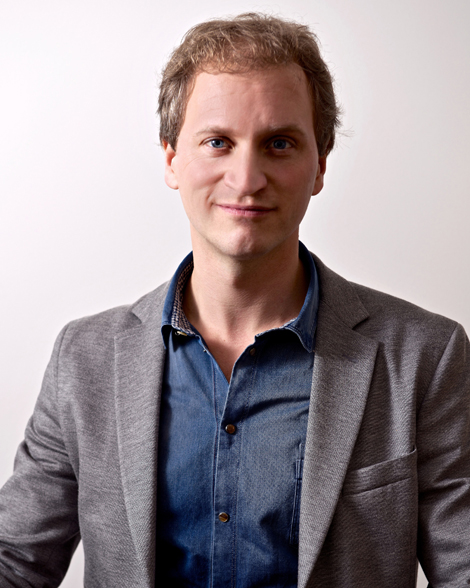
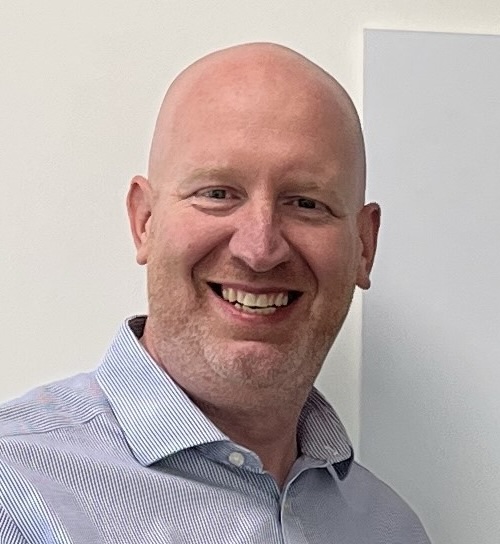
The co-owner and company director of Pellikaan in the Netherlands talks to Kate Cracknell about rental models, integrating medical and fitness offerings, and differentiation through service
By Kate Cracknell | Published in Health Club Management 2013 issue 4
My view is that, across the whole of the Netherlands, the fitness sector needs to get better at delivering the product people are actually asking for,” says Dennis Pellikaan, company director and co-owner, along with brother Patrick, of family-owned Pellikaan – a company that encompasses health club operations as well as construction (see The Pellikaan Story, p33). “That means better goal-setting, for example, really getting people into the habit of being active. But most of all it’s about creating a service culture.”
He continues: “Patrick and I have grown up in our family’s fitness facilities. I also used to work at the Harbour Club in London, UK. So sport and physical activity really runs through our veins – but not to the point that we’ve lost touch with the mindset of our members. In fact, that’s what drives me: I always strive to look through the eyes of the consumer.
“Not everyone is sports-mad – we know it’s an effort for people to get active – and we therefore focus on the total experience at our health clubs, doing everything we can to make them places in which people want to spend time. Service levels are key to that, and this is an area in which we aim to constantly improve, learning not only from other health and fitness businesses but also from restaurants and hotels, for example.”
Taking on the budget gyms This focus on service is particularly important in the Netherlands, says Pellikaan, where the budget sector has taken a firm grip: “Our facilities are beautiful and very extensive, and we invest heavily in maintaining their high quality. But our membership fees, which average around €65 a month, put us very much at the top end of the market. We therefore aim to differentiate ourselves on more than just our facilities, with a strong focus on lifestyle as well as complementary, value-added offerings. However, we believe the only real way to set ourselves apart from the budget sector is by focusing on service.”
Pellikaan continues: “Most gym operators in the Netherlands are either converting their clubs to a budget model or else launching a budget arm to their business. And the low-cost sector is doing very well here – it’s all but killed off the mid-market.
“We’re perfectly happy with that, as it puts our product firmly where we want it to be: at the premium end of the market. However, the budget clubs’ product isn’t bad, which makes it hard for us to compete for members who are only interested in fitness: if all they want is a gym, they’re not going to pay €65 a month when they could be paying €15.”
A new medical offering Nevertheless, Pellikaan’s focus for now is on continuing to justify his clubs’ premium price tag. “It’s about adding value to the membership, trying to attract a different type of person to the club – someone who’s still willing to pay our prices in exchange for the facilities we offer,” he says. “Our medical health clinics are a good example of this – they are bringing people to our clubs who never would have joined or visited before.”
Originally launched in 2010 and currently available at three sites, both for members and non-members, the medical offering is designed to broaden the health club model to address what Pellikaan sees as the two key trends in society: an ageing population, and the growing issue of obesity.
“We already had in-house physiotherapists, but essentially they just rented a room – there wasn’t any real connection between our product and their expertise or facilities. We wanted to create what we call our ‘3Cs’ approach – a philosophy of cure, care and control – by fully integrating medical expertise into the offering at our clubs.
“Our medical centre model comprises on average six or eight consultation rooms rented out to physiotherapists, nutritionists, psychologists, oncologists, podiatrists and so on. We offer vitality checks (V-Checks – see HCM Oct 10, p29), obesity programmes, special physiotherapy for cyclists. We even go into local companies to offer fitness advice and occupational health checks.
“It’s been a deliberate decision that all our medical professionals are local people – we don’t have agreements at a national level to cover all our clubs. We want people who are proactive within our clubs, marketing their services to our members. But we also want people who have strong streams of business locally – relationships with nearby hockey clubs, tennis clubs and so on – as this brings new prospects into our facilities.”
Pellikaan continues: “The biggest challenge, of course, is to create a seamless connection between the fitness and medical elements of our offering. We’re trying to treat the medical health team in the same way as we do our reception, sales or F&B teams, meeting on a monthly basis so everyone’s fully briefed on what everyone else is doing.
“But we also work together on developing programmes that involve everyone in the club, and that everyone feels ownership of. We don’t leave it to the medical professionals to introduce their own, standalone initiatives – we take the lead to ensure the bigger commercial picture is taken into account. Where do our staff come in? What information are we sharing with our fitness team when a member has a V-Check, for example, to help them put together a good programme for that member?
“It’s about creating and constantly refining the communication channels between medical and fitness, as well as evolving training ideas together as a team.”
The medical centre concept will now be rolled out to the other clubs – two this year and the sixth in 2014 – once, explains Pellikaan, the right medical professionals have been found. “That’s not easy, because the market in Holland has changed a lot,” he explains. “The government is trying to cut healthcare costs, and of course insurance companies still want to make their margins, which means consumers are having to pick up more of the costs themselves. Physiotherapists, nutritionists and so on are reporting a drop in demand of around 15–20 per cent as a direct result of this. They’re therefore more hesitant about committing to paying rent to us. Once our centres get up and running they go very well, and we get lots of interest from local professionals. But finding the right people in the first place takes time.”
The effort is worthwhile though, as Pellikaan explains: “The medical offering is very important for our brand as a whole. As I explained before, we need to differentiate our offering and add value to our facilities and product, and a medical health clinic is a great way of doing that. It generates a lot of publicity and makes the club more professional in the eyes of the consumer.”
A rental model Although the medical centres are performing well, the income from renting out the space remains small when compared with membership revenues. However, says Pellikaan: “We have big clubs and we weren’t effectively using all of the space, so the rental model makes perfect sense.”
There’s also an additional bonus for the clubs’ bottom line: “With the medical centres, not only do we get rental revenues, but we’re also slowly seeing income from personal training going up due to referrals from the medical centres.”
Meanwhile, a partnership with national childcare provider Kinderstad has provided the clubs with an additional rental-based revenue stream. “Children represent a key opportunity for the health and fitness sector,” says Pellikaan. “However, although our health clubs are very family-orientated, we decided we should stick to what we do best and bring in a third party to run our daycare offering.
“Kinderstad has dedicated areas within our clubs to run after-school clubs for kids while their parents are still at work. That also allows it to introduce sports into its offering, using our facilities – which again brings in additional revenue for us, as the kids pay for sports sessions, swimming lessons, karate and so on.”
Given the large footprint of the Pellikaan clubs, are there any plans for further rental-based agreements? “Yes,” says Pellikaan. “I’m currently busy working on a deal with a big dental operation. If I’m honest, that’s purely a commercial venture: although there’s some synergy between dentistry and the rest of our medical offering, there’s no real connection with our health club facilities. Really it’s just about driving revenue from our spare square metres. That said, if it helps the member in some way – through convenience of location for example – then it’s one more way of adding perceived value to our offering.”
Future plans So if we project forward 10 years, where does Pellikaan see the company? “I’d definitely like to have more clubs – around three or four in that sort of timeframe, perhaps one of which could be international. We have considered going into markets such as Belgium, for example.
“I think our focus on families and children will continue to grow, as will our medical offering and our programming for the older population. And no doubt we’ll continue to enhance our offering in ways we’re already working on, to ensure it remains relevant in the future: improving service for our members, introducing IT to help deliver results, cutting costs, introducing much more measurement across all departments to ensure we’re being as effective and efficient as we can be.
“Ultimately I don’t see obstacles. I just see opportunities. Patrick and I are both still young – he’s 40 and I’m 35 – and we have a lot of appetite for this industry. We’re both very, very positive about the future.”
The Pellikaan Story
“The Pellikaan business began with my grandfather,” says Dennis Pellikaan. “He used to play for the Dutch football team and was very into sports, so when his football career ended and he launched his construction company, he focused heavily on building sports facilities for the local councils – swimming pools, sports halls and so on.
“Then, 36 years ago, he started his own multi-functional tennis centre – a concept he’d seen in the US. He built and operated the facility and the model proved a success in the Dutch market, so he built more – not only in Holland, but also in Germany and Belgium, where he also had construction companies.
“The clubs attracted all the top tennis players: David Lloyd, for example, played for my grandfather’s first team in the Netherlands. In fact, it was this experience that encouraged David to go back to the UK and build a tennis club just like my grandfather’s. At the time we didn’t have a construction company in the UK, so we didn’t build the first ever David Lloyd club, but we built the second and still build a lot of their facilities for them now.
“In the end, my grandfather operated three facilities of his own – big tennis clubs with indoor courts, squash, a restaurant – which at the time were unique in Holland. Of course, the product has evolved a lot since then to become the full-service health club offering we have nowadays, but that’s how it all started 36 years ago.”
He continues: “My grandfather continued to run the clubs when he retired. Meanwhile my father took over the construction business, building clubs for the likes of David Lloyd Leisure in the UK. My father soon realised the tennis club model wasn’t really evolving any more, so he decided to introduce to Holland the model he’d seen working in the UK: the full health club offering with a monthly membership. The first such facility opened in Amersfoort 20 years ago. It still had indoor and outdoor tennis, as well as squash, but now it also had 1,000sq m of fitness, two aerobics studios, a swimming pool, sauna and so on.
“Fast-forward to today and we now have seven clubs in the Netherlands: six branded as Club Pellikaan, with a seventh – an older-style tennis club – due to be overhauled and rebranded as a Club Pellikaan in the next couple of years. We had wanted to do it sooner, but the economic crisis delayed the project. For now, we’ve created a budget gym on-site, so there is at least a fitness offering.”
Pellikaan concludes: “There continues to be great synergy between the construction company and the health club business, because both parties have the same expertise in operations. The construction people understand how the clubs work and the whole co-operative relationship works very well.”
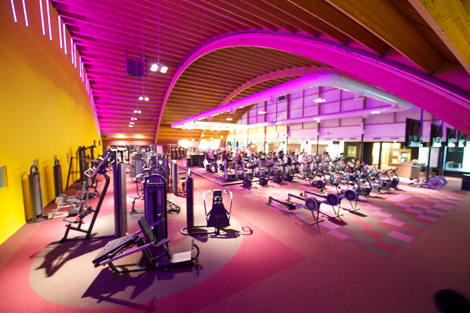
Pellikaan operates at the premium end of the market
Pellikaan was the first company to bring the full health club offer to Holland 20 years ago
There are six Pellikaan clubs, with a seventh to follow after a rebrand
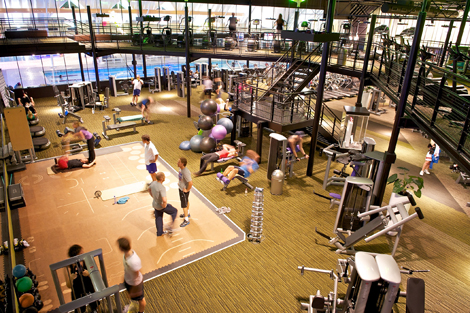
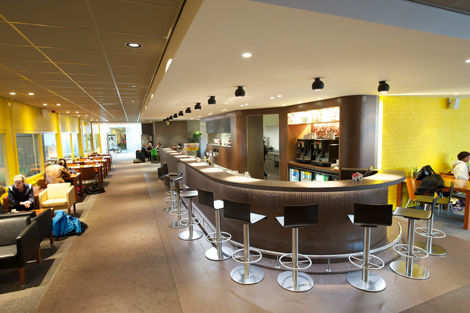
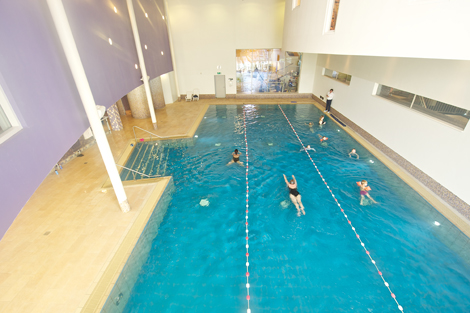
The clubs offer a wide range of facilities – but service remains the USP
A partnership with a national childcare provider has created new revenue streams
Active Blackpool is deploying Cornerstone Connect, a new digital interface allowing
disparate information from multiple systems to be aggregated into one dataset, to support
its focus on reducing health inequalities and improving healthy life expectancy. [more...]
CoverMe, the global leader in fitness workforce management, today launches CoverMe PT, an
on-demand personal training platform that connects the right personal trainer to the right
client in under 10 seconds. [more...]
+ More featured suppliers
COMPANY PROFILES
Orbit4
With Orbit4, you’ll always have full visibility
of your equipment inventory, the true
market value [more...]
Serco Leisure
Serco Leisure Operating Limited is one of the UK’s leading national operators of leisure centres, de [more...]
The co-owner and company director of Pellikaan in the Netherlands talks to Kate Cracknell about rental models, integrating medical and fitness offerings, and differentiation through service
By Kate Cracknell | Published in Health Club Management 2013 issue 4
My view is that, across the whole of the Netherlands, the fitness sector needs to get better at delivering the product people are actually asking for,” says Dennis Pellikaan, company director and co-owner, along with brother Patrick, of family-owned Pellikaan – a company that encompasses health club operations as well as construction (see The Pellikaan Story, p33). “That means better goal-setting, for example, really getting people into the habit of being active. But most of all it’s about creating a service culture.”
He continues: “Patrick and I have grown up in our family’s fitness facilities. I also used to work at the Harbour Club in London, UK. So sport and physical activity really runs through our veins – but not to the point that we’ve lost touch with the mindset of our members. In fact, that’s what drives me: I always strive to look through the eyes of the consumer.
“Not everyone is sports-mad – we know it’s an effort for people to get active – and we therefore focus on the total experience at our health clubs, doing everything we can to make them places in which people want to spend time. Service levels are key to that, and this is an area in which we aim to constantly improve, learning not only from other health and fitness businesses but also from restaurants and hotels, for example.”
Taking on the budget gyms This focus on service is particularly important in the Netherlands, says Pellikaan, where the budget sector has taken a firm grip: “Our facilities are beautiful and very extensive, and we invest heavily in maintaining their high quality. But our membership fees, which average around €65 a month, put us very much at the top end of the market. We therefore aim to differentiate ourselves on more than just our facilities, with a strong focus on lifestyle as well as complementary, value-added offerings. However, we believe the only real way to set ourselves apart from the budget sector is by focusing on service.”
Pellikaan continues: “Most gym operators in the Netherlands are either converting their clubs to a budget model or else launching a budget arm to their business. And the low-cost sector is doing very well here – it’s all but killed off the mid-market.
“We’re perfectly happy with that, as it puts our product firmly where we want it to be: at the premium end of the market. However, the budget clubs’ product isn’t bad, which makes it hard for us to compete for members who are only interested in fitness: if all they want is a gym, they’re not going to pay €65 a month when they could be paying €15.”
A new medical offering Nevertheless, Pellikaan’s focus for now is on continuing to justify his clubs’ premium price tag. “It’s about adding value to the membership, trying to attract a different type of person to the club – someone who’s still willing to pay our prices in exchange for the facilities we offer,” he says. “Our medical health clinics are a good example of this – they are bringing people to our clubs who never would have joined or visited before.”
Originally launched in 2010 and currently available at three sites, both for members and non-members, the medical offering is designed to broaden the health club model to address what Pellikaan sees as the two key trends in society: an ageing population, and the growing issue of obesity.
“We already had in-house physiotherapists, but essentially they just rented a room – there wasn’t any real connection between our product and their expertise or facilities. We wanted to create what we call our ‘3Cs’ approach – a philosophy of cure, care and control – by fully integrating medical expertise into the offering at our clubs.
“Our medical centre model comprises on average six or eight consultation rooms rented out to physiotherapists, nutritionists, psychologists, oncologists, podiatrists and so on. We offer vitality checks (V-Checks – see HCM Oct 10, p29), obesity programmes, special physiotherapy for cyclists. We even go into local companies to offer fitness advice and occupational health checks.
“It’s been a deliberate decision that all our medical professionals are local people – we don’t have agreements at a national level to cover all our clubs. We want people who are proactive within our clubs, marketing their services to our members. But we also want people who have strong streams of business locally – relationships with nearby hockey clubs, tennis clubs and so on – as this brings new prospects into our facilities.”
Pellikaan continues: “The biggest challenge, of course, is to create a seamless connection between the fitness and medical elements of our offering. We’re trying to treat the medical health team in the same way as we do our reception, sales or F&B teams, meeting on a monthly basis so everyone’s fully briefed on what everyone else is doing.
“But we also work together on developing programmes that involve everyone in the club, and that everyone feels ownership of. We don’t leave it to the medical professionals to introduce their own, standalone initiatives – we take the lead to ensure the bigger commercial picture is taken into account. Where do our staff come in? What information are we sharing with our fitness team when a member has a V-Check, for example, to help them put together a good programme for that member?
“It’s about creating and constantly refining the communication channels between medical and fitness, as well as evolving training ideas together as a team.”
The medical centre concept will now be rolled out to the other clubs – two this year and the sixth in 2014 – once, explains Pellikaan, the right medical professionals have been found. “That’s not easy, because the market in Holland has changed a lot,” he explains. “The government is trying to cut healthcare costs, and of course insurance companies still want to make their margins, which means consumers are having to pick up more of the costs themselves. Physiotherapists, nutritionists and so on are reporting a drop in demand of around 15–20 per cent as a direct result of this. They’re therefore more hesitant about committing to paying rent to us. Once our centres get up and running they go very well, and we get lots of interest from local professionals. But finding the right people in the first place takes time.”
The effort is worthwhile though, as Pellikaan explains: “The medical offering is very important for our brand as a whole. As I explained before, we need to differentiate our offering and add value to our facilities and product, and a medical health clinic is a great way of doing that. It generates a lot of publicity and makes the club more professional in the eyes of the consumer.”
A rental model Although the medical centres are performing well, the income from renting out the space remains small when compared with membership revenues. However, says Pellikaan: “We have big clubs and we weren’t effectively using all of the space, so the rental model makes perfect sense.”
There’s also an additional bonus for the clubs’ bottom line: “With the medical centres, not only do we get rental revenues, but we’re also slowly seeing income from personal training going up due to referrals from the medical centres.”
Meanwhile, a partnership with national childcare provider Kinderstad has provided the clubs with an additional rental-based revenue stream. “Children represent a key opportunity for the health and fitness sector,” says Pellikaan. “However, although our health clubs are very family-orientated, we decided we should stick to what we do best and bring in a third party to run our daycare offering.
“Kinderstad has dedicated areas within our clubs to run after-school clubs for kids while their parents are still at work. That also allows it to introduce sports into its offering, using our facilities – which again brings in additional revenue for us, as the kids pay for sports sessions, swimming lessons, karate and so on.”
Given the large footprint of the Pellikaan clubs, are there any plans for further rental-based agreements? “Yes,” says Pellikaan. “I’m currently busy working on a deal with a big dental operation. If I’m honest, that’s purely a commercial venture: although there’s some synergy between dentistry and the rest of our medical offering, there’s no real connection with our health club facilities. Really it’s just about driving revenue from our spare square metres. That said, if it helps the member in some way – through convenience of location for example – then it’s one more way of adding perceived value to our offering.”
Future plans So if we project forward 10 years, where does Pellikaan see the company? “I’d definitely like to have more clubs – around three or four in that sort of timeframe, perhaps one of which could be international. We have considered going into markets such as Belgium, for example.
“I think our focus on families and children will continue to grow, as will our medical offering and our programming for the older population. And no doubt we’ll continue to enhance our offering in ways we’re already working on, to ensure it remains relevant in the future: improving service for our members, introducing IT to help deliver results, cutting costs, introducing much more measurement across all departments to ensure we’re being as effective and efficient as we can be.
“Ultimately I don’t see obstacles. I just see opportunities. Patrick and I are both still young – he’s 40 and I’m 35 – and we have a lot of appetite for this industry. We’re both very, very positive about the future.”
The Pellikaan Story
“The Pellikaan business began with my grandfather,” says Dennis Pellikaan. “He used to play for the Dutch football team and was very into sports, so when his football career ended and he launched his construction company, he focused heavily on building sports facilities for the local councils – swimming pools, sports halls and so on.
“Then, 36 years ago, he started his own multi-functional tennis centre – a concept he’d seen in the US. He built and operated the facility and the model proved a success in the Dutch market, so he built more – not only in Holland, but also in Germany and Belgium, where he also had construction companies.
“The clubs attracted all the top tennis players: David Lloyd, for example, played for my grandfather’s first team in the Netherlands. In fact, it was this experience that encouraged David to go back to the UK and build a tennis club just like my grandfather’s. At the time we didn’t have a construction company in the UK, so we didn’t build the first ever David Lloyd club, but we built the second and still build a lot of their facilities for them now.
“In the end, my grandfather operated three facilities of his own – big tennis clubs with indoor courts, squash, a restaurant – which at the time were unique in Holland. Of course, the product has evolved a lot since then to become the full-service health club offering we have nowadays, but that’s how it all started 36 years ago.”
He continues: “My grandfather continued to run the clubs when he retired. Meanwhile my father took over the construction business, building clubs for the likes of David Lloyd Leisure in the UK. My father soon realised the tennis club model wasn’t really evolving any more, so he decided to introduce to Holland the model he’d seen working in the UK: the full health club offering with a monthly membership. The first such facility opened in Amersfoort 20 years ago. It still had indoor and outdoor tennis, as well as squash, but now it also had 1,000sq m of fitness, two aerobics studios, a swimming pool, sauna and so on.
“Fast-forward to today and we now have seven clubs in the Netherlands: six branded as Club Pellikaan, with a seventh – an older-style tennis club – due to be overhauled and rebranded as a Club Pellikaan in the next couple of years. We had wanted to do it sooner, but the economic crisis delayed the project. For now, we’ve created a budget gym on-site, so there is at least a fitness offering.”
Pellikaan concludes: “There continues to be great synergy between the construction company and the health club business, because both parties have the same expertise in operations. The construction people understand how the clubs work and the whole co-operative relationship works very well.”
Pellikaan operates at the premium end of the market
Pellikaan was the first company to bring the full health club offer to Holland 20 years ago
There are six Pellikaan clubs, with a seventh to follow after a rebrand
The clubs offer a wide range of facilities – but service remains the USP
A partnership with a national childcare provider has created new revenue streams
The UK's four Chief Medical Officers have published a refreshed edition of Physical activity
guidelines: UK Chief Medical Officers' report, updating the evidence that underpins the nation's
physical activity recommendations and placing greater emphasis on strength, balance, reducing
sedentary behaviour and, for the first time, supporting people taking weight loss medications.
Places Leisure has exchanged contracts to build and operate a flagship £60m water and leisure
destination on behalf of Basingstoke and Deane Borough Council.
The Republic of Ireland will become the latest market in PureGym’s expanding international
portfolio, with the first launch planned for Dublin in 2027.
Anytime Fitness opened more than one club a day in 2025 and is on track to maintain this rate
of growth this year, as parent company Purpose Brands targets further international expansion.
The £33.9 million Leighton Leisure and Community Centre has opened in Leighton Buzzard, UK,
creating a next-generation public leisure, health and wellbeing hub for the local community.
Walnuts Leisure Centre in Orpington, in the London Borough of Bromley, has reopened following
a £17m transformation designed to secure the long-term future of the public leisure asset and
reposition it as a community wellbeing hub.
The Gym Group, has announced that it's sustained positive trading momentum has continued
through the first half of 2026 and the company remains confident about the outlook.
Luxury boutique Pilates and wellness studio, X-Club, officially launches a
4,000sq ft flagship at
Marylebone on 16 July Built around X-Club’s four pillars of wellness – mind,
movement,
nutrition and therapy – the facility features two group exercise studi
Active Blackpool is deploying Cornerstone Connect, a new digital interface allowing
disparate information from multiple systems to be aggregated into one dataset, to support
its focus on reducing health inequalities and improving healthy life expectancy. [more...]
CoverMe, the global leader in fitness workforce management, today launches CoverMe PT, an
on-demand personal training platform that connects the right personal trainer to the right
client in under 10 seconds. [more...]
+ More featured suppliers
COMPANY PROFILES
Orbit4 With Orbit4, you’ll always have full visibility
of your equipment inventory, the true
market value [more...]