With its high hourly rates, personal training has sometimes been seen by fitness instructors as a ‘get rich quick’ scheme. However, the reality is somewhat different. IHRSA’s 2011 Profiles of Success report found that in the US, only 15 per cent of members pay for PT – and as a result, disillusioned no doubt by the reality versus their expectations, 57 per cent of personal trainers give up in the first six months.
Why is this? Is PT a service most members simply don’t want? Has the recession made gym-goers more price-conscious? Is the gym culture not supportive? Or is word-of-mouth not happening because clients aren’t seeing results?
US chain Planet Fitness stopped offering PT in 2011, claiming people were just using the service to “rent a friend”. But other operators might turn the same argument on its head, seeing the counselling aspect as a selling point of good PT.
Consultant and PT expert Nic Jarvis certainly believes that being successful as a PT requires innovation and a sophisticated skill set, encompassing knowledge of behavioural change, nutrition and counselling. But he feels that, at the moment, few PTs are meeting the grade: “Very often, clubs are just sending staff for a minimal amount of training to tick boxes. But for people to see results with PT, they need to change their behaviour, which is a mental shift and not a physical change. For long-term change, PTs need to be able to coach people through that behavioural change process.
“I’ve been encouraging the PTs I work with to target a younger audience – generation Y – as an untapped and potentially lucrative market,” he continues. “Many PTs are intimidated by this group and prefer to target older, deconditioned people, as it’s easier to put a programme together. Superior knowledge is needed to make a difference to an already fit 20-year-old – it requires a different type of programming and knowledge of nutrition.”
It’s this sort of out-of-the-box thinking that could boost PT in clubs, ensuring members are engaged, PTs retained and revenues boosted. We look at the innovation already bearing fruit for some entrepreneurial chains, clubs and individuals.
PHOENIX PRO FITNESS, UK Godalming-based gym Phoenix Pro Fitness has integrated personal training into its membership structure. Club owner Charlotte Ord says the model was inspired by her mentor, a Californian health club operator.
There are a number of different membership packages on offer which include personal training and semi-private training, where people train alongside a few other clients. These integrated packages are driving take-up of personal training at the club.
“Having several clients working together is slightly harder work for the PT, but it means the club can offer more PT sessions during peak times,” says Ord. “Also, there’s group accountability and motivation, and PT is made more affordable. People with different goals happily train together and it’s made the club more sociable.”
Fees start at £70 a month for gym membership, rising to £600 a month for the VIP membership, which includes eight private PT sessions a month. “The most popular package is the All Access which, at £179 a month, gives four one-hour, semi-private sessions a month and access to all the classes and gym,” says Ord.
“Our retention is very good, and we think this is because the personal training makes sure people come regularly and get better results. PT is all about continuity.”
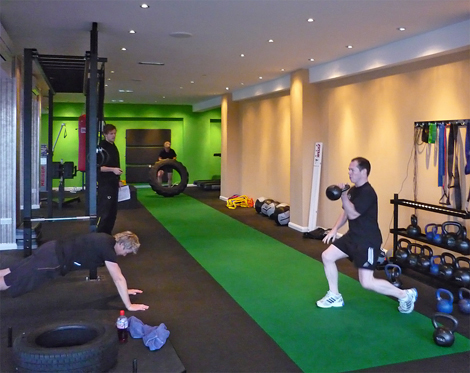
Group PT sessions at Phoenix have improved club sociability
DAVID LLOYD LEISURE, UK
Having enjoyed success with PT in its full-service clubs, David Lloyd Leisure is currently rolling out a new standalone high street concept – DL Studios – based on PT and small group functional training.
“The David Lloyd Leisure brand has seen the number of people who use PT treble over the last four years,” says Rob Beale, head of sports, health and fitness at DLL. “It’s the most rapidly growing part of the business.”
Beale says the recipe for success is a great environment, attracting and retaining the best PTs by offering a good salary package and excellent training. All DLL PTs are REPs Level 3 qualified and then undertake the DLL Trainer Journey, which takes two years and involves different training, including soft skills on changing behaviour and nutrition advice.
DL Studios build on this success, and are shaped specifically around the expertise of PTs. On offer is one-to-one training, small group training, a 12-week Lose and Shape Up weight-loss programme, TRX classes and a running club. People can buy blocks of three to 10 sessions, or pay monthly. Beale says most are choosing to pay by monthly direct debit, usually for one or two PT sessions a week, spending an average of £60 a week.
The first two sites are open – in Putney, south London, and Winchester – and a central London site is next. No definite decision has been made on the rollout, but around 20 sites are expected to open in the next 12 months.
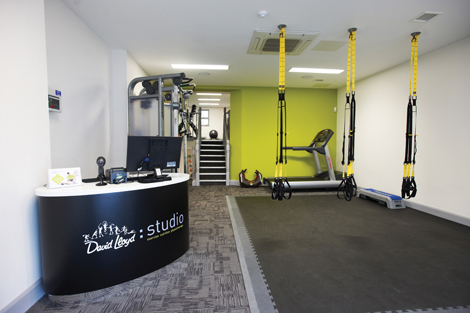
The DL Studio concept focuses on PT and small group functional training
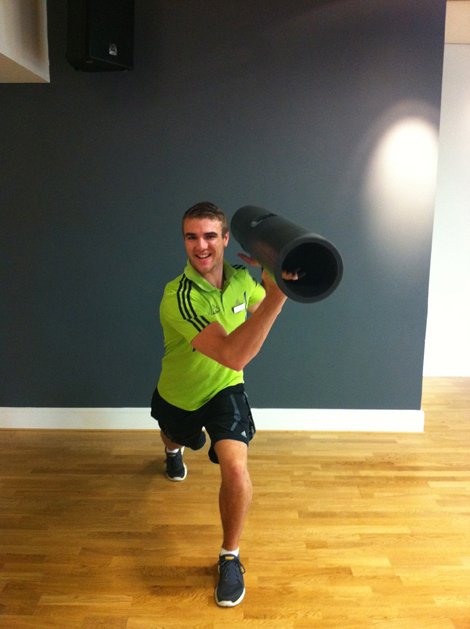
Personal training is now a rapidly growing area of the DLL business
SPORTS AND LEISURE GROUP, NETHERLANDS “When I joined the industry 16 years ago, I predicted it would go from fitness to wellness and then to oneness, which is about the mind, body and soul,” says Theo Hendriks, CEO at Sports and Leisure Group in the Netherlands, which operates Capital Sports, Family Fitness, and Sports and Recreation.
“This shift is reflected in personal training: people don’t just come for the physical exercise. Many clients now see it as a way of getting contact with someone who’s focused on them. My wife has had a PT studio for seven years and provides counselling as much as a workout,” he says.
For this reason, Hendriks says PTs need to be increasingly knowledgeable about exercise, diet and psychology. “We can help people to use exercise to control their weight, but the real question is: why are they eating that much in the first place?” he observes.
At the Family Fitness clubs, Hendriks is creating designated PT rooms away from the main gym area. “The industry has assumed that having PT visible encourages other people to try it, but I disagree,” he says. “Those who aren’t receiving individual attention start to feel resentful when they see PT taking place on the next treadmill – they feel they are paying a lot of money for membership and believe they should also be getting personal attention, even without PT.”
Family Fitness members pay €40–50 a month, with the option to buy into PT at an additional cost of €50 for a 30-minute session, all taking place in the PT studio. Hendriks believes the benefit for members is that, where those attending a fully standalone PT studio would need to commit to perhaps three sessions a week to achieve their goals, the location of the studios on-site at his clubs means members can supplement PT with normal gym use – they can take their personalised programmes into the gym, making their training more cost-effective.
“In the Netherlands, many people make a deal direct with their PT, but our set-up offers the best of both worlds: fully kitted-out PT studio, but access to a gym too,” he adds. On average, PT members book one or two sessions a week.
Meanwhile, the studio doesn’t pay rent but instead pays Family Fitness €6 per PT session. This, says Hendriks, makes for an easier start-up, as the studio is not penalised in the early weeks of operation when there are likely to be fewer clients.
PURE FITNESS, ASIA At Asian operator Pure Fitness, PT is the most significant ancillary revenue stream: each month, 20 per cent of members use a PT, with the average user having five sessions a month.
PTs are managed and incentivised similarly to the sales teams, and are expected to drive up PT performance each month. But PTs don’t have other responsibilities to hinder their efforts and are supported by other departments. For example, the membership sales team sign up 30 per cent of new members for PT. All trainers are employed by the clubs and run an average of 33 sessions a week. To ensure this is a sustainable business model, the PTs are also very well supported, with regular training including coaching in business and sales skills. For example, when one Pure Fitness club acquired the functional training frame PurMotion FTS200, the inventor was brought into the club to train the team.
Regional fitness operations director Marco Ferdinandi says PT is well integrated into the company structure and clubs: the equipment used, training methods and club design are all focused around PT. “If we can make it a fun and exciting environment, where our staff and our members can see our dedication to great training and results, we’re confident our team will return the results we want as an organisation,” he says.
Pure Fitness PT clients average five sessions a month
JOSH WARRELL, UK Personal Trainer of the Year 2011 Based in Eastbourne, UK, Josh Warrell is an example of a PT who has thrived. Initially training with Premier Training to Level 2, he then joined David Lloyd Leisure and swiftly moved to the top of the pay band, running 25 sessions a week.
He says building a client base was just a case of talking to people: “I worked out that, to get one appointment, I would have to talk to five people, and would need three to five appointments to get a client,” he says. “Each month I had to find two to three new clients as people met their goals and moved on.”
Now that Warrell is self-employed, he has adapted his business by adding multiple income streams, including teaming up with Herbalife to sell meal replacements. He also ‘sees’ clients online, meaning that he can have more clients and not be limited by geography. More recently, he has been mentoring other PTs on how to grow their business, which has created an additional income stream for him.
Warrell recommends that PTs find a niche. He chose weight loss, as this seemed to be what people were most interested in. His standard package lasts a month and encompasses exercise, meal plans and meal replacements. If people are gym members, he prescribes a gym-based programme; if not, he gives them exercises to do at home and can supply the necessary equipment. “To get results, it’s 20 per cent exercise and 80 per cent nutrition,” he says.
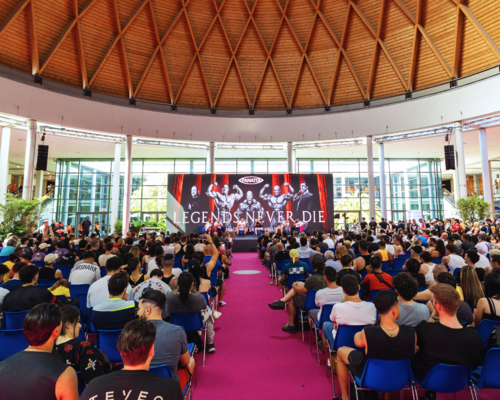
Panatta brought together four of the most influential figures in bodybuilding history on the
stage of RiminiWellness 2026: Phil Heath, Lee Haney, Ronnie Coleman and Hany Rambod. [more...]
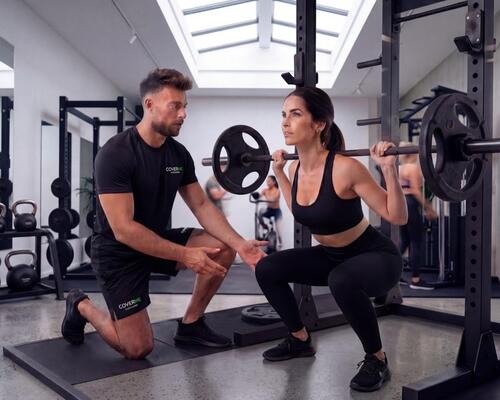
CoverMe, the global leader in fitness workforce management, today launches CoverMe PT, an
on-demand personal training platform that connects the right personal trainer to the right
client in under 10 seconds. [more...]
+ More featured suppliers
COMPANY PROFILES
Safe Space Lockers
We provide a full turn-key solution for clients from design and consultation, through to bespoke man [more...]
Alliance Leisure
Alliance Leisure Services was specifically
established to respond to the changing
development need [more...]
With its high hourly rates, personal training has sometimes been seen by fitness instructors as a ‘get rich quick’ scheme. However, the reality is somewhat different. IHRSA’s 2011 Profiles of Success report found that in the US, only 15 per cent of members pay for PT – and as a result, disillusioned no doubt by the reality versus their expectations, 57 per cent of personal trainers give up in the first six months.
Why is this? Is PT a service most members simply don’t want? Has the recession made gym-goers more price-conscious? Is the gym culture not supportive? Or is word-of-mouth not happening because clients aren’t seeing results?
US chain Planet Fitness stopped offering PT in 2011, claiming people were just using the service to “rent a friend”. But other operators might turn the same argument on its head, seeing the counselling aspect as a selling point of good PT.
Consultant and PT expert Nic Jarvis certainly believes that being successful as a PT requires innovation and a sophisticated skill set, encompassing knowledge of behavioural change, nutrition and counselling. But he feels that, at the moment, few PTs are meeting the grade: “Very often, clubs are just sending staff for a minimal amount of training to tick boxes. But for people to see results with PT, they need to change their behaviour, which is a mental shift and not a physical change. For long-term change, PTs need to be able to coach people through that behavioural change process.
“I’ve been encouraging the PTs I work with to target a younger audience – generation Y – as an untapped and potentially lucrative market,” he continues. “Many PTs are intimidated by this group and prefer to target older, deconditioned people, as it’s easier to put a programme together. Superior knowledge is needed to make a difference to an already fit 20-year-old – it requires a different type of programming and knowledge of nutrition.”
It’s this sort of out-of-the-box thinking that could boost PT in clubs, ensuring members are engaged, PTs retained and revenues boosted. We look at the innovation already bearing fruit for some entrepreneurial chains, clubs and individuals.
PHOENIX PRO FITNESS, UK Godalming-based gym Phoenix Pro Fitness has integrated personal training into its membership structure. Club owner Charlotte Ord says the model was inspired by her mentor, a Californian health club operator.
There are a number of different membership packages on offer which include personal training and semi-private training, where people train alongside a few other clients. These integrated packages are driving take-up of personal training at the club.
“Having several clients working together is slightly harder work for the PT, but it means the club can offer more PT sessions during peak times,” says Ord. “Also, there’s group accountability and motivation, and PT is made more affordable. People with different goals happily train together and it’s made the club more sociable.”
Fees start at £70 a month for gym membership, rising to £600 a month for the VIP membership, which includes eight private PT sessions a month. “The most popular package is the All Access which, at £179 a month, gives four one-hour, semi-private sessions a month and access to all the classes and gym,” says Ord.
“Our retention is very good, and we think this is because the personal training makes sure people come regularly and get better results. PT is all about continuity.”
Group PT sessions at Phoenix have improved club sociability
DAVID LLOYD LEISURE, UK
Having enjoyed success with PT in its full-service clubs, David Lloyd Leisure is currently rolling out a new standalone high street concept – DL Studios – based on PT and small group functional training.
“The David Lloyd Leisure brand has seen the number of people who use PT treble over the last four years,” says Rob Beale, head of sports, health and fitness at DLL. “It’s the most rapidly growing part of the business.”
Beale says the recipe for success is a great environment, attracting and retaining the best PTs by offering a good salary package and excellent training. All DLL PTs are REPs Level 3 qualified and then undertake the DLL Trainer Journey, which takes two years and involves different training, including soft skills on changing behaviour and nutrition advice.
DL Studios build on this success, and are shaped specifically around the expertise of PTs. On offer is one-to-one training, small group training, a 12-week Lose and Shape Up weight-loss programme, TRX classes and a running club. People can buy blocks of three to 10 sessions, or pay monthly. Beale says most are choosing to pay by monthly direct debit, usually for one or two PT sessions a week, spending an average of £60 a week.
The first two sites are open – in Putney, south London, and Winchester – and a central London site is next. No definite decision has been made on the rollout, but around 20 sites are expected to open in the next 12 months.
The DL Studio concept focuses on PT and small group functional training
Personal training is now a rapidly growing area of the DLL business
SPORTS AND LEISURE GROUP, NETHERLANDS “When I joined the industry 16 years ago, I predicted it would go from fitness to wellness and then to oneness, which is about the mind, body and soul,” says Theo Hendriks, CEO at Sports and Leisure Group in the Netherlands, which operates Capital Sports, Family Fitness, and Sports and Recreation.
“This shift is reflected in personal training: people don’t just come for the physical exercise. Many clients now see it as a way of getting contact with someone who’s focused on them. My wife has had a PT studio for seven years and provides counselling as much as a workout,” he says.
For this reason, Hendriks says PTs need to be increasingly knowledgeable about exercise, diet and psychology. “We can help people to use exercise to control their weight, but the real question is: why are they eating that much in the first place?” he observes.
At the Family Fitness clubs, Hendriks is creating designated PT rooms away from the main gym area. “The industry has assumed that having PT visible encourages other people to try it, but I disagree,” he says. “Those who aren’t receiving individual attention start to feel resentful when they see PT taking place on the next treadmill – they feel they are paying a lot of money for membership and believe they should also be getting personal attention, even without PT.”
Family Fitness members pay €40–50 a month, with the option to buy into PT at an additional cost of €50 for a 30-minute session, all taking place in the PT studio. Hendriks believes the benefit for members is that, where those attending a fully standalone PT studio would need to commit to perhaps three sessions a week to achieve their goals, the location of the studios on-site at his clubs means members can supplement PT with normal gym use – they can take their personalised programmes into the gym, making their training more cost-effective.
“In the Netherlands, many people make a deal direct with their PT, but our set-up offers the best of both worlds: fully kitted-out PT studio, but access to a gym too,” he adds. On average, PT members book one or two sessions a week.
Meanwhile, the studio doesn’t pay rent but instead pays Family Fitness €6 per PT session. This, says Hendriks, makes for an easier start-up, as the studio is not penalised in the early weeks of operation when there are likely to be fewer clients.
PURE FITNESS, ASIA At Asian operator Pure Fitness, PT is the most significant ancillary revenue stream: each month, 20 per cent of members use a PT, with the average user having five sessions a month.
PTs are managed and incentivised similarly to the sales teams, and are expected to drive up PT performance each month. But PTs don’t have other responsibilities to hinder their efforts and are supported by other departments. For example, the membership sales team sign up 30 per cent of new members for PT. All trainers are employed by the clubs and run an average of 33 sessions a week. To ensure this is a sustainable business model, the PTs are also very well supported, with regular training including coaching in business and sales skills. For example, when one Pure Fitness club acquired the functional training frame PurMotion FTS200, the inventor was brought into the club to train the team.
Regional fitness operations director Marco Ferdinandi says PT is well integrated into the company structure and clubs: the equipment used, training methods and club design are all focused around PT. “If we can make it a fun and exciting environment, where our staff and our members can see our dedication to great training and results, we’re confident our team will return the results we want as an organisation,” he says.
Pure Fitness PT clients average five sessions a month
JOSH WARRELL, UK Personal Trainer of the Year 2011 Based in Eastbourne, UK, Josh Warrell is an example of a PT who has thrived. Initially training with Premier Training to Level 2, he then joined David Lloyd Leisure and swiftly moved to the top of the pay band, running 25 sessions a week.
He says building a client base was just a case of talking to people: “I worked out that, to get one appointment, I would have to talk to five people, and would need three to five appointments to get a client,” he says. “Each month I had to find two to three new clients as people met their goals and moved on.”
Now that Warrell is self-employed, he has adapted his business by adding multiple income streams, including teaming up with Herbalife to sell meal replacements. He also ‘sees’ clients online, meaning that he can have more clients and not be limited by geography. More recently, he has been mentoring other PTs on how to grow their business, which has created an additional income stream for him.
Warrell recommends that PTs find a niche. He chose weight loss, as this seemed to be what people were most interested in. His standard package lasts a month and encompasses exercise, meal plans and meal replacements. If people are gym members, he prescribes a gym-based programme; if not, he gives them exercises to do at home and can supply the necessary equipment. “To get results, it’s 20 per cent exercise and 80 per cent nutrition,” he says.
The UK's four Chief Medical Officers have published a refreshed edition of Physical activity
guidelines: UK Chief Medical Officers' report, updating the evidence that underpins the nation's
physical activity recommendations and placing greater emphasis on strength, balance, reducing
sedentary behaviour and, for the first time, supporting people taking weight loss medications.
Places Leisure has exchanged contracts to build and operate a flagship £60m water and leisure
destination on behalf of Basingstoke and Deane Borough Council.
The Republic of Ireland will become the latest market in PureGym’s expanding international
portfolio, with the first launch planned for Dublin in 2027.
Anytime Fitness opened more than one club a day in 2025 and is on track to maintain this rate
of growth this year, as parent company Purpose Brands targets further international expansion.
The £33.9 million Leighton Leisure and Community Centre has opened in Leighton Buzzard, UK,
creating a next-generation public leisure, health and wellbeing hub for the local community.
Walnuts Leisure Centre in Orpington, in the London Borough of Bromley, has reopened following
a £17m transformation designed to secure the long-term future of the public leisure asset and
reposition it as a community wellbeing hub.
The Gym Group, has announced that it's sustained positive trading momentum has continued
through the first half of 2026 and the company remains confident about the outlook.
Luxury boutique Pilates and wellness studio, X-Club, officially launches a
4,000sq ft flagship at
Marylebone on 16 July Built around X-Club’s four pillars of wellness – mind,
movement,
nutrition and therapy – the facility features two group exercise studi
Panatta brought together four of the most influential figures in bodybuilding history on the
stage of RiminiWellness 2026: Phil Heath, Lee Haney, Ronnie Coleman and Hany Rambod. [more...]
CoverMe, the global leader in fitness workforce management, today launches CoverMe PT, an
on-demand personal training platform that connects the right personal trainer to the right
client in under 10 seconds. [more...]
+ More featured suppliers
COMPANY PROFILES
Safe Space Lockers We provide a full turn-key solution for clients from design and consultation, through to bespoke man [more...]