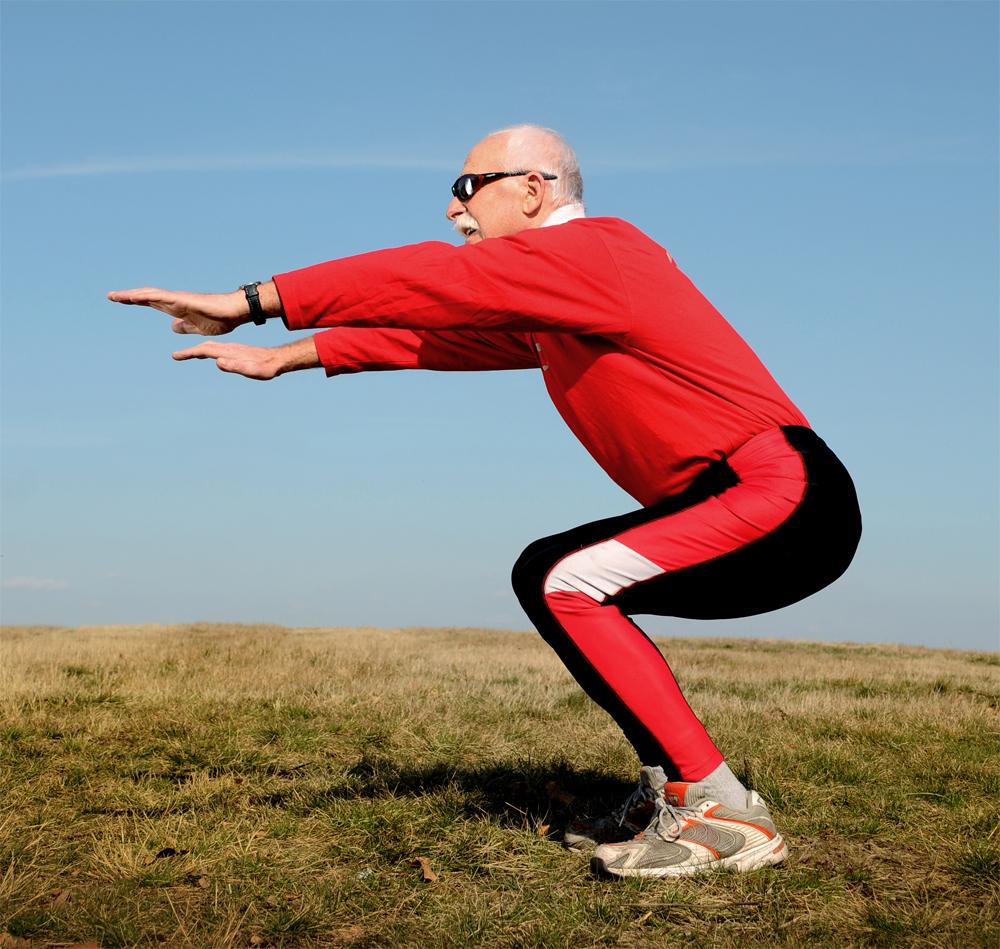
A group of researchers from Clinimex - an exercise and medical clinic in Rio de Janeiro, Brazil – have discovered that older adults who need help and support to stand up from a seated position on the floor are 6.5 times more likely to die over a course of six years than those who have less difficulty in performing the activity.
The new test could be an effective measure for doctors, physiotherapists and fitness professionals to consider when assessing a person’s health and fitness.
Traditionally, health clubs have used the ‘sit and reach’ test to define how flexible a person is, but in 2009, a study revealed that the test could also be used as an indicator of how stiff a person’s arteries are, and how likely they may be to suffer from a heart attack or stroke (see HCM Nov/Dec 10, p46).
Now this sitting-rising test (SRT), in addition to assessing how easily a person might be able to carry out important actions – picking up vital items such as medication or a phone that have fallen on the floor, for example, or getting up after a fall – could also be used to predict longevity.
Aiming for perfection The study* was based on 2,000 men and women aged 51–80 who were asked, in their own time and pace, to sit down on the floor from standing and then rise up straight again. They were assessed on the ease with which they could carry out the actions, aiming for a perfect score of 10: five for sitting down and five for standing back up. They were deducted points and half points if they needed support in the action, such as placing a hand or knee on the ground when pushing off or putting a hand on their knee to steady themselves.
What’s the score? Unsurprisingly, how well someone did on the test was linked to how old they were. Over half the participants aged 76–80 failed the test, with a score of 0–3. In contrast, about 70 per cent of those aged 60 or below scored 8–10.
However, even when scores were moderated based on multivariate-adjusted (age, sex, BMI) hazard ratios, there was still a continuous trend for longer survival among those performing better in the SRT. Over the 6.3-year follow-up, a total of 159 study participants died, but those in the 0–3 group were 6.5 times more likely to pass away than people with a score of 8–10. Participants in the 3.5–5.5 range were 3.8 times more likely to die; those who scored between 6 and 7.4 were 1.8 times more likely.
Claudio Gil Soares de Araújo, who worked on the study, was quoted on Yahoo! Health as saying: “Just two subjects who scored 10 died in the follow-up of about six years.” He explained that, if someone aged 51–80 scored a 10, their “chances of being alive in the next six years are quite good”, and added: “A one-point increment in the score was related to a 21 per cent reduction in mortality.”
Araújo concludes: “It is well known that aerobic fitness is strongly related to survival, but our study also shows that maintaining high levels of body flexibility, muscle strength, power-to-body weight ratio and co-ordination are not only good for performing daily activities, but have a favourable influence on life expectancy.”
*Soares de Araújo, CG et al. Ability to sit and rise from the floor as a predictor of all-cause mortality. European Journal of Preventive Cardiology. December 2012
Panatta brought together four of the most influential figures in bodybuilding history on the
stage of RiminiWellness 2026: Phil Heath, Lee Haney, Ronnie Coleman and Hany Rambod. [more...]
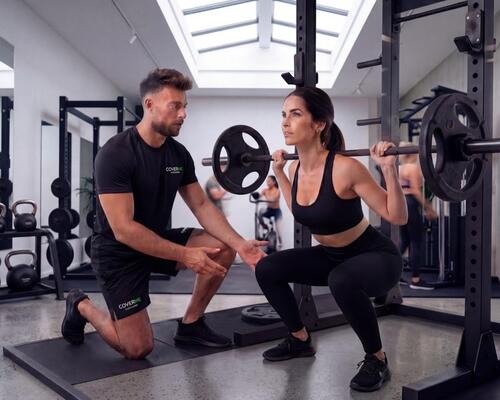
CoverMe, the global leader in fitness workforce management, today launches CoverMe PT, an
on-demand personal training platform that connects the right personal trainer to the right
client in under 10 seconds. [more...]
A group of researchers from Clinimex - an exercise and medical clinic in Rio de Janeiro, Brazil – have discovered that older adults who need help and support to stand up from a seated position on the floor are 6.5 times more likely to die over a course of six years than those who have less difficulty in performing the activity.
The new test could be an effective measure for doctors, physiotherapists and fitness professionals to consider when assessing a person’s health and fitness.
Traditionally, health clubs have used the ‘sit and reach’ test to define how flexible a person is, but in 2009, a study revealed that the test could also be used as an indicator of how stiff a person’s arteries are, and how likely they may be to suffer from a heart attack or stroke (see HCM Nov/Dec 10, p46).
Now this sitting-rising test (SRT), in addition to assessing how easily a person might be able to carry out important actions – picking up vital items such as medication or a phone that have fallen on the floor, for example, or getting up after a fall – could also be used to predict longevity.
Aiming for perfection The study* was based on 2,000 men and women aged 51–80 who were asked, in their own time and pace, to sit down on the floor from standing and then rise up straight again. They were assessed on the ease with which they could carry out the actions, aiming for a perfect score of 10: five for sitting down and five for standing back up. They were deducted points and half points if they needed support in the action, such as placing a hand or knee on the ground when pushing off or putting a hand on their knee to steady themselves.
What’s the score? Unsurprisingly, how well someone did on the test was linked to how old they were. Over half the participants aged 76–80 failed the test, with a score of 0–3. In contrast, about 70 per cent of those aged 60 or below scored 8–10.
However, even when scores were moderated based on multivariate-adjusted (age, sex, BMI) hazard ratios, there was still a continuous trend for longer survival among those performing better in the SRT. Over the 6.3-year follow-up, a total of 159 study participants died, but those in the 0–3 group were 6.5 times more likely to pass away than people with a score of 8–10. Participants in the 3.5–5.5 range were 3.8 times more likely to die; those who scored between 6 and 7.4 were 1.8 times more likely.
Claudio Gil Soares de Araújo, who worked on the study, was quoted on Yahoo! Health as saying: “Just two subjects who scored 10 died in the follow-up of about six years.” He explained that, if someone aged 51–80 scored a 10, their “chances of being alive in the next six years are quite good”, and added: “A one-point increment in the score was related to a 21 per cent reduction in mortality.”
Araújo concludes: “It is well known that aerobic fitness is strongly related to survival, but our study also shows that maintaining high levels of body flexibility, muscle strength, power-to-body weight ratio and co-ordination are not only good for performing daily activities, but have a favourable influence on life expectancy.”
*Soares de Araújo, CG et al. Ability to sit and rise from the floor as a predictor of all-cause mortality. European Journal of Preventive Cardiology. December 2012
The UK's four Chief Medical Officers have published a refreshed edition of Physical activity
guidelines: UK Chief Medical Officers' report, updating the evidence that underpins the nation's
physical activity recommendations and placing greater emphasis on strength, balance, reducing
sedentary behaviour and, for the first time, supporting people taking weight loss medications.
Places Leisure has exchanged contracts to build and operate a flagship £60m water and leisure
destination on behalf of Basingstoke and Deane Borough Council.
The Republic of Ireland will become the latest market in PureGym’s expanding international
portfolio, with the first launch planned for Dublin in 2027.
Anytime Fitness opened more than one club a day in 2025 and is on track to maintain this rate
of growth this year, as parent company Purpose Brands targets further international expansion.
The £33.9 million Leighton Leisure and Community Centre has opened in Leighton Buzzard, UK,
creating a next-generation public leisure, health and wellbeing hub for the local community.
Walnuts Leisure Centre in Orpington, in the London Borough of Bromley, has reopened following
a £17m transformation designed to secure the long-term future of the public leisure asset and
reposition it as a community wellbeing hub.
The Gym Group, has announced that it's sustained positive trading momentum has continued
through the first half of 2026 and the company remains confident about the outlook.
Luxury boutique Pilates and wellness studio, X-Club, officially launches a
4,000sq ft flagship at
Marylebone on 16 July Built around X-Club’s four pillars of wellness – mind,
movement,
nutrition and therapy – the facility features two group exercise studi
Panatta brought together four of the most influential figures in bodybuilding history on the
stage of RiminiWellness 2026: Phil Heath, Lee Haney, Ronnie Coleman and Hany Rambod. [more...]
CoverMe, the global leader in fitness workforce management, today launches CoverMe PT, an
on-demand personal training platform that connects the right personal trainer to the right
client in under 10 seconds. [more...]