As volleyball takes centre stage at three venues across London during the Olympic and Paralympic Games this summer, we talk to the key players at Volleyball England about its flagship grassroots campaign, Go Spike, and find out how people of any age, ability and background can dig and spike their way into the sport
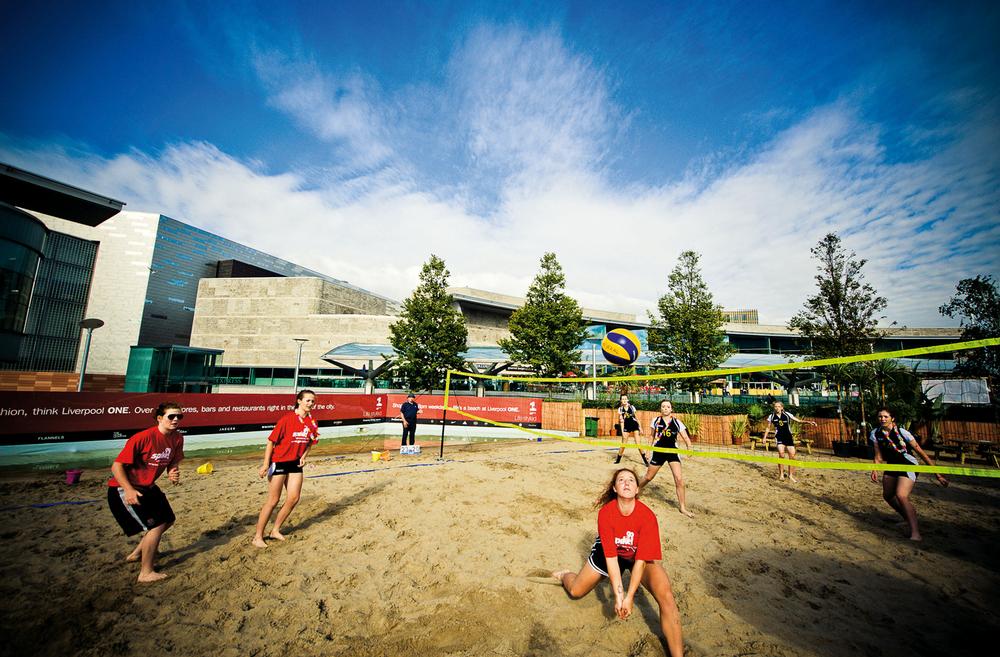
Last summer, Volleyball England ran Go Spike volleyball sessions at music, entertainment and charity events across the country
Volleyball has come a long way from the old YMCA gymnasium of Holyoke, Massachusetts, US, where William G Morgan invented the sport back in 1895. Today, it’s one of the big three international sports with almost a billion people playing worldwide – 35 million of which are beach volleyball players. The Federation of International Volleyball (FIVB), with its 220 affiliated national federations, is one of the largest international sporting federations in the world.
Volleyball England is the branded image for the English Volleyball Association (EVA) and is the recognised national governing body (NGB) for the sport in all its forms, including volleyball, beach volleyball and sitting volleyball in England.
The NGB is responsible for the development, promotion and delivery of the sport and is currently working towards a 500,000 new player target as outlined in its current strategic plan.
In England, volleyball has gained a large following, which is set to increase as we approach Games time. Lisa Wainwright, CEO at Volleyball England explains: “Volleyball is certainly climbing in popularity, our membership figures detailing the number of people coaching and regularly participating in competitions has increased year on year. We’ve witnessed a 14 per cent increase in weekly participation figures in the last 12 months. At club level, the number of volleyball clubs has increased by 6 per cent in the last five years with almost 500 located across the country.”
Bringing volleyball to the masses The surge of interest in the sport can be partly attributed to an increase in the number of opportunities to play in tournaments, places to play and the provision of equipment. However, while the sport is climbing at club level, recent results from Sport England’s Active People Survey 5, Quarter 2 shows a significant decrease in the number of people participating weekly, from Quarter 1. Wainwright comments: “We’re confident that weekly participation levels will pick up ahead of the Games. Volleyball in England has by no means reached its full potential. With the versatility of the game’s format the sport is incredibly accessible; with a ball and a piece of ribbon as a net you can play anywhere with as little as two players.”
In line with Volleyball England’s current strategic plan, 2011 saw the launch of Go Spike, the campaign that offers players of any ability and fitness level the chance to gain skills, tactics, improve fitness and experience the social buzz of the sport. Targeted at the 16-years-plus market, Go Spike sessions run across the country and allow for budding players to turn up and try their hand at the sport – commitment and cost free for first timers.
Taking advantage of the sport’s outdoor appeal, during the summer of 2011 Go Spike sessions ran at a range of music, entertainment and charity events – exposing thousands of people across the country to the sport. In addition, regular Go Spike sessions were set up across the club network, in parks and other public spaces – encouraging local passers-by to come and try the game.
Amy Seaman, Go Spike campaign manager at Volleyball England says: “Since its launch in June 2011, the Go Spike campaign has been hugely successful with the dedicated grassroots website, gospike.net, receiving more than 9,000 visitors. More than 5,000 people have turned up to Go Spike sessions and our volleyball ‘Game In A Bag’, has been so popular that we have been able to retail it on the Volleyball England website.
Life’s a beach Sitting within the Go Spike campaign, Volleyball England launched its ‘Beach Volleyball Capital Investment Initiative’ to increase participants and spectators in beach sports, with funding for beach courts across England. The NGB aims to build 10 permanent multi-court beach centres by 2013. Partner funded, these local, permanent beach development projects are part of a legacy programme for the sport which aims to: * Expose more people to beach sports as both spectators and participants * Provide opportunities for more people to follow up their initial experience and play beach volleyball regularly. * Significantly improve the experience for those already playing regularly by enhancing services and reducing travel time to volleyball venues.
Speaking about the second round of the initiative, Craig Handford, head of technical development and excel for Volleyball England, said: “We’ve already developed four permanent multi-court centres as a result of the funding; each providing fantastic examples of how the initiative can transform a site and breathe new life into under-used facilities, increase participation in sport and physical activity and create a legacy from the Games.”
As part of the initiative, the organisation produced a ‘Development of Beach Volleyball Courts’ – a document which details conversion and modification methods of under-used public areas into sand courts. This gives leisure sites official guidance on how to safely convert public areas into sand courts and facilities in sustainable and cost effective ways.
New talent While Go Spike is targeted at the 16-plus market, specific campaigns aimed at attracting younger players to the sport such as ‘Let’s Play Volleyball’ continue to bring new players to the court. The Let’s Play Volleyball National Youth Volleyball Programme is a holistic development model designed to encourage young people (aged five to 16 years) to experience and enjoy the sport as a player, competitor, leader, coach or referee.
On the court, Let’s Play Volleyball is a game-based session whereby a small- sided approach is used to take young players sequentially through the essential skills required to become a competent volleyball player, developing game understanding and sport specific techniques in parallel.
Volleyball England also works with schools nationwide to encourage children and young people to get involved in the sport. The School-Club strategy focuses on activity and takes place outside of the school curriculum. This helps to guide young people from sport in School Sport Partnerships (SSPs) to clubs.
Wainwright says: “It’s our aim to ensure that the links between schools and clubs are sustainable and of a high quality. If we want children to choose to play volleyball we must ensure that they receive the most enjoyable and beneficial experience initially. By increasing the standard of teacher training in our sport through short courses in programmes, such as Volley Sport and Mini Volley, or by arranging for community sports coaches to deliver sessions, we ensure that children enjoy playing the sport in school and are then more likely to want to find and join their local Volleyball England-recommended club.”
Pathways to success Once part of a Volleyball England accredited club, young people have the opportunity to progress and compete at local and national level via an array of tournaments organised by the NGB.
Regional Let’s Play Volleyball festivals, national volleyball leagues and national junior championships all encourage young people to develop and participate in competitions at regional and national level.
Seventeen-year-old Jordan Darylmple from London is a great example of how volleyball clubs can help to produce the stars of the future. The South London student began playing volleyball at after school sessions with his local coach; he then went on to compete for his borough in Wandsworth before being scouted to play for England and is now a regular for the England Youth Team. Jordan is now one of the Lloyds TSB Local Sporting Heroes and a hopeful for 2016.
Retaining players As well as attracting new players to the sport, retaining people through the autumn and winter months is also a key objective for Volleyball England.
However, results of the recent Sports Satisfaction Survey in which volleyball ranked as the ‘third least satisfied sport’, showed that the delivery of volleyball is restricted by the standard dimensions of sports halls. A key objective of Volleyball England’s facilities strategy was to combat the issue of “small, dirty, badly-lit sports halls”, which provided a barrier to new players experiencing the sport.
Wainwright explains: “The development of our technical guidance notes highlights how small changes to the current standard Sport England dimensions for indoor court spaces can increase provision and revenue generation for volleyball and other indoor sports. The notes provide recommendations for the design of volleyball provision including court dimensions and markings, flooring, lighting and equipment – giving leisure operators guidelines for creating safe, user friendly and enjoyable provision.”
In addition, the NGB has invested in innovative equipment which can provide facilities with access to courts. Wainwright explains; “To provide an inexpensive, versatile and sustainable solution to the provision of volleyball at leisure sites, we have dedicated funding to providing 400 sites with cross sport slider net systems. This enables the sites to offer volleyball along with other sports, such as badminton, in their sports halls while complying with our guidelines. These two methods are helping to boost the number of sites offering volleyball – giving players accessibility to the sport all year round.”
How to get involved
For advice on developing Go Spike Volleyball sessions or beach courts visit: www.volleyballengland.org
To find your nearest Go Spike session visit: www.gospike.net
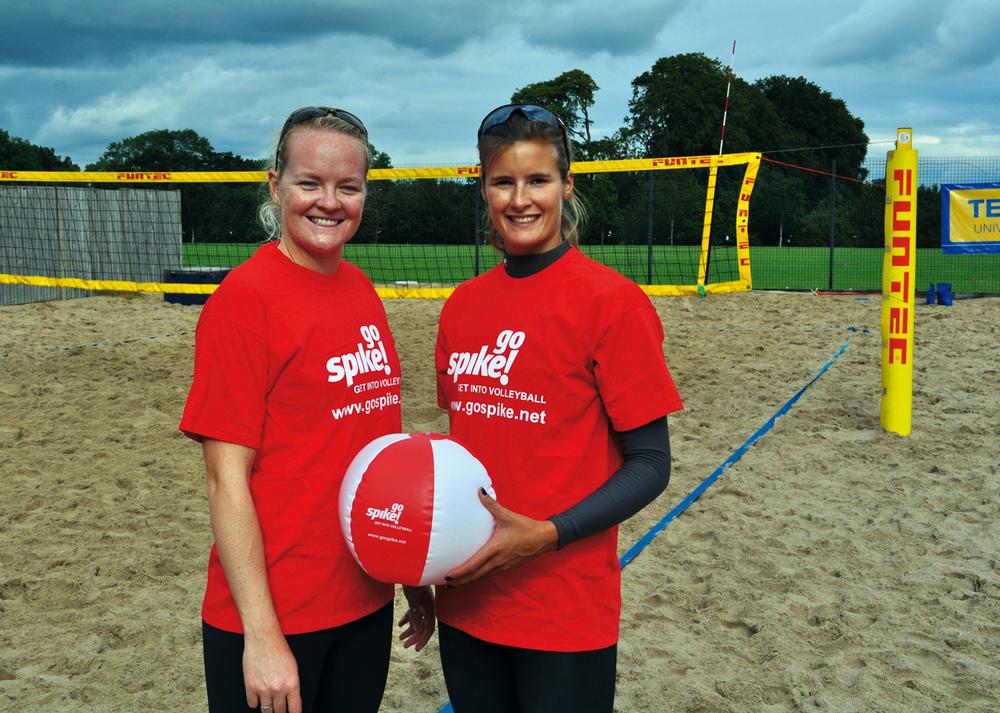
Team GB volleyball players Shauna Mullin and Zara Dampney.
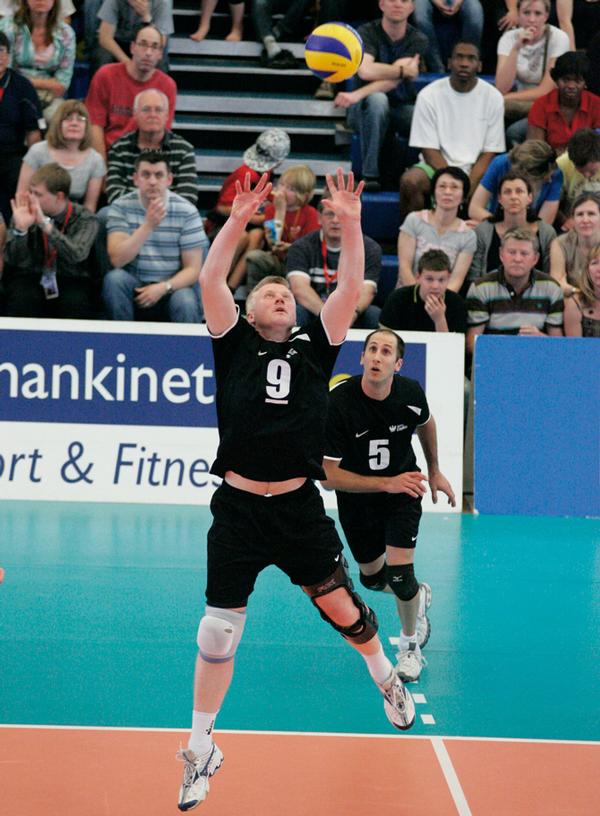
Malorey Eagles captain Richard Dobell at the Men’s National Cup Final
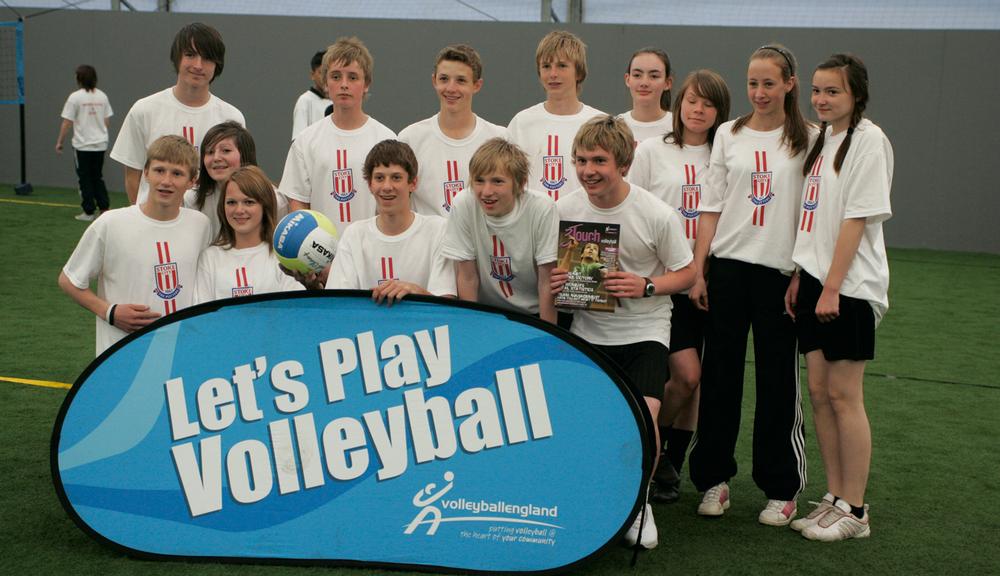
Let’s Play Volleyball festivals encourage young people to develop and participate in regional and national competitions
Celebrating its milestone 5th anniversary, W3Fit EMEA returns in 2026 with an unmissable
gathering of the Health & Fitness industry’s most influential leaders. [more...]
As healthcare continues to shift towards prevention, there’s a growing focus on helping
people stay active, independent and feeling good for longer. [more...]
+ More featured suppliers
COMPANY PROFILES
IndigoFitness
At IndigoFitness, we create intelligent training spaces that elevate fitness facilities across indus [more...]
Precor
Precor promises precision-quality products with steadfast reliability that are inspired by exerciser [more...]
As volleyball takes centre stage at three venues across London during the Olympic and Paralympic Games this summer, we talk to the key players at Volleyball England about its flagship grassroots campaign, Go Spike, and find out how people of any age, ability and background can dig and spike their way into the sport
Last summer, Volleyball England ran Go Spike volleyball sessions at music, entertainment and charity events across the country
Volleyball has come a long way from the old YMCA gymnasium of Holyoke, Massachusetts, US, where William G Morgan invented the sport back in 1895. Today, it’s one of the big three international sports with almost a billion people playing worldwide – 35 million of which are beach volleyball players. The Federation of International Volleyball (FIVB), with its 220 affiliated national federations, is one of the largest international sporting federations in the world.
Volleyball England is the branded image for the English Volleyball Association (EVA) and is the recognised national governing body (NGB) for the sport in all its forms, including volleyball, beach volleyball and sitting volleyball in England.
The NGB is responsible for the development, promotion and delivery of the sport and is currently working towards a 500,000 new player target as outlined in its current strategic plan.
In England, volleyball has gained a large following, which is set to increase as we approach Games time. Lisa Wainwright, CEO at Volleyball England explains: “Volleyball is certainly climbing in popularity, our membership figures detailing the number of people coaching and regularly participating in competitions has increased year on year. We’ve witnessed a 14 per cent increase in weekly participation figures in the last 12 months. At club level, the number of volleyball clubs has increased by 6 per cent in the last five years with almost 500 located across the country.”
Bringing volleyball to the masses The surge of interest in the sport can be partly attributed to an increase in the number of opportunities to play in tournaments, places to play and the provision of equipment. However, while the sport is climbing at club level, recent results from Sport England’s Active People Survey 5, Quarter 2 shows a significant decrease in the number of people participating weekly, from Quarter 1. Wainwright comments: “We’re confident that weekly participation levels will pick up ahead of the Games. Volleyball in England has by no means reached its full potential. With the versatility of the game’s format the sport is incredibly accessible; with a ball and a piece of ribbon as a net you can play anywhere with as little as two players.”
In line with Volleyball England’s current strategic plan, 2011 saw the launch of Go Spike, the campaign that offers players of any ability and fitness level the chance to gain skills, tactics, improve fitness and experience the social buzz of the sport. Targeted at the 16-years-plus market, Go Spike sessions run across the country and allow for budding players to turn up and try their hand at the sport – commitment and cost free for first timers.
Taking advantage of the sport’s outdoor appeal, during the summer of 2011 Go Spike sessions ran at a range of music, entertainment and charity events – exposing thousands of people across the country to the sport. In addition, regular Go Spike sessions were set up across the club network, in parks and other public spaces – encouraging local passers-by to come and try the game.
Amy Seaman, Go Spike campaign manager at Volleyball England says: “Since its launch in June 2011, the Go Spike campaign has been hugely successful with the dedicated grassroots website, gospike.net, receiving more than 9,000 visitors. More than 5,000 people have turned up to Go Spike sessions and our volleyball ‘Game In A Bag’, has been so popular that we have been able to retail it on the Volleyball England website.
Life’s a beach Sitting within the Go Spike campaign, Volleyball England launched its ‘Beach Volleyball Capital Investment Initiative’ to increase participants and spectators in beach sports, with funding for beach courts across England. The NGB aims to build 10 permanent multi-court beach centres by 2013. Partner funded, these local, permanent beach development projects are part of a legacy programme for the sport which aims to: * Expose more people to beach sports as both spectators and participants * Provide opportunities for more people to follow up their initial experience and play beach volleyball regularly. * Significantly improve the experience for those already playing regularly by enhancing services and reducing travel time to volleyball venues.
Speaking about the second round of the initiative, Craig Handford, head of technical development and excel for Volleyball England, said: “We’ve already developed four permanent multi-court centres as a result of the funding; each providing fantastic examples of how the initiative can transform a site and breathe new life into under-used facilities, increase participation in sport and physical activity and create a legacy from the Games.”
As part of the initiative, the organisation produced a ‘Development of Beach Volleyball Courts’ – a document which details conversion and modification methods of under-used public areas into sand courts. This gives leisure sites official guidance on how to safely convert public areas into sand courts and facilities in sustainable and cost effective ways.
New talent While Go Spike is targeted at the 16-plus market, specific campaigns aimed at attracting younger players to the sport such as ‘Let’s Play Volleyball’ continue to bring new players to the court. The Let’s Play Volleyball National Youth Volleyball Programme is a holistic development model designed to encourage young people (aged five to 16 years) to experience and enjoy the sport as a player, competitor, leader, coach or referee.
On the court, Let’s Play Volleyball is a game-based session whereby a small- sided approach is used to take young players sequentially through the essential skills required to become a competent volleyball player, developing game understanding and sport specific techniques in parallel.
Volleyball England also works with schools nationwide to encourage children and young people to get involved in the sport. The School-Club strategy focuses on activity and takes place outside of the school curriculum. This helps to guide young people from sport in School Sport Partnerships (SSPs) to clubs.
Wainwright says: “It’s our aim to ensure that the links between schools and clubs are sustainable and of a high quality. If we want children to choose to play volleyball we must ensure that they receive the most enjoyable and beneficial experience initially. By increasing the standard of teacher training in our sport through short courses in programmes, such as Volley Sport and Mini Volley, or by arranging for community sports coaches to deliver sessions, we ensure that children enjoy playing the sport in school and are then more likely to want to find and join their local Volleyball England-recommended club.”
Pathways to success Once part of a Volleyball England accredited club, young people have the opportunity to progress and compete at local and national level via an array of tournaments organised by the NGB.
Regional Let’s Play Volleyball festivals, national volleyball leagues and national junior championships all encourage young people to develop and participate in competitions at regional and national level.
Seventeen-year-old Jordan Darylmple from London is a great example of how volleyball clubs can help to produce the stars of the future. The South London student began playing volleyball at after school sessions with his local coach; he then went on to compete for his borough in Wandsworth before being scouted to play for England and is now a regular for the England Youth Team. Jordan is now one of the Lloyds TSB Local Sporting Heroes and a hopeful for 2016.
Retaining players As well as attracting new players to the sport, retaining people through the autumn and winter months is also a key objective for Volleyball England.
However, results of the recent Sports Satisfaction Survey in which volleyball ranked as the ‘third least satisfied sport’, showed that the delivery of volleyball is restricted by the standard dimensions of sports halls. A key objective of Volleyball England’s facilities strategy was to combat the issue of “small, dirty, badly-lit sports halls”, which provided a barrier to new players experiencing the sport.
Wainwright explains: “The development of our technical guidance notes highlights how small changes to the current standard Sport England dimensions for indoor court spaces can increase provision and revenue generation for volleyball and other indoor sports. The notes provide recommendations for the design of volleyball provision including court dimensions and markings, flooring, lighting and equipment – giving leisure operators guidelines for creating safe, user friendly and enjoyable provision.”
In addition, the NGB has invested in innovative equipment which can provide facilities with access to courts. Wainwright explains; “To provide an inexpensive, versatile and sustainable solution to the provision of volleyball at leisure sites, we have dedicated funding to providing 400 sites with cross sport slider net systems. This enables the sites to offer volleyball along with other sports, such as badminton, in their sports halls while complying with our guidelines. These two methods are helping to boost the number of sites offering volleyball – giving players accessibility to the sport all year round.”
How to get involved
For advice on developing Go Spike Volleyball sessions or beach courts visit: www.volleyballengland.org
To find your nearest Go Spike session visit: www.gospike.net
Team GB volleyball players Shauna Mullin and Zara Dampney.
Malorey Eagles captain Richard Dobell at the Men’s National Cup Final
Let’s Play Volleyball festivals encourage young people to develop and participate in regional and national competitions
Global luxury hospitality brand, Six Senses, has partnered with longevity healthcare provider,
HUM2N, to launch a clinic at Six Senses London, at The Whiteley.
Premium London health club, KX Chelsea, will imminently unveil its most significant
redevelopment since its launch in 2002 to create an integrated wellness model combining
training, recovery and relaxation.
Researchers in the US have identified an antibody which could greatly reduce the loss of lean
muscle mass in people who are taking weight-loss medications.
Crunch Fitness has announced the launch of Crunch Reform Pilates – its own reformer concept
designed to bring this fast growing, but rather expensive, modality into the mainstream.
The 20th State of the Industry Report reveals a resilient, expanding and competitive
sector, the
importance of differentiation and the ongoing challenge of tackling inequalities.
Nuffield Health has told HCM that it takes its responsibilities towards its colleagues seriously
and is committed to meeting all legal obligations after news of a tribunal has made national
headlines.
Technogym has announced the launch of the Run X World Treadmill Championship, the first
world championship for running on connected treadmills over five kilometres.
Celebrating its milestone 5th anniversary, W3Fit EMEA returns in 2026 with an unmissable
gathering of the Health & Fitness industry’s most influential leaders. [more...]
As healthcare continues to shift towards prevention, there’s a growing focus on helping
people stay active, independent and feeling good for longer. [more...]
+ More featured suppliers
COMPANY PROFILES
IndigoFitness At IndigoFitness, we create intelligent training spaces that elevate fitness facilities across indus [more...]